Both vendors take a request at intake, run the provider chase without your staff, and deliver records back into the case management system through supported integrations. They diverge on where the work of finding providers happens, how a stalled request gets worked, what a paralegal can see while it is open, and how far each carries the file after records arrive.
LlamaLab describes itself as an AI retrieval service built for plaintiff and mass-tort firms that pairs a national provider network with a clinical analysis platform and a case-qualification step.
Tavrn is an AI platform for plaintiff personal injury and workers' compensation firms that retrieves through agentic workflows that contact providers and manage follow-ups, and continues through medical chronologies and demand letters. Firms weighing broader legal workflow automation will find retrieval is usually the first bottleneck. Whether to hand retrieval off at all is a separate decision. This comparison covers provider outreach, follow-up on stalled requests, visibility while a request is open, and what lands in the file after delivery.
Table of Contents
- Tavrn vs. LlamaLab: Key Differences at a Glance
- Where a Request Breaks Before Records Move
- How a Request Gets Worked After It Goes Out
- What Your Paralegal Sees While a Request Is Open
- What Happens Once Records Land in the File
- Which Platform Fits Your Firm
Tavrn vs. LlamaLab: Key Differences at a Glance
Tavrn and LlamaLab both cover all 50 states and integrate with Litify and Clio.
Tavrn and LlamaLab both cover all 50 states and integrate with Litify and Clio.LlamaLab details above are as published on www.llamalab.ai, including its /retrieval, /pricing, /integrations, /how, and /llamalab-reviews pages, accessed September 2026.
Firms can lose time at two points. One is provider discovery, where the urgent-care visit the client forgot never becomes a request. The other is week six, with the request still open at a hospital system that does not answer faxes.
Where a Request Breaks Before Records Move
A request stalls for one of two reasons: nobody knew to send it, or the custodian sent it back.
LlamaLab's How It Works page describes a reverse search across its network with "every provider found, and every record pulled, including ones clients forgot," and its August 15, 2026 benchmarks post gives the reasoning: "Reverse provider search exists because intake memory is incomplete." LlamaLab also handles patient authorization and identity verification itself, "fully digital. No printing, no faxing, no weeks of back and forth," per its How It Works page. Its homepage adds, "Our clinical team tells you if the case is real."
Finding the provider only pays if the request the firm sends survives the custodian, which is the second breakpoint. Firms upload their existing HIPAA authorization when submitting a request through Tavrn's medical retrieval page, and Tavrn accepts the firm's existing release rather than requiring a new Tavrn form. Its agents also hold each provider to its statutory response window and catch the common defects that cause a bounce: a wrong form, a missing signature, a mismatched signature, or a wet-ink requirement not met.
How a Request Gets Worked After It Goes Out
LlamaLab works a request by fax with people behind it; Tavrn works it by phone with an agent on the line.
LlamaLab's January 14, 2026 post describes the automated route: an AI validates the authorization and routes it to the correct provider, then a fax goes out automatically with delivery confirmation, and the provider sends records back by fax. That same post describes a hybrid model in which "LlamaLab's retrieval specialists step in." It is the only LlamaLab document that describes the outreach channel; the /how and /retrieval pages describe outcomes rather than how the request is worked.
Tavrn's AI voice agents call the provider directly. They navigate the facility's phone tree, work through objections a records desk raises, and carry forward what worked on a prior call to that same office, so the tenth attempt is not a repeat of the first. That work runs across every open request at once, not one at a time on a schedule, so a hospital that goes quiet on Monday gets called again before the week is out rather than waiting on a paralegal to notice. The week-six request that never answered its first fax stays in that same active work queue, worked the same way as every other open request, instead of sitting until someone remembers to chase it.
What Your Paralegal Sees While a Request Is Open
Both vendors push status into the case file; they differ in whether the underlying provider interaction is visible. LlamaLab's integrations page describes status updates and webhooks for Litify, Clio, and Needles, and its Litify page says records file automatically to the correct matter and costs sync to expense tracking. The January 14, 2026 post describes the end state: "You're notified that records are ready in your case." For a firm that lives in Litify, that keeps the paralegal out of a second portal.
Tavrn tracks request status in real time. Underneath sits what Tavrn's product page calls "Secure Call Transcripts: Every provider interaction is logged and stored for a clear audit trail."
LlamaLab's published integration materials describe status updates and webhooks; they do not describe provider-call transcripts. Tavrn's transcript carries the custodian's own words about why a request is stuck, so the next contact answers the objection instead of re-asking. Paul LLP reports in Tavrn's published case study that it now tracks requests without spreadsheets, emails, or phone calls, and that paralegal time on record requests fell from multiple full days a week to roughly one to two hours per week.
What Happens Once Records Land in the File
The deliverable after retrieval diverges: one side is an analysis workspace with a clinical case-qualification step, the other a hyperlinked medical chronology plus a drafted demand letter.
LlamaLab's pricing page lists Search, Timelines, Summaries, Chronologies, and AI Chat in both plans, and its retrieval services page states, "Only the retrieval is billed. The platform is included at no additional charge with every request."
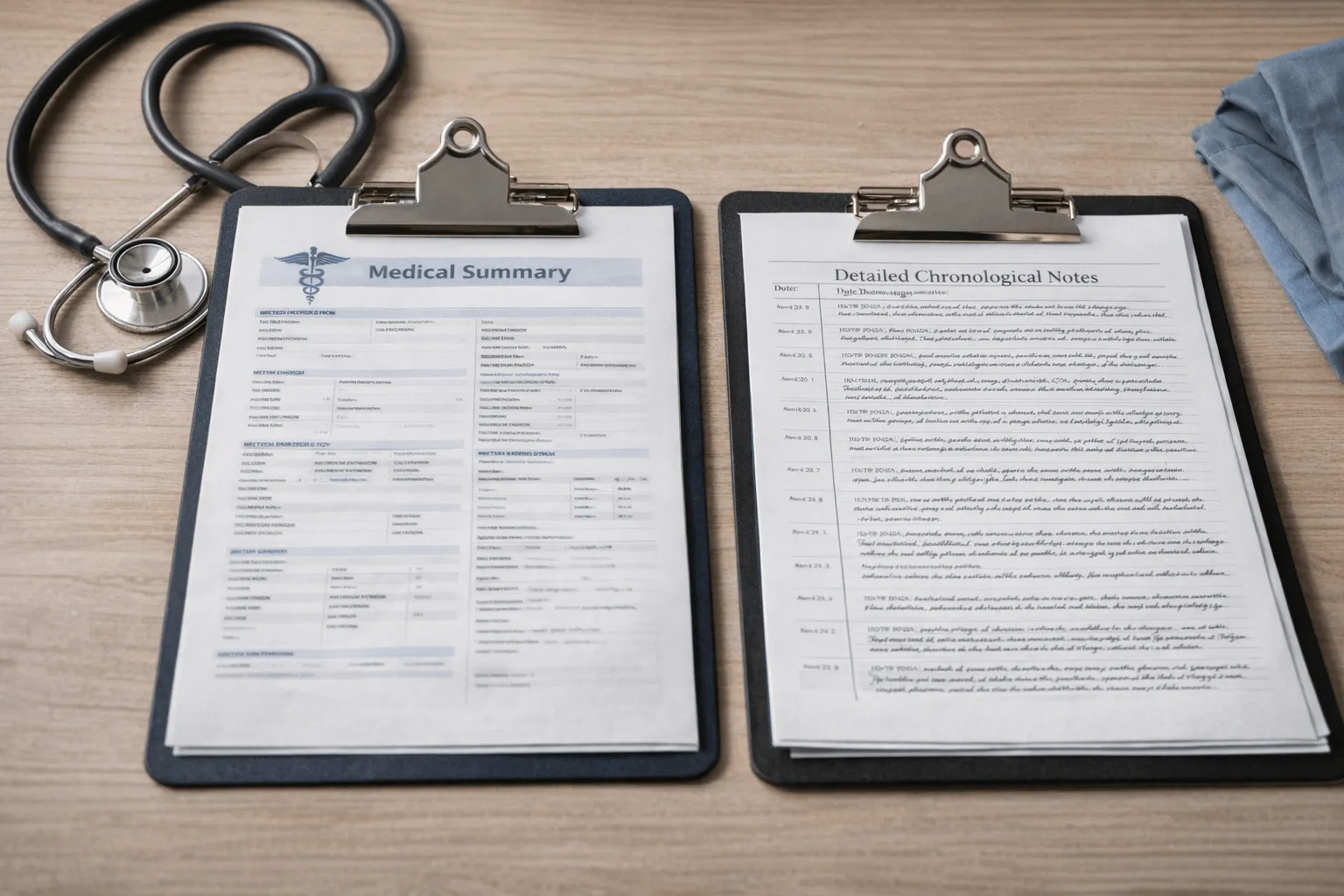
Tavrn's medical chronology arrives in under three hours, most in one, with each entry linked to its source page, per Tavrn's chronologies page. The same system then drafts the demand letter from the records and case facts, covering injuries, treatments, and damages.
Demand drafting does not appear among the platform features listed on LlamaLab's pricing page as accessed September 2026.
Landver Law reports in Tavrn's published case study that demands sent rose 6x. Managing partner Alina Landver: "If I'm getting six times the amount of demands out, that means I have the records. That means cases are moving."
Which Platform Fits Your Firm
Choose Tavrn when the requests that hurt are the ones that stall. One request covers records, bills, and imaging; the same system drafts the demand letter. That fits a plaintiff PI or workers' comp firm whose worst providers ignore faxes, whose paralegals need the custodian's own words, and whose bottleneck runs past retrieval into medical chronologies and demand letters.
Consider LlamaLab when intake completeness and case selection are the problem. Reverse provider search before the first request, fully digital authorization, a clinical team that helps qualify cases, and mass tort tooling (Patient Fact Sheets, portfolio-level qualification) fit a firm screening a large docket before spending on retrieval.
Is your bottleneck deciding which cases to work, or getting records out of the providers you already know about?
Get Stalled Requests Moving Without Adding Headcount
A stalled request costs staff time whether a person or software is chasing it; Tavrn's agents work every open request in parallel, hold providers to their statutory deadline, and catch the defects that cause a bounce before it happens. The same request then feeds a hyperlinked chronology and a drafted demand letter. Bigos Law reports in Tavrn's published case study that a negotiation involving three minors concluded in one week against typical timelines of up to six months, with the check expected 30–90 days sooner.
To learn more, book a demo.