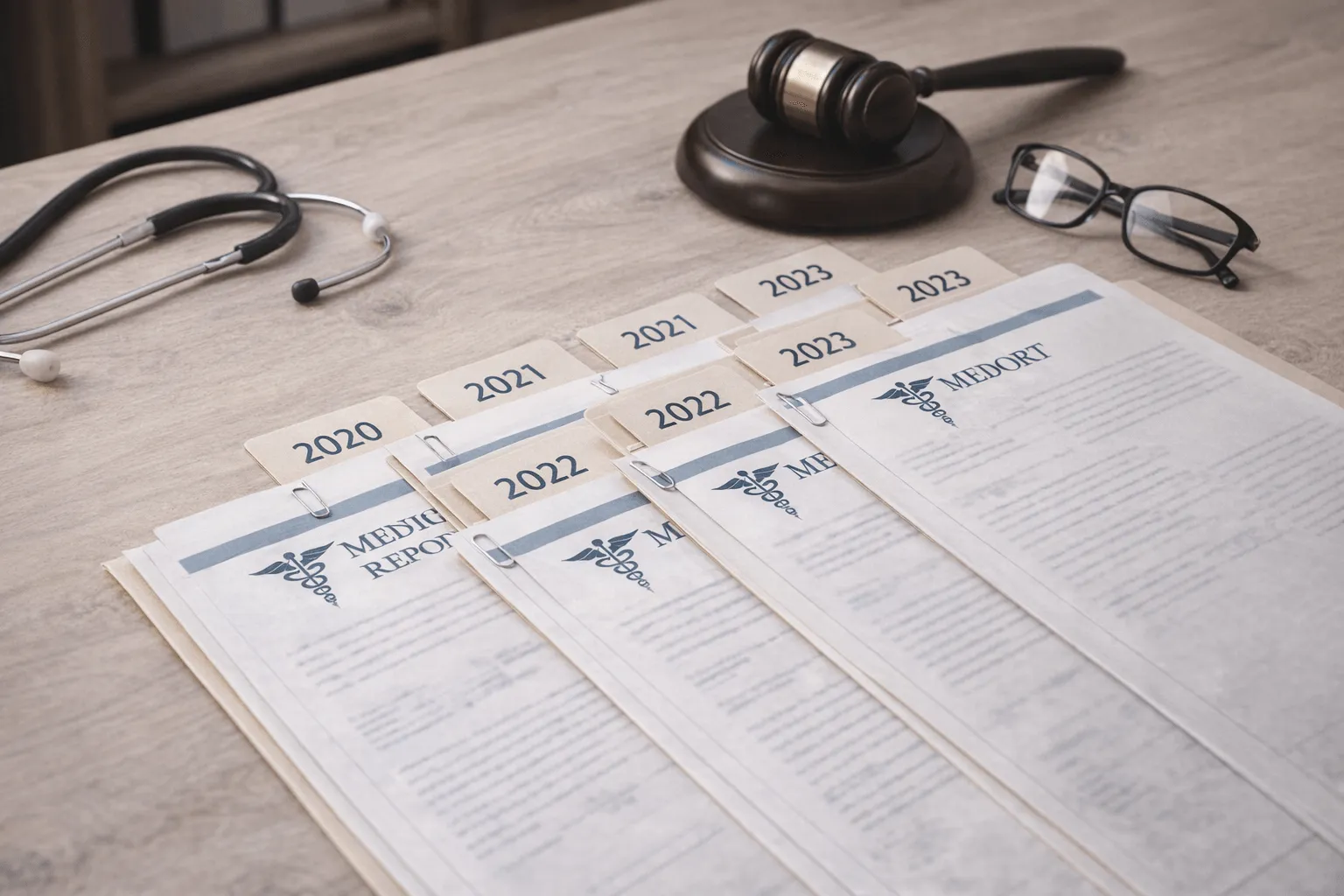
A misread term in an MRI impression. A skipped discharge summary. A chronology built on an unconfirmed clinical finding. These errors can look minor in the file and become costly later.
The most consequential medical record review mistakes are usually structural, not careless. A chronology built on a misread source may appear sound internally and fail once the source record is tested against it.
This article covers documentation misreads, chronology construction errors, record completeness failures, and the errors that survive internal review but break down under deposition or expert scrutiny. Because PI causation, aggravation, apportionment, and damages issues vary with the facts, jurisdiction, and evidentiary record, the consequences discussed here are recurring risk patterns rather than universal legal outcomes.
Misreading Clinical Language in the Record
Many damaging review mistakes begin with clinical vocabulary rather than transcription. The wording may be copied correctly, while the clinical meaning is overstated, simplified, or confused with a different documentation category. That can distort the timeline in ways that become obvious only when the source record is examined closely.
Impression vs. Diagnosis: The Costliest Distinction
The distinction between a clinical impression and a confirmed diagnosis often matters to causation analysis.
In radiology reports, the Impression section reflects the radiologist's interpretive conclusion about what findings may suggest. It is not automatically the same as a treating provider's confirmed diagnosis or a legal causation opinion. If an MRI impression says findings may represent a disc herniation at L4-L5 and the chronology converts that into a confirmed herniated disc, the file now contains a discrepancy that can be used to attack chronology accuracy.
CDI addresses queries when the record contains conflicting, incomplete, or ambiguous information about a significant condition. In practice, that reflects the larger point here: an impression and a confirmed diagnosis are not interchangeable.
Terms That Mean Less Than They Appear To
Several clinical terms have narrower meanings than they appear to have in a PI summary:
- "Rule out" signals a diagnosis under consideration, not confirmation. Guidance states that outpatient coders should not treat "rule out" conditions as confirmed diagnoses.
- "Stable" describes a patient's trajectory, not the absence of injury. A condition documented as stable means it has stopped changing, not that the patient has recovered.
- "Unremarkable" means no notable pathology was identified in the structure or study being discussed. It is not a global statement about the patient's condition.
- "Consistent with" means findings are compatible with a diagnosis, not that a diagnosis has been conclusively established.
Each of these terms can produce the same downstream problem: a chronology entry that overstates or understates what the record actually says.
Chronology Errors That Distort Causation and Damages
Chronology problems differ from isolated wording errors because they shape the legal story of the case. Even when individual entries are technically accurate, the chronology can still mislead if it omits context, compresses timing, or treats legally distinct concepts as the same.
Treatment Gaps and the Inference They Create
A timeline that shows treatment on Day 1, nothing until Day 47, and then resumed treatment may present a misleading picture of continuity even when each listed date is accurate. Unexplained gaps invite questions about what happened during the missing period.
Those questions often take familiar forms:
- Alternative cause arguments about whether symptoms began elsewhere
- Pre-existing condition theories about whether prior problems are being attributed to the accident
- Intervening cause investigations into what occurred during the gap period
As an internal workflow rule of thumb, some teams flag 30-day gaps between treatment dates for follow-up, but that is a heuristic rather than a universal legal or professional standard. The problem is not just that a gap exists. The problem is that the chronology leaves the gap unexplained.
Pre-Existing Conditions Without the Aggravation Distinction
This is one of the most consequential chronology errors in PI work. An aggravation analysis often depends on documenting the pre-accident baseline, the post-accident condition, and the change between them. If the chronology does not establish all three, the aggravation theory may be harder to support.
The failure is not merely mentioning a pre-existing condition. The failure is treating a pre-existing condition and an aggravation of that condition as if they are legally identical. If chronic back pain increased after an accident and later returned to baseline, the baseline still matters because it defines the delta the accident may have caused.
A chronology that treats pre-existing conditions only as vulnerabilities to minimize may undervalue the case. The retrieval should include pre-accident records when they are needed to establish the "before" that gives legal meaning to the "after."
Omitted Specialist Consultations
Specialist records are frequently omitted because the file appears complete without them. Their absence matters because those records may contain the clearest discussion of causation, prognosis, permanency, or future care.
Without a neurologist's or orthopedic specialist's opinion in the record set, the damages analysis may be limited to what primary care notes can support. Specialist records are where treating providers are most likely to document causation opinions, permanency findings, and future care needs in explicit terms. A physiatrist's functional assessment, a neurologist's prognosis, or an orthopedic surgeon's opinion on surgical necessity may each carry more damages weight than months of primary care follow-up notes. Primary care records may reference a referral without capturing what the specialist concluded, and if those conclusions never enter the record set, they cannot enter the chronology. The file may therefore look complete while omitting the records most directly relevant to long-term damages and expert preparation.
Record Completeness Failures and What They Obscure
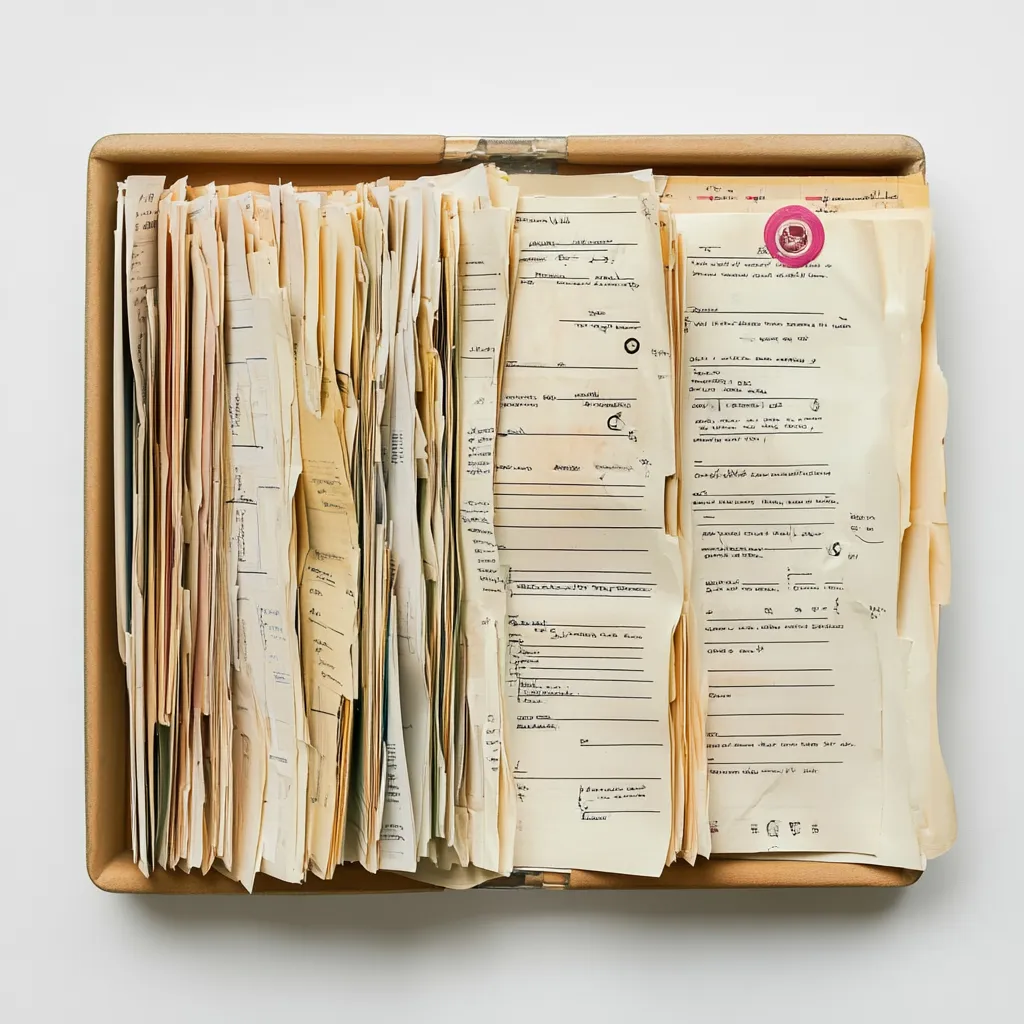
Completeness failures operate differently from wording or chronology mistakes. The problem is not that the existing file was misread; it is that the file never contained all of the records that should have been reviewed. Those omissions are hard to catch because internal review can evaluate only what is present.
That creates an asymmetric risk. If another party obtains a fuller record set, the missing records can reshape the treatment history and the damages story. Several record categories are missed often enough to justify targeted auditing:
- Imaging reports: Teams may collect imaging orders and study references, but not the radiologist's written interpretation. That report is often the document most likely to contain findings relevant to causation, and its absence means the chronology may reference a study without reflecting what the reviewing radiologist actually said about it.
- Discharge summaries: General requests for treatment records may return notes and orders without a separate discharge summary. Discharge summaries often contain the clearest account of the working diagnosis, treatment course, discharge condition, and follow-up instructions. This content may not appear in any individual progress note.
- Pharmacy histories: Prescription fill histories sit outside the medical records department and may require separate requests. They can document treatment continuity during periods when clinical notes are sparse or absent.
- Separate billing records: Itemized bills may come from billing departments rather than medical records, and a CPT code on a billing statement without a matching clinical note can signal a gap in the record set that warrants follow-up before chronology assembly begins.
When later-obtained records identify treatment the team never requested, the defense may characterize the file as incomplete, omit context from the treatment history, or raise questions about prior conditions. Auditing against an internal case-type-specific checklist before chronology assembly can reduce that exposure.
Mistakes That Surface Under Scrutiny, Not During Review
The most damaging review errors often survive ordinary internal checks. They look correct when the record is read in isolation and become vulnerable only when tested against metadata, prior documentation, or legal sufficiency concerns.
Copy-Paste Propagation Across EHR Notes
EHR systems allow prior note content to be pulled forward into later encounters. The record may therefore show repeated examination language across multiple visits. A PMC review and a JAMA study both reflect that duplicated EHR text is a real documentation issue.
Internal review may confirm that a note exists for each visit without testing whether the repeated text reflects independent examination findings. Under scrutiny, discoverable audit data may cast doubt on whether a repeated exam narrative supports a progressive damages story.
Pre-Existing Conditions Without Causation-Linking Language
A separate but related failure occurs when the reviewer knows to look for the aggravation distinction and the source record simply does not contain the language to support it.
Records that describe a baseline change can strengthen an aggravation argument, but no single phrase controls legal sufficiency. Peer-reviewed research on treating physicians' documentation notes the value of contemporaneous records in supporting causation opinions. When the record does not document the change and its basis at the time, later opinions may rest on a weaker foundation.
MMI Notations Buried in Routine Notes
Maximum Medical Improvement may appear as a short phrase buried in an ordinary follow-up note, not in a standalone report. Phrases such as "plateaued in functional gains" or "no further improvement expected" may appear mid-paragraph and be missed by review protocols that search only for formal MMI documents.
If that notation is missed, the damages summary may project future treatment in tension with the treating record. The review practices that catch this kind of problem usually require source verification and enough documentation literacy to distinguish simple disclosure from legal significance.
Where the Exposure Compounds
Medical record review mistakes in PI cases fall into predictable categories, and the most damaging ones are those that look accurate in the file but fail under external scrutiny. Misread clinical language, incomplete record sets, and buried notations all create exposure that compounds by the time a case reaches demand or deposition. A defensible chronology depends on catching these errors before they become structural.
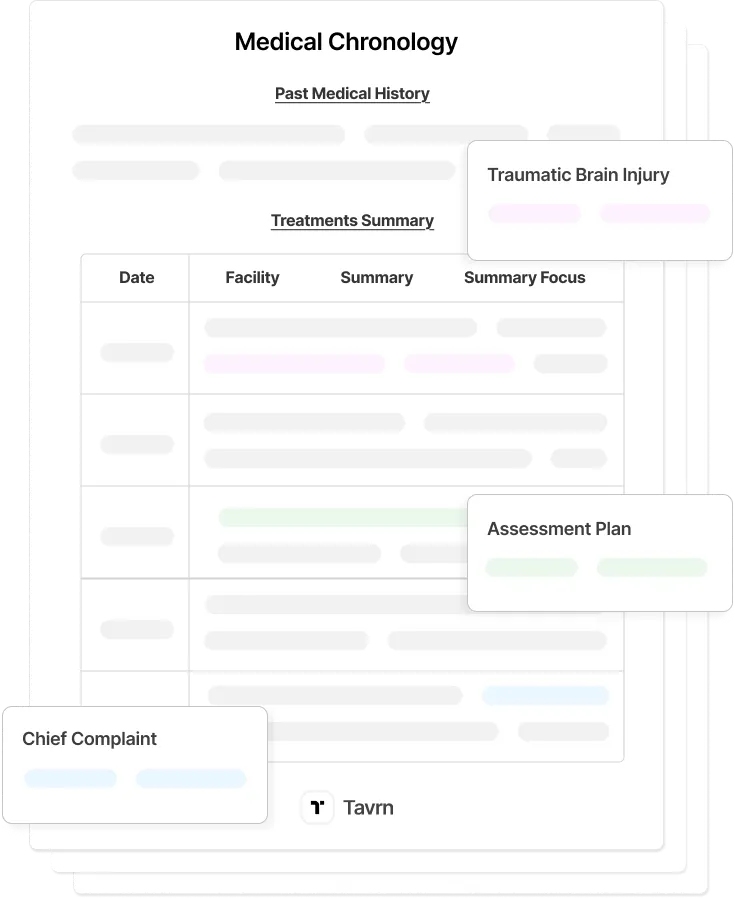
Avoiding that exposure requires both documentation literacy and a workflow that surfaces the right records before chronology assembly begins. Tavrn's retrieval and chronology tools support source-linked review workflows that keep chronology entries tied to the underlying record and surface missing material earlier in the process.