Waiting on the records, chronology, and billing that every section depends on often takes more time than drafting the letter itself. In many files, the draft stalls long before the first sentence.
Demand letter preparation in a personal injury or medical malpractice practice differs from the debt-recovery letters that dominate search results. It is the point in the litigation timeline where a substantially assembled case file becomes a single document an adjuster will read.
Each section of the letter is built from a source document. A draft is ready for attorney signature only when those inputs are assembled and verified.
What Source Documents Does Demand Letter Preparation Require?
Every section maps to a specific category of source documentation, and a demand draft generally should not be finalized until those inputs are assembled and verified. Demand work commonly sits in the pre-litigation stage, after evidence gathering and once maximum medical improvement is confirmed, though some case-specific or policy-limits contexts may call for earlier drafting.
Drafting a demand letter is primarily an assembly task: the paralegal pulls each section from the file rather than composing it. Demand letters usually draw from six categories of source documents:
- Liability evidence: police or incident reports, witness statements, photographs, scene diagrams
- Medical records: ER records, treating physician notes, diagnostic imaging, specialist and physical therapy notes
- Medical billing: itemized bills from every provider, explanations of benefits from health insurers
- Lien documentation: health insurance liens, Medicare and Medicaid liens, ERISA plan liens, letters of protection
- Wage loss documentation: employer verification letters, pay stubs, tax returns
- Insurance coverage: at-fault party's policy information, client's own UM/UIM and PIP cards
When preparing a demand letter, tracking what was requested and what has been received determines whether the draft can move to finalization or must wait.
How Is the Liability Section Built?
Build the liability section from the police or incident report, witness statements, photographic evidence, and the medical records that establish causation. In many workflows, the paralegal organizes this evidence and ties factual claims to specific documents, while the attorney refines the legal theory; the exact division of labor varies by firm, attorney supervision model, and jurisdiction.
Start With the Police Report
The police report is the primary anchor. Liability is typically built from the police or incident report, accident scene diagrams, photographs, and the client intake materials, with the description covering the violation, the incident location, and the insured's allegedly faulty actions. Leading with the police report and citing the officer's name and report number signals that the version of events is based on official documentation rather than the client's unilateral account.
Cite a Document for Every Claim
Every factual claim in the liability section requires a document citation. Reference official report numbers, officer names, and exhibit labels throughout the narrative rather than making generalized assertions.
Build the Causation Narrative
Raw medical records are often disorganized and may span hundreds or thousands of pages; without a clear view of what the records contain and what may be absent, the attorney risks presenting an incomplete or inaccurate account of injuries.
Trace the incident, diagnosis, and treatment through the records when building the causation narrative. Pre-existing conditions and treatment gaps should be identified and flagged for the attorney before the draft is written rather than surfacing for the first time during adjuster review.
How Are Damages Documented From the Medical Chronology?
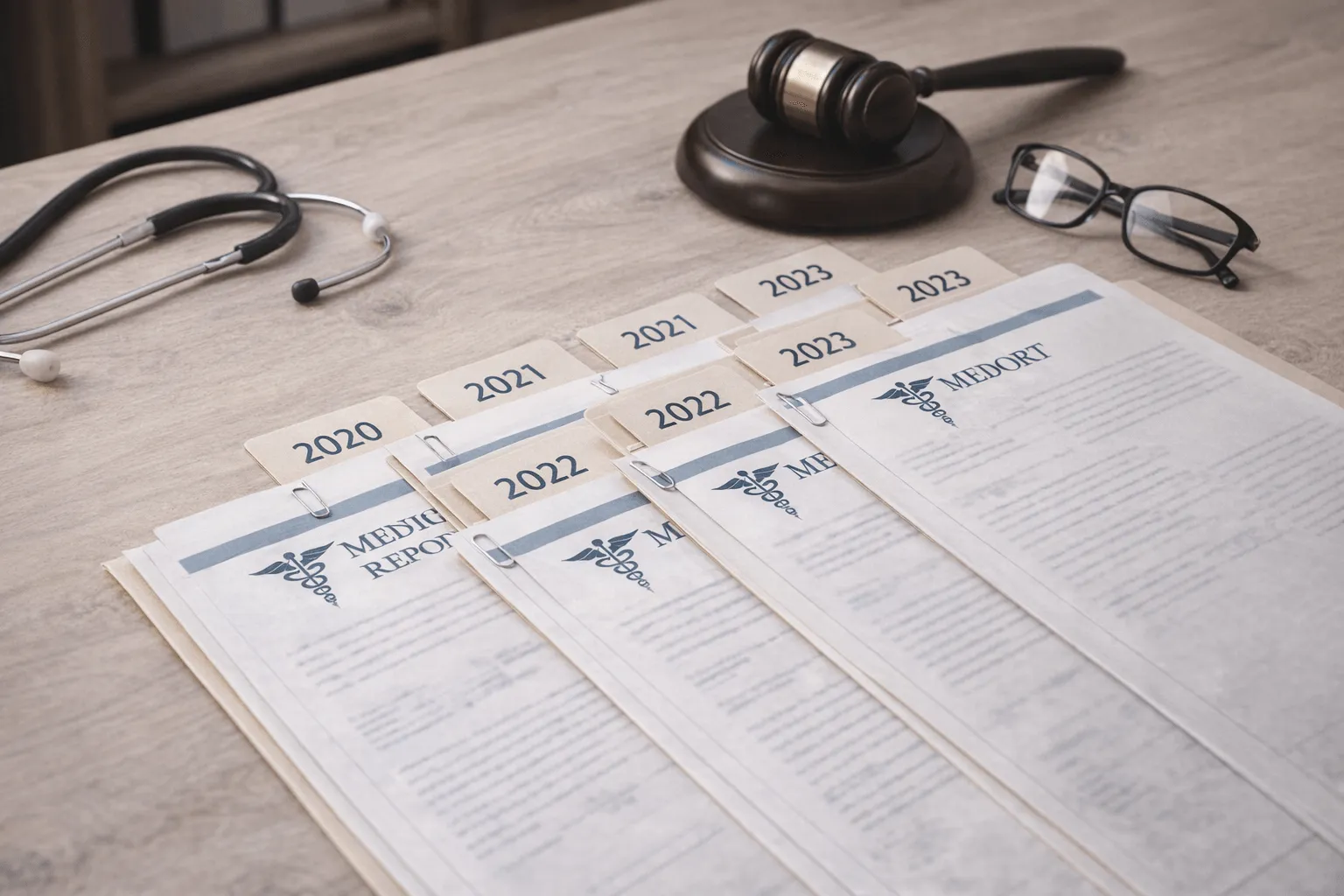
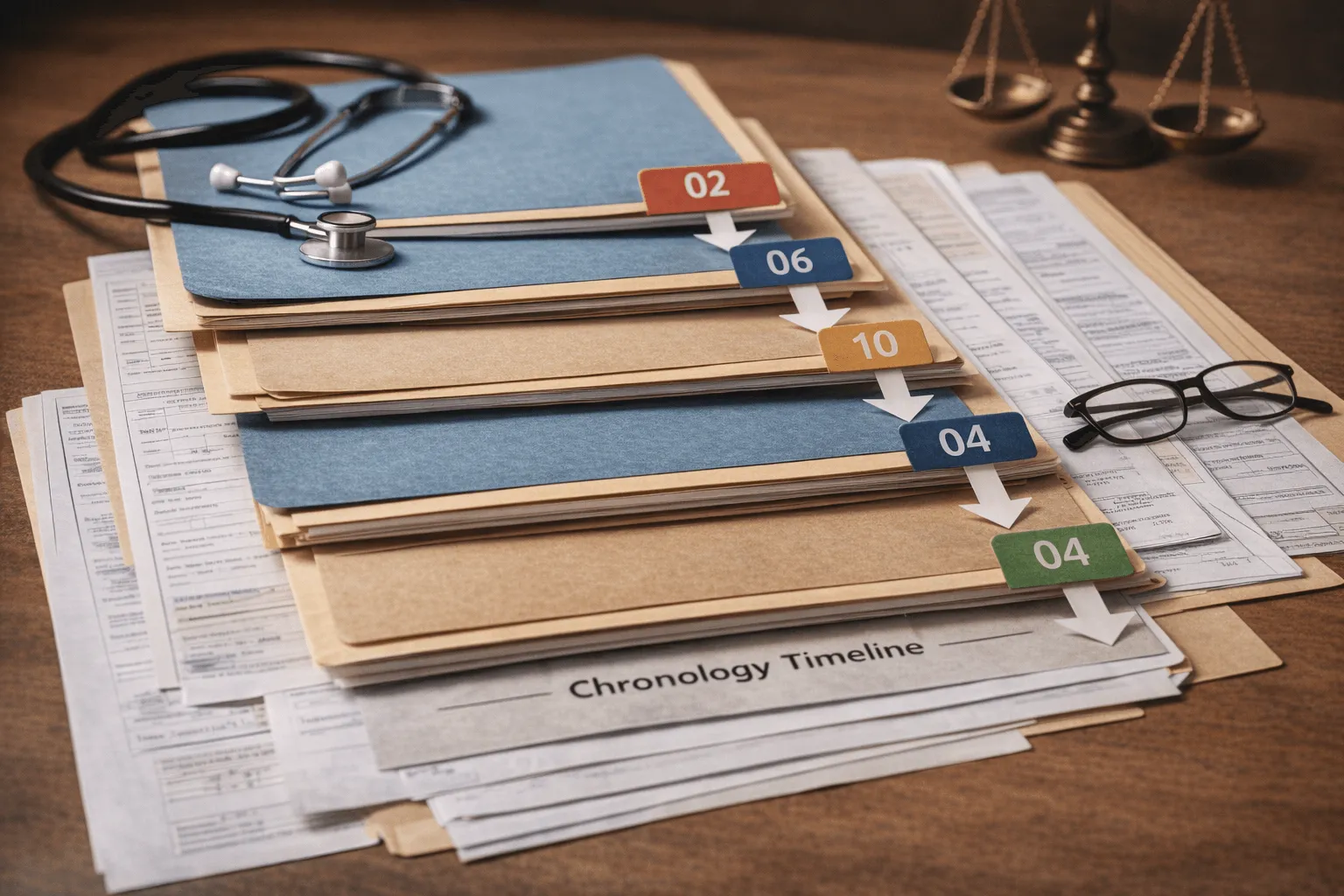
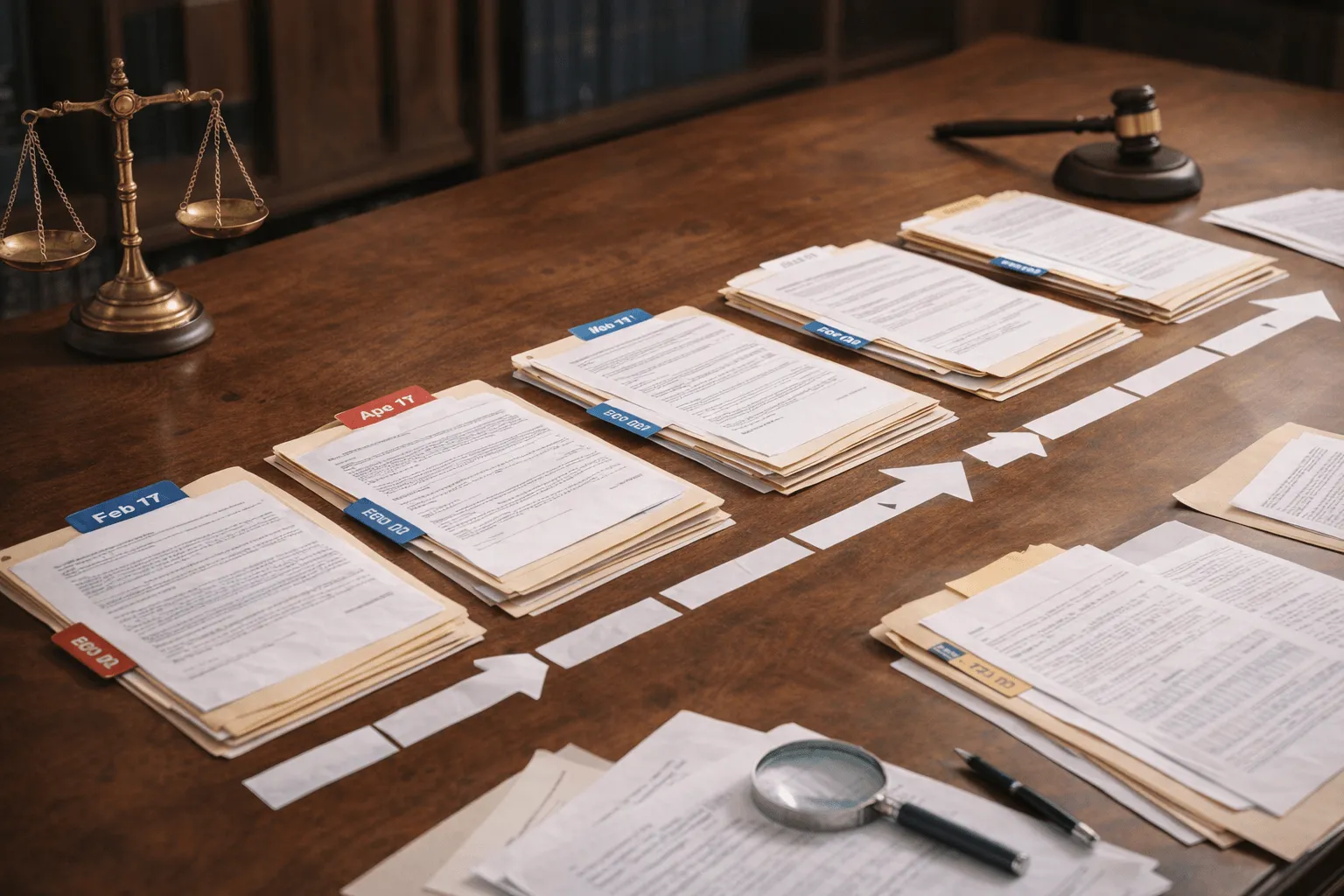
The medical chronology sequences treatment, ties each entry to a record, and exposes gaps. The medical chronology supports both the special damages itemization and the general damages narrative.
Structure the Chronology Entries
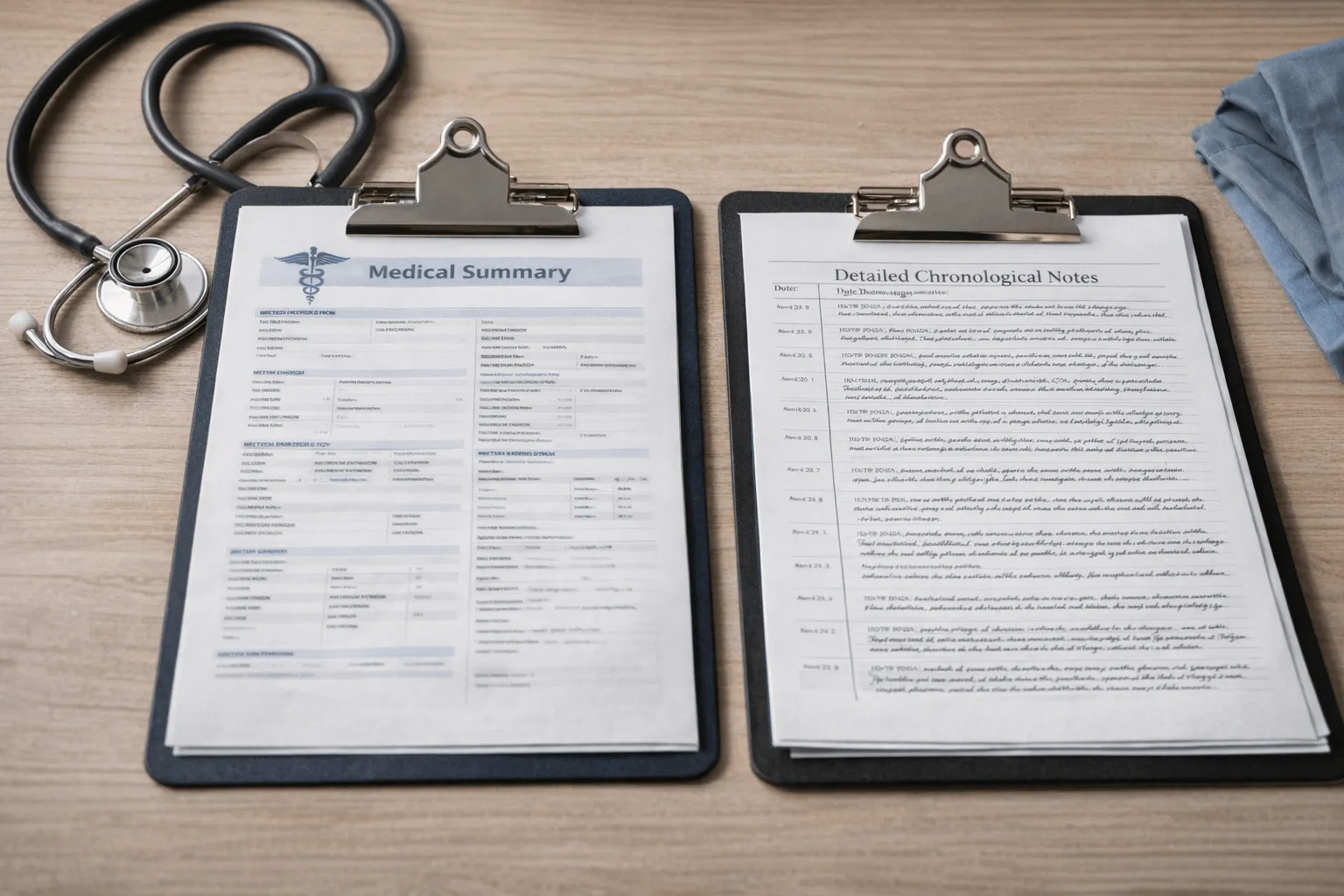
Each chronology entry should contain the provider name, date and time of service, case-relevant facts, Bates number references, and paralegal comments. This structure allows the attorney to move between the summary, the record, and the damages section without rebuilding the timeline from scratch.
Document Special Damages
Translating the chronology into special damages requires provider-level billing itemization. Every dollar figure should be backed by a medical bill, pay stub, expert report, or other verifiable document; vague or unsupported numbers invite the insurer to discount the claim. The damages itemization should list each provider with the date of service and exact dollar amount, then total the categories used in the letter.
Cross-referencing billing against the treatment timeline is a recognized paralegal task. A practical comparison of itemization to chronology looks for errors and omissions across billing, treatment dates, and provider records. This cross-reference catches discrepancies such as billing charges from a provider that does not appear in clinical records, or treatment documentation that does not match the period billed.
Document General Damages
General damages are built from the treatment narrative in the chronology, not from billing records. The chronology should document medical appointments, procedures, and treatment from emergency care through follow-up care and any ongoing treatment. A clean chronology is what makes the damages section supportable.
What Determines the Demand Amount?
The demand figure comes from valuation, not intuition. It reflects the documented economic damages, the non-economic damages, and the policy limits available on file. In many workflows, the paralegal compiles these inputs, and the attorney sets the figure, though the precise allocation varies by firm, supervision structure, and jurisdiction.
Economic damages cover past and future costs, each backed by documentation already in the file: itemized medical bills, wage-loss verification, and out-of-pocket expense records. Non-economic damages and the final demand figure are matters of attorney judgment, informed by the severity and duration of the injury as documented in the records.
The paralegal's responsibility is traceability. Every dollar figure that supports the demand should map to a specific source document, so the attorney can confirm the number against the file and an adjuster cannot discount it as unsupported. This is where the managing partner's review lands: whether the demand is defensible and tied to documentation rather than asserted.
How Should Supporting Exhibits Be Organized?
Organize the exhibit package so the adjuster can evaluate the claim without responding first with a documentation request that delays the claim. The exhibit package should make the demand letter easy to verify, not merely complete in a technical sense.
Supporting exhibits should be built like an indexable file: numbered exhibits, short descriptive labels, and a one-page cover sheet listing all included items. A short paragraph within the demand letter should direct the adjuster to exhibit numbers for the most significant items. Bates numbering supports sequential pagination, so all reviewers refer to the same page when discussing a record, chronology entry, or damages exhibit.
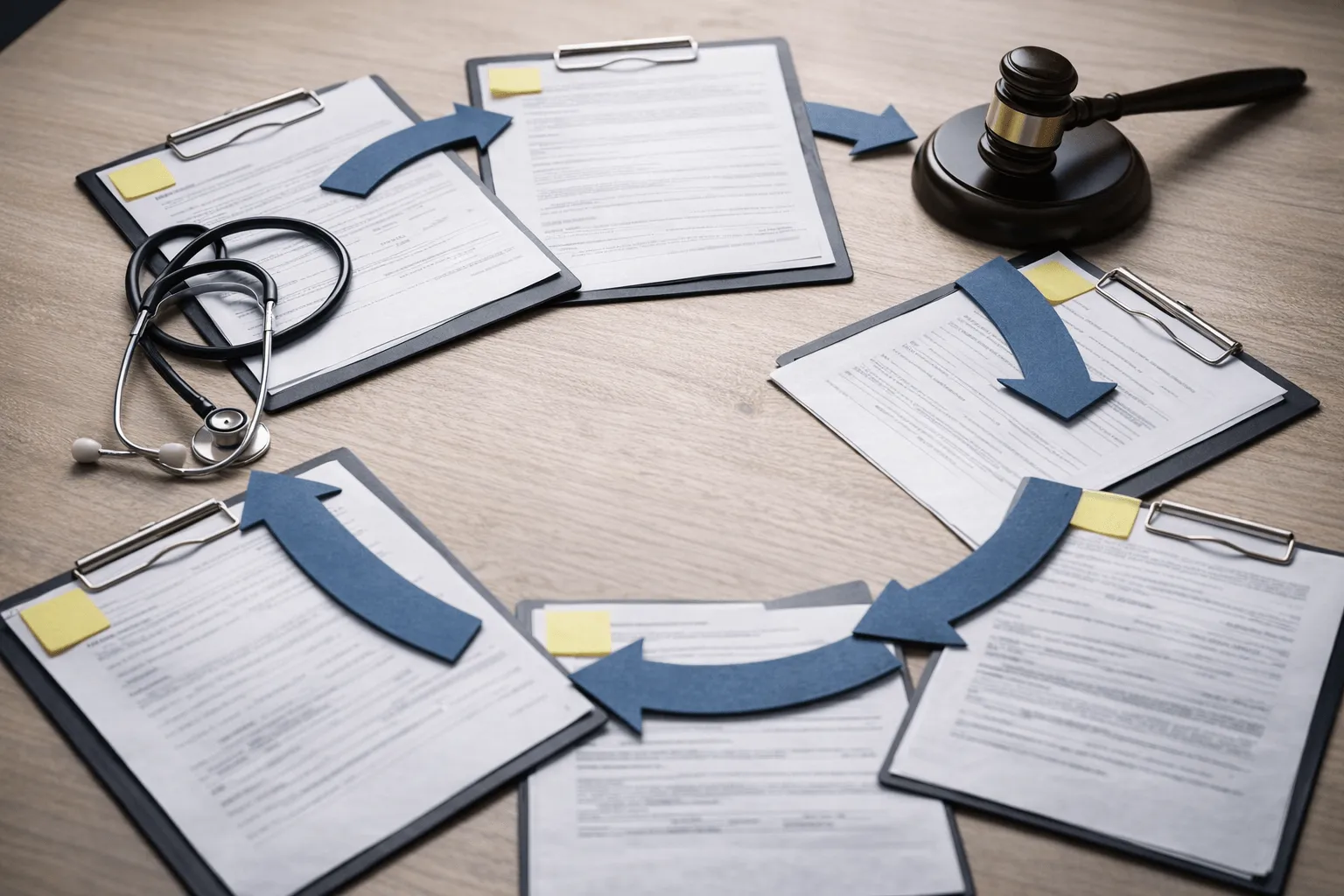
The cross-referencing obligation runs in both directions: every exhibit referenced in the letter body must be physically present in the package, and every exhibit in the package should be accounted for by a reference in the letter. A messy packet makes the case feel messy, even when the injury is serious.
What Makes a Draft Review-Ready for the Attorney?
Make the draft review-ready before handoff so the attorney can read the letter, verify every factual claim against a labeled exhibit without leaving their desk, and sign without needing to locate missing documents or correct calculations. The paralegal owns draft quality before the handoff.
In many personal injury workflows, drafting usually begins after the client has reached maximum medical improvement or completed treatment, though case-specific exceptions can arise, including some policy-limits contexts or strategically urgent cases. This timing matches the broader workflow logic of placing demand work after evidence gathering and MMI.
Check these handoff gates before sending the draft to the attorney:
- Every medical provider appears as a separate line item in the damages table with a corresponding exhibit
- Lost wages are supported by both an employer verification letter and pay stubs or tax returns
- Every dollar figure in the letter body traces to a specific labeled exhibit
- The exhibit index is complete, with all exhibits numbered, labeled, and cross-referenced
- No contradictions exist between the narrative and attached medical records
- Pre-existing conditions to the same body part are addressed proactively
- The demand figure is left blank for attorney insertion, or reflects an attorney-directed amount
A draft that requires the attorney to locate missing records, correct math, or build the exhibit index has not met the handoff standard. Those tasks belong in the paralegal's lane. The damages itemization in particular should list every special damage, not a partial set, including lost wages and how they were calculated, so the package is complete before it reaches the attorney.
Where Does Drafting Slow Down?
Records retrieval and chronology assembly create the main bottleneck in demand letter preparation, before the first sentence of a draft is written. The issue is less the demand letter format than the availability, completeness, and organization of the inputs that feed it.
Record turnaround depends on request type, provider process, and the laws or procedures that apply to the file. Because request type affects timing, the drafting calendar should account for the difference between requesting records, receiving them, reviewing them, and converting them into a usable chronology.
Records collection commonly slows case preparation because medical, accident, and wage-loss records must be obtained before the demand package can be fully supported. Obtaining those records tends to take time and should begin well in advance. Every week lost in retrieval delays pushes back the point at which settlement negotiations can begin. Faster, cleaner inputs produce a faster, cleaner draft.
The Demand Letter Comes From the File Behind It
Demand letter preparation starts with the assembled file behind it. Each section maps to a source document: liability to the police report and fault evidence, damages to the medical chronology and billing, and the demand figure to the attorney's valuation of documented inputs. The drafting stage moves at the speed of the records and chronology that feed it.
Tavrn retrieves records and builds defensible chronologies, reducing the distance between a new case and a review-ready draft. When upstream inputs arrive faster and in structured form, the paralegal's assembly work shifts from chasing documents to building the package.