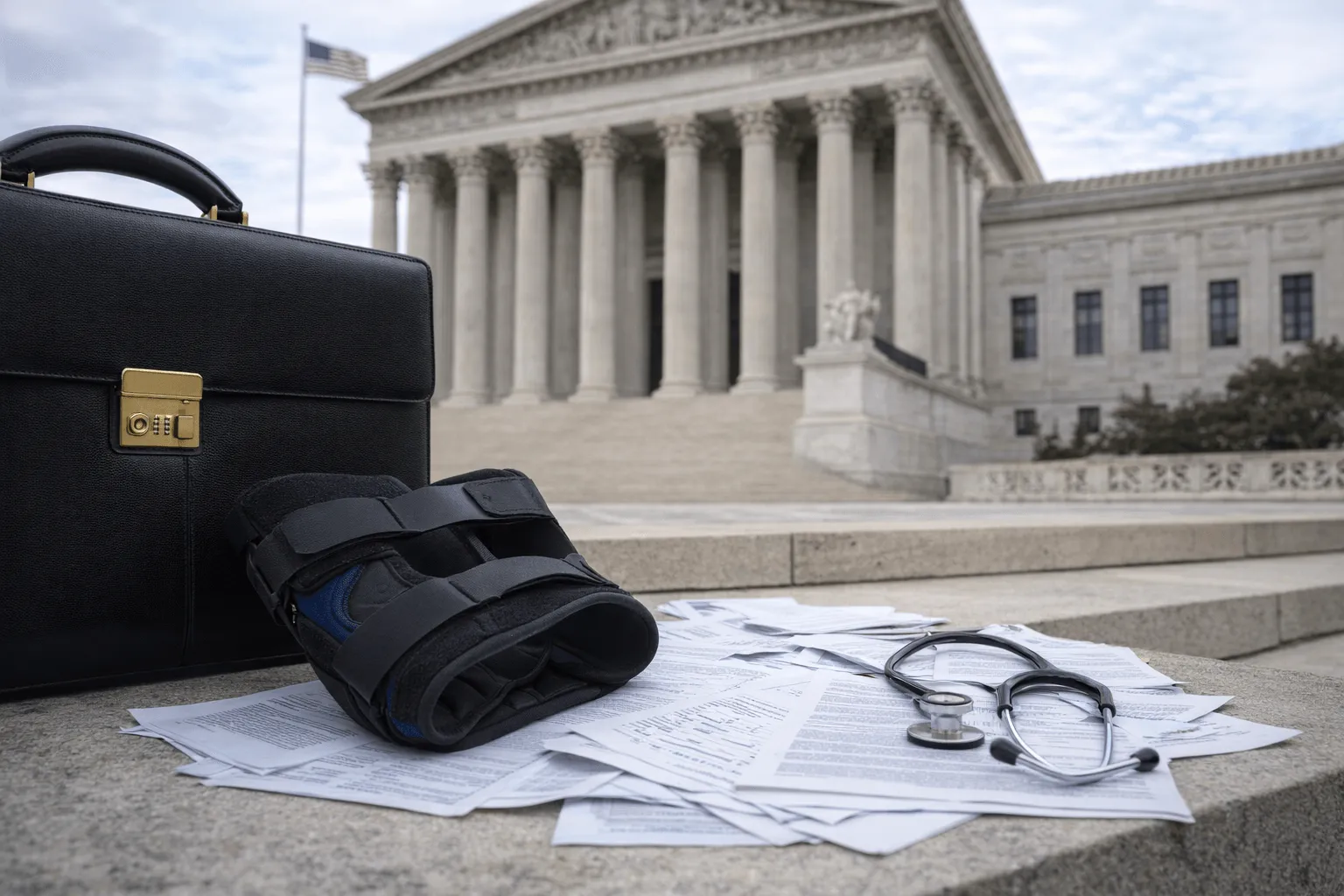
On December 12, 2025, Pfizer added a meningioma warning to the Depo-Provera label under NDA 020246. By then, MDL 3140 had been centralized in the Northern District of Florida for ten months, and the docket would reach 3,769 actions by May 2026.
The Depo-Provera lawsuit does not turn solely on whether prolonged use can cause meningioma. The epidemiological signal and Pfizer's label change support plaintiffs, but causation remains contested. The key questions are what Pfizer knew and when, whether federal preemption ends the case before trial, and whether plaintiffs' general causation experts survive a Rule 702 ruling set for June 24-26, 2026, a gate that ended the acetaminophen autism MDL before trial. See In re Acetaminophen – ASD-ADHD Prods. Liab. Litig., No. 22MD3043 (DLC), 2023 WL 8711617 (S.D.N.Y. Dec. 18, 2023).
This analysis covers the epidemiological foundation, the JPML's centralization rationale, the December 2025 label change, and the Daubert hearing ahead.
Case Background: The Scientific and Regulatory Record Behind MDL 3140
The scientific record anchoring the Depo-Provera lawsuit rests primarily on a 2024 national case-control study published in The BMJ. The study's findings, and their documented limitations, will help determine whether plaintiffs' experts survive the June 2026 Daubert hearing.
Roland et al. (2024) drew from the French National Health Data System, matching 18,061 meningioma surgery cases to 90,305 controls. Injectable medroxyprogesterone acetate produced an odds ratio of 5.55 (95% CI 2.27 to 13.56), with excess risk concentrated in users with prolonged exposure of one year or more.
Two findings sharpen the litigation-specific relevance:
- Negative control: Levonorgestrel intrauterine systems showed no excess risk of intracranial meningioma in the same dataset, supporting the specificity argument that the effect is linked to high-dose injectable MPA.
- Small absolute count: The exposed case count was nine out of 18,061 total cases, a limitation noted in subsequent commentary and central to the defense's methodological attack.
A second study strengthens the plaintiff's position. Reynolds et al. (2025), published in Epidemiologia, used Alabama Medicaid data and applied both non-active and active comparator designs (the active comparator was levonorgestrel or norethindrone). Among 469 cerebral meningioma cases and 4,690 matched controls, prolonged injection MPA exposure produced an adjusted odds ratio of 3.80 (95% CI 1.88-7.68) against the non-active comparator and 3.67 (95% CI 1.09-12.29) against the active comparator. The active comparator design directly addressed the Roland study's most cited methodological limitation.
Legal Proceedings: Preemption, Centralization, and the Rule 702 Sequence
The JPML's transfer order identified four common factual questions: whether Depo-Provera causes meningioma, whether defendants knew of the risk, whether they failed to adequately warn, and whether they failed to promote safer alternatives. The fourth question names Depo-SubQ Provera 104 explicitly. Plaintiffs contend the product is safer on two grounds: a 30.7% lower dose (104 mg versus 150 mg) and subcutaneous rather than intramuscular administration. The Depo-SubQ Provera 104 label reports a mean Cmax of 1.56 ng/mL after a single dose, compared with peak plasma concentrations of 1 to 7 ng/mL on the Depo-Provera CI label after a 150 mg IM dose. No head-to-head meningioma risk comparison between the two formulations exists in published literature.
Pfizer's preemption defense rests on the FDA's 2024 Complete Response Letter, which stated that "the findings of the available observational studies alone do not support the addition of a warning on Meningioma risk to medroxyprogesterone acetate (MPA)-containing products." Pfizer argues this constitutes "clear evidence" under Wyeth v. Levine, 555 U.S. 555 (2009), that the FDA would have rejected the proposed warning. Plaintiffs' September 19, 2025, response cited Merck Sharp & Dohme Corp. v. Albrecht, 587 U.S. 299 (2019), arguing Pfizer had not "fully informed" the agency because the initial submission grouped Depo-Provera with lower-dose formulations the science could not justify warning on. The 2025 resubmission dropped those products and succeeded, supporting the inference that a properly framed warning could have been proposed earlier.
The MDL was centralized on February 7, 2025, in the Northern District of Florida before Judge M. Casey Rodgers. Defendants include Pfizer, Pharmacia & Upjohn Company LLC, Pharmacia LLC, Greenstone LLC, Viatris Inc., and Prasco, LLC, with generic defendants facing categorically stronger preemption arguments under PLIVA, Inc. v. Mensing, 564 U.S. 604 (2011); plaintiffs' counsel represented in May 2025 that they were close to dismissing claims against three of them. Pretrial Order No. 30 (January 27, 2026) makes both rulings binding across all pending and future MDL cases: if preemption is granted, Rule 702 proceedings are moot; if denied in whole or in part, the court proceeds to the Daubert hearing scheduled for June 24 to 26, 2026.
Verdict/Outcome: No Merits Resolution, No Bellwether Result, and No Settlement Yet
The current posture is defined more by what has not yet happened than by any dispositive merits outcome. The next ruling could either end the federal litigation on preemption grounds or force a full general-causation test under Rule 702.
The docket has grown sharply:
- June 2025: 348 actions pending
- August 2025: 550 actions pending
- March 2026: 3,099 actions pending
- May 2026: 3,769 actions pending
That trajectory likely reflects plaintiff firm case development following the December 2025 FDA label change.
Current Outcome Status
No verdict has been issued, no bellwether result has been announced, and no global settlement has been announced as of May 2026.
Industry Implications: The December 2025 Label Change and the Tylenol Comparison
The December 2025 label change reshaped the litigation's strategic center of gravity. It gave plaintiffs a regulatory warning to point to while preserving defense arguments that the warning language still falls short of proving causation.
The Section 5.4 language instructs prescribers to "monitor patients on Depo-Provera CI for signs and symptoms of meningioma" and to "discontinue Depo-Provera CI if a meningioma is diagnosed." The FDA added an affirmative monitoring instruction that Pfizer had not included in its own proposed language, a detail plaintiffs argue demonstrates the agency independently assessed a more specific prescriber duty.
The regulatory timeline matters for the preemption fight. Pfizer submitted its initial label change request in February 2024 and received a Complete Response Letter from the FDA later that year. Pfizer resubmitted a narrowed, injectable-specific proposal on June 12, 2025, dropping the lower-dose oral products and focusing on the two higher-dose injectables. The FDA approved it on December 12, 2025, twenty-one months after the BMJ publication and ten months after MDL transfer.
The label change cuts both directions:
- It provides a regulatory anchor for plaintiffs' "knew or should have known" element during the pre-December 2025 period
- It damages Pfizer's preemption defense by demonstrating that the FDA ultimately concluded a warning was warranted
- It complicates the plaintiffs' safer-alternative theory because the FDA applied the same warning to both the 150 mg intramuscular and 104 mg subcutaneous formulations
- It gives defense the argument that the "reported cases" language falls short of confirmed causation
Judge Rodgers ordered a supplemental briefing on the preemption motion within a week of the label change. No ruling was issued.
The Tylenol MDL offers the defense's closest procedural template. In re Acetaminophen – ASD-ADHD Prods. Liab. Litig., No. 22MD3043 (DLC), 2023 WL 8711617 (S.D.N.Y. Dec. 18, 2023), Judge Cote excluded all plaintiffs' general causation experts on methodological grounds. The distinction for MDL 3140 is regulatory posture: the FDA issued a meningioma warning six months before the Daubert hearing.
Key Takeaways: What Plaintiff and Defense Counsel Need Before June 2026
The June 2026 Daubert hearing will determine the litigation's viability, and the current record points to different pressure points for each side. The strongest strategic positions are the ones tied most closely to the existing epidemiological and regulatory record.
Plaintiff Counsel
General causation must be built independent of regulatory action. The label change supports notice and warning adequacy arguments but does not satisfy Rule 702. Convergence across multiple independent studies with different methodological limitations is the strongest response to any single study's weaknesses.
Case retention demands documented exposure exceeding one year and a confirmed meningioma diagnosis, consistent with exposure thresholds in the epidemiological record.
Defense Counsel
Federal preemption remains the most efficient case-ending posture, and PTO 30 makes any grant binding across all actions. The Rule 702 attack should anchor the small absolute case count and wide confidence interval in the peer-reviewed scientific record, not merely defense expert opinion. State court proceedings in New York and Delaware would not be bound by a federal Daubert ruling.
Future Outlook: The Preemption Decision Comes First, and Daubert May Decide the Rest
The next inflection point is procedural, not factual. If preemption is granted, the federal cases end without a Rule 702 ruling; if preemption is denied in whole or in part, the June 24 to 26, 2026, hearing becomes the central event in the litigation.
The defense Rule 702 attack will focus on four documented vulnerabilities in the Roland study: the nine exposed cases out of 18,061, the wide confidence interval (2.27 to 13.56), the absence of an active comparator, and the limitation that observational case-control studies cannot establish disease causation.
Judge Rodgers' eventual sequence of rulings will shape not only MDL 3140, but also the bargaining range in parallel state proceedings in New York and Delaware. The procedural arc parallels other product liability MDLs, where threshold rulings have determined whether bellwether trials proceed at all.