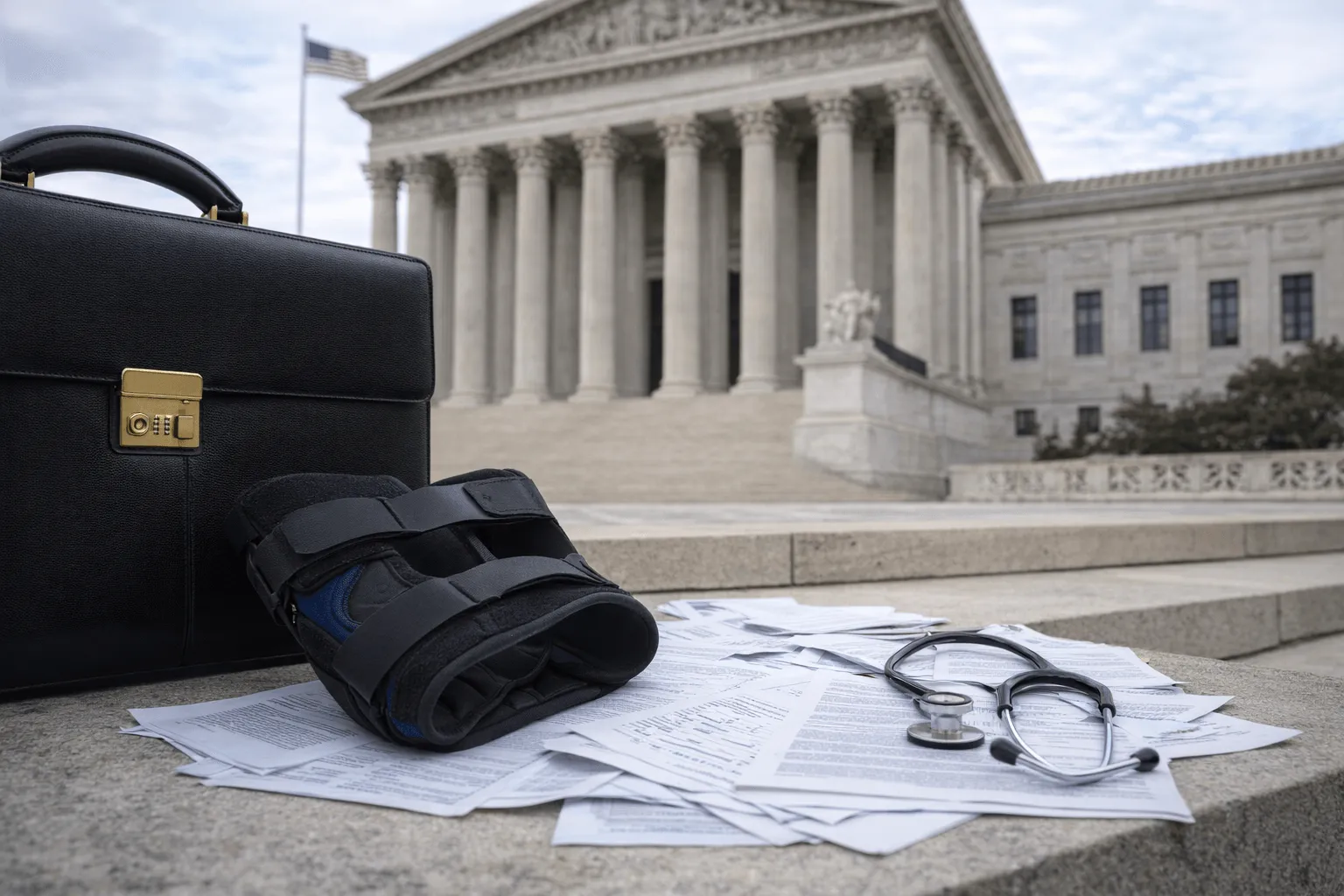
Personal injury firms face a scaling challenge: as case volume grows, document-processing capacity remains limited. Managing partners report turning away viable cases because paralegals struggle to process medical records fast enough to keep pace with intake.
AI tools for personal injury law analyze, summarize, and generate legal content. Unlike case management platforms that store and organize case data, these complementary tools automate document review, generate chronologies, draft demand letters, and screen incoming leads, integrating with (not replacing) existing systems.
This article examines AI tools across four workflow categories: medical record review, demand letter generation, case intake, and legal research.
How AI Software Differs from Case Management Platforms
AI tools and case management platforms serve complementary functions. CLOC's analysis confirms this is an augmentation relationship. Case management systems provide the central repository while AI tools handle specific analysis tasks.
Case management systems (Litify, SmartAdvocate, CASEpeer, Filevine) provide authoritative case storage, deadline management, billing, and workflow automation. AI tools provide:
- Automated medical record analysis with source linking.
- Demand letter and pleading generation.
- Predictive case valuation analytics.
- Medical chronology extraction.
- Automated client intake screening.
Managing partners should recognize that AI tools require existing CMS infrastructure. Legal operations teams coordinate the integration layer between these complementary systems.
Most firms run both layers simultaneously. AI tools connect through APIs, pulling data for analysis and pushing results back. Filevine's API v2 exemplifies this architecture.
AI Software for Medical Record Review and Chronology
Medical record review consumes the largest share of paralegal time in PI practice, and directly limits how many cases a firm can move toward demand. Understanding medical chronology fundamentals helps firms evaluate these tools effectively. Early peer-reviewed research suggests up to 60% reduction in review time, though independent benchmarks across the broader market remain limited.
1. Tavrn: Retrieval, Chronology, and Demand Integration
Tavrn transforms medical records into hyperlinked chronological timelines with navigation between entries and source documents. Medical Retrieval pricing starts at $299.99/month for 20 requests. Integrates with Filevine, Litify, and Clio. SOC 2 Type II, HIPAA compliant, ISO 27001 certified.
Best for: PI and med-mal firms (10-75 professionals) on contingency-fee models requiring predictable costs.
2. Supio: Chronology and Cross-Case Intelligence
Supio generates source-linked medical chronologies while flagging conflicting information and treatment gaps. The 2025 Thomson Reuters partnership provides enterprise credibility. CaseAware AI enables cross-case search with medical timeline intelligence.
Best for: Complex injury and mass tort cases requiring pattern recognition across case portfolios.
3. Legalyze.ai: Focused Review with Direct CMS Integrations
Legalyze.ai provides page-by-page analysis, including handwritten documents. Case Chat AI allows attorneys to ask questions and receive sourced answers. Direct two-way integrations with CASEpeer, MyCase, and Smokeball.
Best for: Firms with existing CMS investments in CASEpeer, MyCase, or Smokeball.
4. Eve Legal: Full Lifecycle from Intake Through Discovery
Eve Legal spans intake through discovery. Medical record summarization generates comprehensive overviews with chronologies and damage assessments. Blueprints capture firm-specific style, and AI Voice Agent provides 24/7 intake. Clio Manage integration enables bidirectional sync.
Best for: Firms seeking a single AI platform spanning pre-litigation through trial preparation.
5. DigitalOwl: Clinical-Grade Analysis with Pain Scoring
DigitalOwl processes medical records through NLP for causation, damages, and liability assessment. Pain score integration enables quantifiable injury impact metrics. DigitalOwl claims 97% precision rates and 72% time reduction. Every insight links to source documents.
Best for: Clinical-grade analysis with pain scoring and injury progression tracking for settlement negotiations.
AI Software for PI Demand Letters and Document Automation
Demand letter preparation synthesizes medical records, treatment history, and damages calculations into the document that initiates settlement negotiations. For contingency-fee firms, the interval between case sign-up and demand submission directly affects cash flow and portfolio velocity.
1. Tavrn: Demands from Chronology Data
Tavrn generates tailored demand letters by extracting facts from case documents and medical chronologies. Custom templates maintain firm-specific formatting with real-time editing control.
Best for: Firms already using Tavrn for retrieval and chronology seeking unified workflows.
2. EvenUp: Express and Expert-Reviewed Options
EvenUp offers two tiers using its proprietary Piai™ AI engine. Express Demands™ provides rapid AI-powered generation. Expert-Reviewed Demands™ adds legal and medical expert refinement. Integrates with SmartAdvocate, Litify, and CASEpeer with automated data exchange.
Best for: Firms wanting tiered options between speed and expert review.
3. ProPlaintiff.ai: Demand Letters with Case Law Access
ProPlaintiff.ai provides demand letter automation through a seven-step workflow. Access to approximately 6.5 million judicial opinions supports precedent research. Credit-based pricing across four tiers. HIPAA compliant and SOC2 audited.
Best for: Firms needing demand letter automation with integrated legal research and credit-based pricing flexibility.
AI Software for Personal Injury Case Intake
Case screening determines how effectively a firm converts leads into viable cases without consuming attorney time on low-value inquiries. AI intake tools evaluate legal and financial viability before attorney investment, enabling firms to scale intake volume without proportionally scaling staff.
1. Tavrn: Intake Integrated with Downstream Workflows
Tavrn's Client Intake screens incoming cases for legal and financial viability, integrating directly with Medical Chronologies and Demand Letters workflows. Results flow into Filevine, Litify, or Clio without manual transfers.
Best for: Firms seeking AI automation across their entire case lifecycle while maintaining existing case management systems.
2. Caseflood.ai: AI Receptionist with Lead Qualification
Caseflood.ai provides 24/7 automated call answering through Luna AI, capable of handling 1,000+ simultaneous calls. TrueVoice™ technology creates human-like interactions across 35+ languages. Integrates with Clio, Filevine, LawPay, and LeadDocket.
Best for: High inbound lead volume requiring automated qualification at scale.
3. Smith.ai: Virtual Receptionist with After-Hours Coverage
Smith.ai combines AI-first architecture with human escalation, featuring conflict of interest checking during intake. 24/7 coverage with post-call automation triggers CRM logging, and follow-ups. Integrates with MyCase, Lawcus, and Lawmatics.
Best for: After-hours intake coverage with human backup for complex inquiries.
AI Software for Legal Research and Analysis
Legal research in PI practice involves locating relevant precedent, analyzing case law patterns, and identifying potential claims or defenses. AI research tools compress hours of manual database work into structured, citation-backed outputs for attorney review. These tools operate as complements to PI-specific workflow platforms, handling upstream research rather than case preparation tasks.
1. CoCounsel: Westlaw Ecosystem Integration
CoCounsel, built on GPT-4 customized for legal, integrates directly into Westlaw following Thomson Reuters' Casetext acquisition. CoCounsel 2.0 provides full AI capabilities within the Westlaw interface.
Best for: Firms with existing Westlaw subscriptions seeking deeper AI integration.
2. Paxton AI: Legal Research with 94% Citation Accuracy
Paxton AI delivers coverage across all 50 states and federal jurisdictions. The patent-pending Paxton AI Citator achieves 94% accuracy on the Stanford Casehold benchmark. SOC 2 Type II, HIPAA, and ISO 27001 certified.
Best for: Multi-jurisdictional research with verified citation accuracy and compliance certifications.
3. Darrow: Case Lead Identification and Trend Intelligence
Darrow employs proprietary AI with anomaly detection to identify case opportunities from court filings, regulatory data, news, and public records through a four-layer intelligence system.
Best for: Firms seeking AI-driven case origination and proactive case development from public data sources.
Warning: General-purpose LLMs like ChatGPT lack domain-specific training, frequently generating fabricated citations. ABA Formal Opinion 512 mandates attorneys independently verify all AI outputs and maintain competence regarding AI limitations.
Full-Lifecycle AI Software for PI Case Preparation
Most AI tools address a single workflow stage. A growing category of platforms connects multiple stages — intake through demand generation — so that data entered at one point propagates through every downstream document without manual transfers or re-entry.
The operational advantage is compounding:
- When intake screening identifies a viable case, record retrieval initiates automatically.
- Retrieved records feed directly into chronology generation.
- Chronology data populates demand letter drafts with structured facts already verified upstream.
Tavrn operates in this category, connecting client intake, medical retrieval, chronology generation, and demand letters in one workflow while maintaining integrations with Filevine, Litify, and Clio, so firms preserve existing CMS investments and data governance structures rather than replacing them.
Evaluation Criteria for Personal Injury AI Software
Managing partners can use these criteria to pressure-test vendor claims during demos. Legal operations professionals should treat this as an internal vetting checklist to present to partners before procurement decisions.
- HIPAA Compliance: Any vendor accessing PHI must execute a Business Associate Agreement prohibiting AI training on client data and specifying 60-day breach notification per HHS guidance. Verify encryption standards explicitly: AES-256 for data at rest, TLS 1.2 minimum for data in transit. Confirm that the BAA language explicitly prohibits using client data for model training or improvement.
- PI-Specific Capabilities: Evaluate medical record analysis, chronology generation, damages calculation, and demand letter formatting, not just general legal features. Assess whether tools handle the specific document types common in PI cases: police reports, emergency room records, imaging reports, physical therapy notes, and pharmacy records.
- Integration Verification: Confirm documented integrations with current case management systems before procurement. Request a live demo of the actual integration workflow, not just documentation. Verify whether integrations are bidirectional and what data syncs automatically versus manually.
- Workflow Coverage: Evaluate whether tools address single tasks or multiple stages of case preparation. Determine whether outputs from one stage automatically feed into the next, reducing manual transfers and re-entry errors.
- Pricing Alignment: Four pricing models exist across the market: per-document, per-case, per-seat, and flat-rate subscription. Per-document and per-case models often align better with contingency-fee economics, where revenue is unpredictable until settlement. Most PI firms currently spend under $5,000 annually on AI tools, though that figure is rising as firms move from experimentation to operational deployment. Where vendors publish pricing, this article includes it; where they do not, request a detailed quote tied to case volume before committing.
- Implementation Reality: Firms commonly report needing several weeks per user to reach proficiency, with time investment varying based on workflow complexity and existing CMS infrastructure. Request a detailed implementation timeline and total cost estimate from vendors before procurement — costs scale significantly with firm size, integration depth, and customization requirements.
Choosing the Right AI Stack
The strongest AI implementations start with a firm's most acute bottleneck, whether that is record review volume, demand turnaround time, intake conversion, or research speed, and build outward. The evaluation criteria above provide a procurement framework; the workflow categories reflect how firms structure their technology stack around operational stages, starting with record review methodology as the highest-impact entry point.
Tavrn connects intake screening, medical record retrieval, chronology generation, and demand letter drafting in a single integrated workflow. Medical Retrieval starts at $299.99/month with SOC 2 Type II, HIPAA, and ISO 27001 certifications.