Texas law treats demand letters in two ways. Statutory pre-suit notices operate as conditions precedent or jurisdictional prerequisites, while ordinary third-party liability demands carry no mandatory form and do not condition the right to file suit.
These requirements appear in the Deceptive Trade Practices Act, the Texas Tort Claims Act, the Medical Liability Act, and the Insurance Code.
This article covers the principal Texas notice frameworks, their deadlines, and the consequences of defective or omitted notice, as part of the broader reference on state-by-state notice rules.
What Counts as a Demand Letter Under Texas Law?
Texas distinguishes voluntary demand instruments from mandatory statutory notices. The distinction controls whether omission affects the claimant's own lawsuit.
A claimant may file suit without sending a Stowers or other voluntary demand letter. Its omission does not create abatement or dismissal in the claimant's lawsuit. A Stowers demand affects the insurer's excess-judgment liability; the claimant may proceed without it.
Mandatory statutory notices are different. The principal examples include:
- Texas Deceptive Trade Practices Act (DTPA) § 17.505: Written notice at least 60 days before filing suit
- TTCA § 101.101: Notice to the governmental unit within six months of the incident
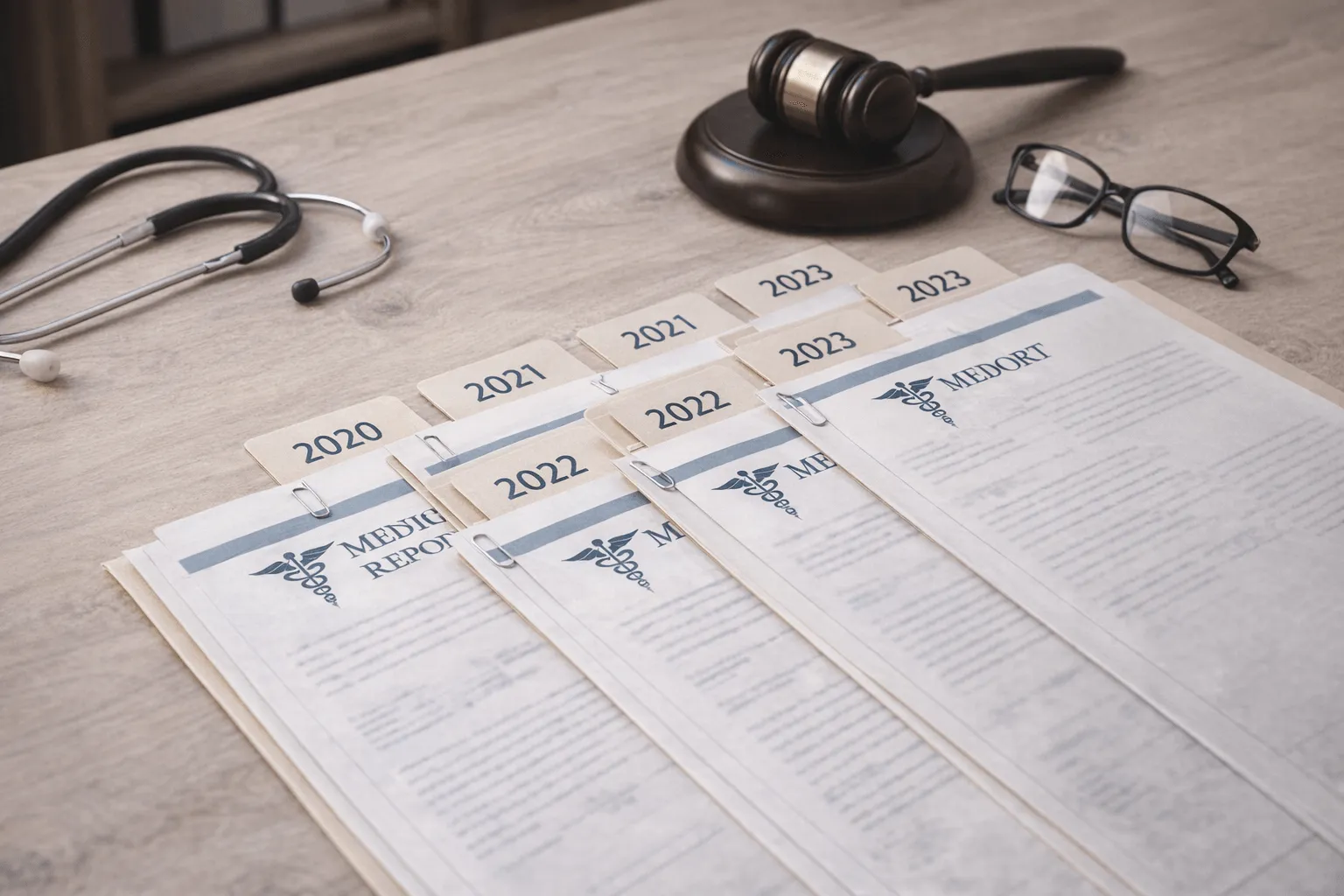
- Texas Medical Liability Act, Health Care Liability Claims (HCLC) § 74.051: Certified-mail notice at least 60 days before filing, with a medical authorization form
A related Chapter 74 requirement, HCLC § 74.351, requires expert-report service within 120 days after each defendant's answer.
DTPA 60-Day Pre-Suit Notice Mechanics Under § 17.505
The Deceptive Trade Practices Act requires written notice before a consumer files suit for damages under § 17.50(b)(1). The notice is a condition precedent, and a defect triggers abatement rather than immediate dismissal.
Under § 17.505(a), written notice must be sent at least 60 days before filing suit. The notice must advise the defendant in reasonable detail of:
- The consumer's specific complaint
- The amount of economic damages
- The amount of damages for mental anguish
- Expenses, including attorneys' fees, reasonably incurred in asserting the claim to date
A defendant who does not receive proper notice may file a plea in abatement no later than the 30th day after filing an original answer. The abatement continues until the 60th day after written notice is served in compliance with § 17.505(a).
Texas Tort Claims Act Notice Under § 101.101
The Texas Tort Claims Act notice requirement is a jurisdictional prerequisite to suit against a governmental unit. A defect cannot be cured through abatement once the notice window closes.
Under § 101.101(a), a governmental unit is entitled to notice not later than six months after the incident giving rise to the claim. The notice must reasonably describe the damage or injury claimed, the time and place of the incident, and the incident itself.
The statute applies to governmental units as defined by § 101.001(3), including the state, its agencies, and political subdivisions such as cities and counties. The Act does not apply to school districts or junior college districts except as to motor vehicles.
Municipalities may shorten the deadline. § 101.101(b) ratifies city charter and ordinance notice provisions, though no period may be shorter than 30 days.
Actual notice can substitute for written notice. § 101.101(c) waives the requirement where the governmental unit has actual notice of death, injury, or property damage. The three-part test from Cathey v. Booth, 900 S.W.2d 339 (Tex. 1995), requires knowledge of:
- A death or injury
- The governmental unit's alleged fault producing or contributing to the death or injury
- The identity of the parties involved
Investigating an accident alone does not provide actual notice under Cathey. As of 2026, members of the Texas Supreme Court have called for the Cathey actual-notice standard to be reconsidered; the three-part test remains controlling law but should be monitored for developments.
Health Care Liability Claims Notice and Expert Report Requirements
Chapter 74 separates pre-suit notice under § 74.051 from the post-answer expert-report deadline under § 74.351. The provisions use different timelines and consequences.
§ 74.051 requires written notice by certified mail, return receipt requested, to each physician or health care provider at least 60 days before filing suit. The notice must be accompanied by the authorization form required under § 74.052 for the release of protected health information.
Notice tolls limitations for 75 days. Carreras v. Marroquin, 339 S.W.3d 68 (Tex. 2011), holds that tolling applies only when the plaintiff provides both the notice and the authorization form, though the Texas Supreme Court has since held in Hampton v. Thome that an imperfect authorization form still tolls for 75 days.
Under § 74.351(a), the claimant must serve one or more expert reports with curriculum vitae for each defendant no later than 120 days after that defendant's original answer is filed. The report must provide a fair summary of the expert's opinions on the applicable standards of care, breach, and causation.
If no report is served, the court must, on motion of the affected provider, award reasonable attorney's fees and costs of court and dismiss the claim with prejudice. The records underlying the claim may support the report, but the 120-day period runs from each answer date.
UM/UIM Demand Mechanics and the Bad-Faith Framework
Uninsured and underinsured motorist demands follow a distinct duty-to-pay framework. The insurer's contractual duty to pay arises only after the insured establishes the tortfeasor's liability and underinsured status.
Brainard v. Trinity Universal Insurance Co., 216 S.W.3d 809 (Tex. 2006) holds that the UIM insurer has no contractual duty to pay benefits until the insured obtains a judgment establishing the liability and underinsured status of the other motorist.
USAA Texas Lloyds Co. v. Menchaca, 545 S.W.3d 479 (Tex. 2018) established five interrelated rules governing the relationship between contractual and extra-contractual claims. Two are most frequently litigated in UIM bad-faith disputes: the General Rule, which bars recovery of policy benefits as statutory-violation damages where the policy provides no right to those benefits, and the Independent-Injury Rule, which permits statutory recovery for harm that is independent of and separate from the loss of policy benefits.
The Insurance Code supplies the bad-faith framework:
- § 541.060: Prohibits unfair settlement practices, including failing to attempt a prompt, fair settlement once liability is reasonably clear
- § 541.154: Requires pre-suit notice no later than the 61st day before filing. The notice must state the complaint and the amount of actual damages and expenses
- § 542.060(a): Imposes an 18% annual penalty plus attorney's fees for non-Chapter 542A actions under the Prompt Payment Act in Chapter 542
Texas Statutes of Limitations and Pre-Suit Notice by Claim Type
The limitation period and pre-suit obligation vary by claim type. Statutory deadlines often depend on deadline tracking across incident, notice, filing, and answer dates.
Common Errors That Defeat a Texas Demand or Notice
Texas notice statutes fall into distinct procedural categories. Jurisdictional prerequisites cannot be cured once the window passes; conditions precedent subject to abatement can be cured if limitations has not run.
Recurring errors include:
- Wrong entity or missed six-month window for TTCA notice. Under UT Southwestern v. Arancibia, this notice requirement is jurisdictional and cannot be cured through abatement once six months pass.
- Filing a DTPA suit without the 60-day window. Mandatory abatement continues until the 60th day after proper notice.
- Omitting the medical authorization with § 74.051 notice. Notice without the authorization produces no tolling, which can time-bar the claim if limitations expires during the assumed 75-day window.
- Missing the § 74.351 expert report deadline. An absent report mandates dismissal with prejudice and attorney's fees, while a timely but deficient report may receive a one-time 30-day cure under Scoresby v. Santillan.
A 2024 Texas appellate decision adds a service trap: e-filing the expert report and CV with the clerk alone does not satisfy § 74.351. Copies must be served on the affected providers within the 120-day deadline.
Claim Type Determines Every Pre-Suit Obligation in Texas
The pre-suit obligation in Texas turns on claim type. Ordinary negligence claims carry no statutory demand form; DTPA, TTCA, and health care liability claims impose distinct notice, content, and timing requirements. TTCA notice errors at six months are incurable, while DTPA and § 74.051 defects can be cured through abatement if limitations have not run.
Compliance depends on accurate identification of claim type, incident dates, defendant identity, and supporting medical records. A PI demand letter that accurately reflects the applicable statutory framework requires precise claim classification before the first sentence is drafted.
To learn more, book a demo.