Last Updated: August 14, 2026
A medical chronology paralegal converts hundreds, sometimes thousands, of pages of provider records into a single dated timeline of the claimant's treatment. At plaintiff personal injury and workers' compensation firms, attorneys rely on that timeline at deposition, at mediation, and in the demand package.
The work begins before the first entry is drafted. A complete medical records workflow determines whether the finished chronology can be trusted, because a timeline built on a partial record set misstates the treatment history.
This guide covers record collection, clinical event extraction, treatment-gap analysis, quality review, and the chronology formats used at different litigation stages.
Medical Chronology Requirements, Fields, and Scope
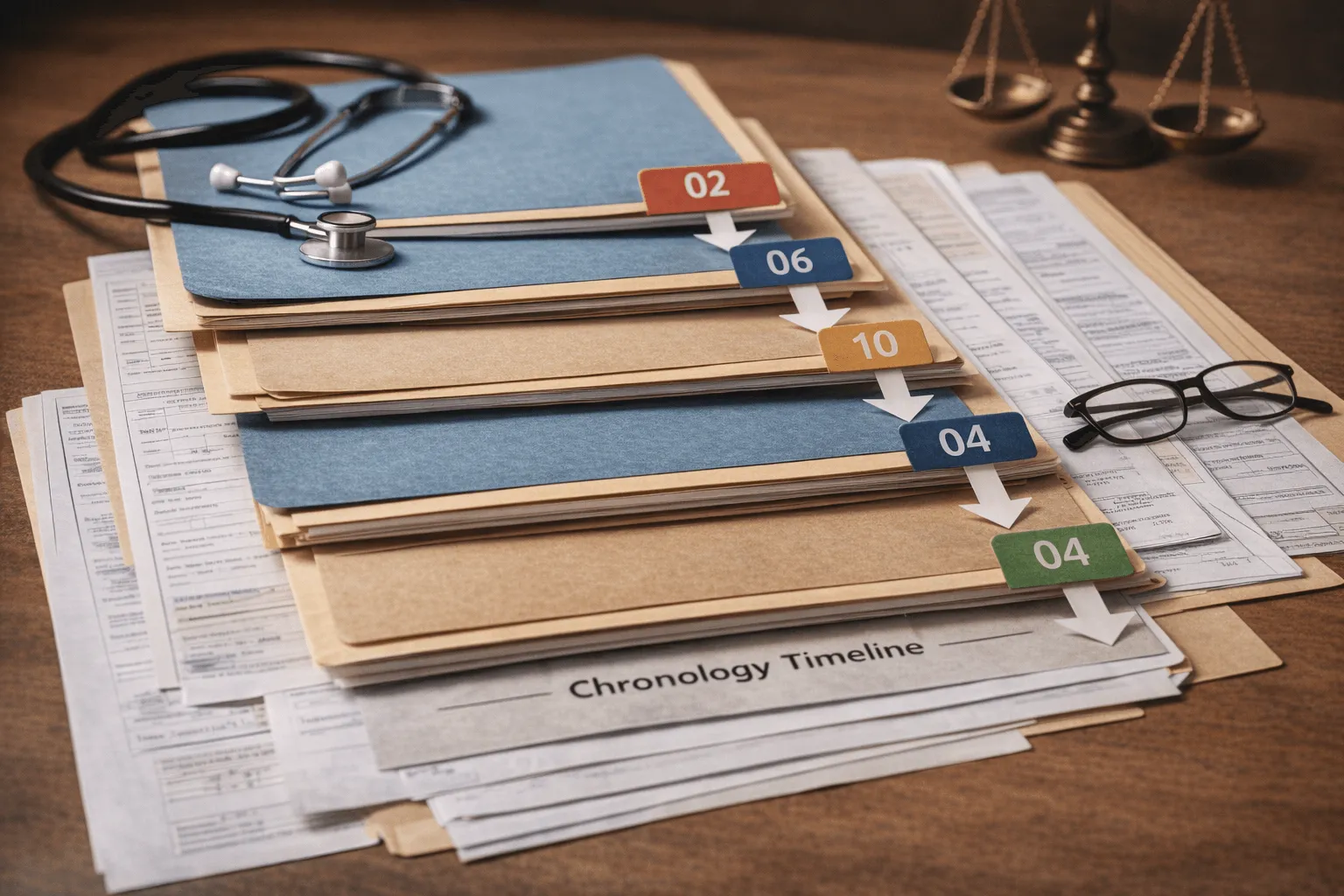
An effective medical chronology organizes every clinically and legally relevant event in the claimant's treatment history by date, in a neutral voice, with each entry traceable to a specific page in the underlying record.
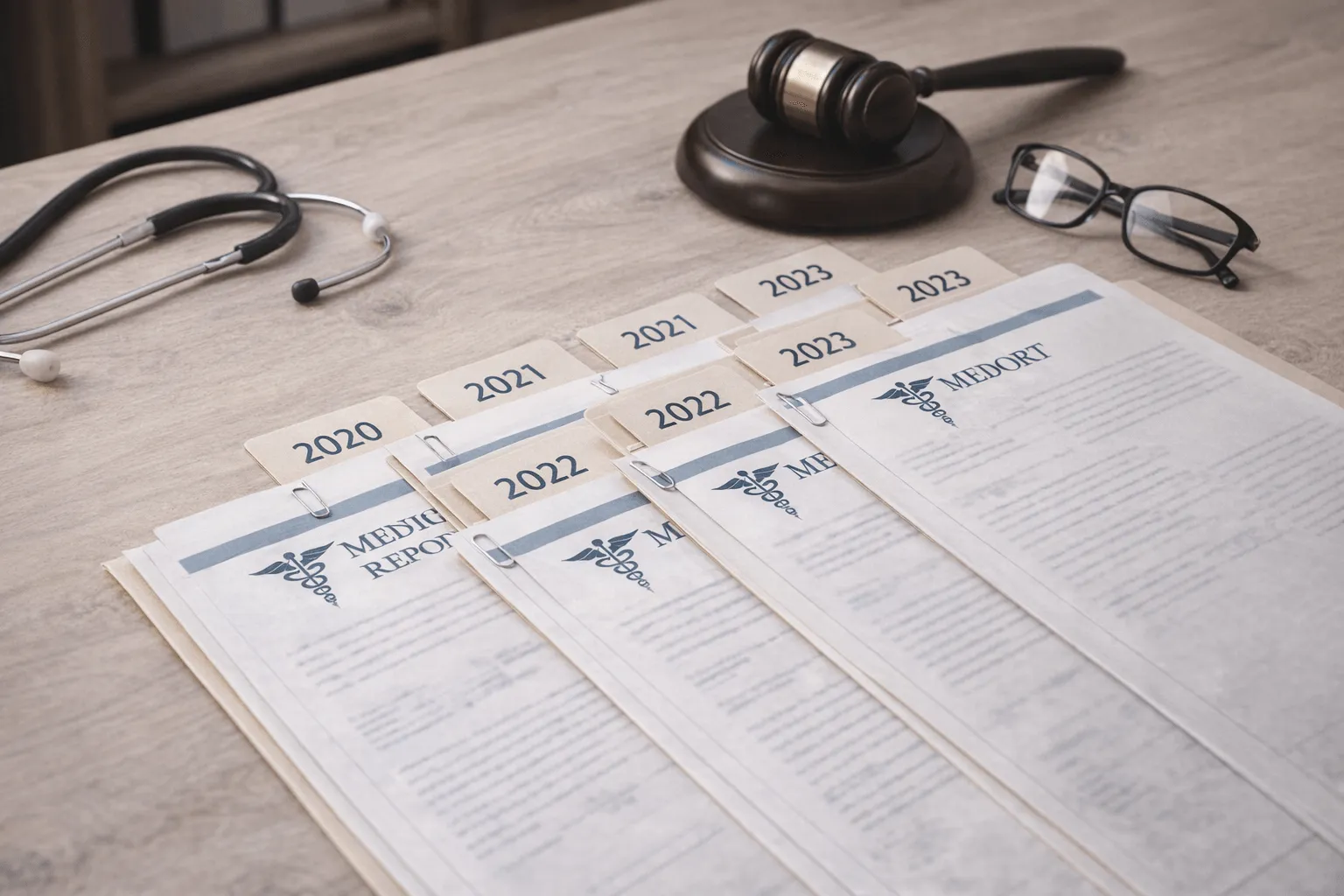
If records arrive in reverse chronological order, re-sort the file using the date each event occurred. Signature and scan dates remain secondary.
The paralegal handles neutral organization and source verification. A legal nurse consultant or other medical expert may provide consultation when clinical interpretation is needed.
The minimum working structure is a four-column table: date of service, provider and facility, description of the encounter, and a page or Bates citation. Above the entries, a header block identifies the claimant by full name and date of birth, the date of the incident, and the claimed injuries, so any reviewer can orient without opening the record set. Litigation-grade chronologies expand that structure with additional chronology report fields:
- Encounter type: progress note, radiology report, operative report, discharge summary
- Chief complaint and reported symptoms, which anchor the subjective injury narrative to specific dates
- Diagnoses, findings, and clinical impressions, including imaging results
- Treatment, procedures, medications, and orders
- Work restrictions and functional limitations, which support lost-wage and earning-capacity damages
- A relevance tag (liability, causation, damages, mitigation) plus reviewer notes flagging gaps and inconsistencies
For permanency and future damages, the professional guide published by the Mississippi Bar and the Mississippi State Medical Association directs that reports address the physician's opinion on permanent residual, prognosis and maximum medical recovery, percentage of permanent impairment under the AMA Guides, and cost of treatment to date alongside estimated future cost. Entries capturing those opinions quantify the long-tail damages component of a demand.
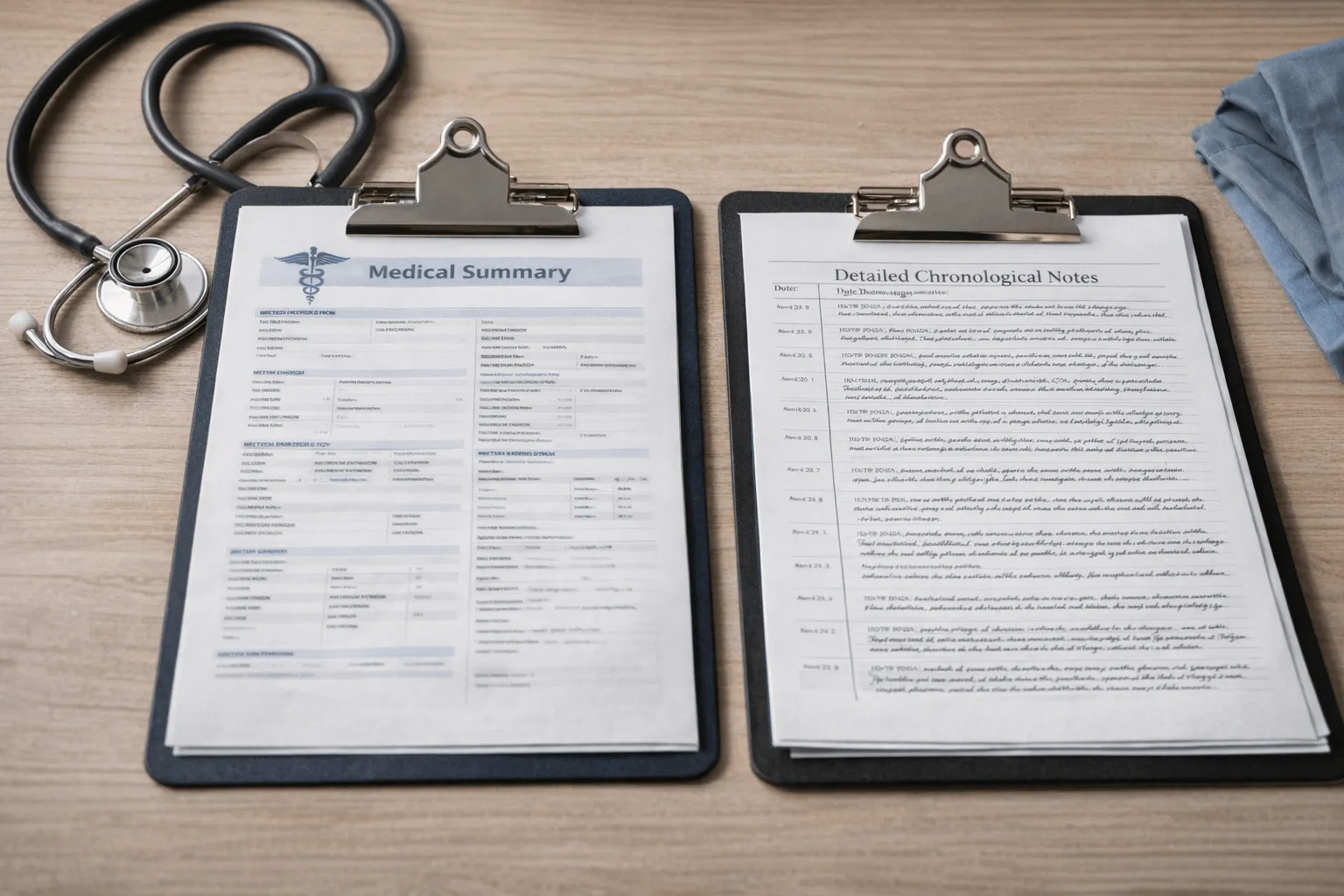
A chronology covers every relevant entry in strict date order; a medical summary is selective, thematic, and built to persuade an adjuster. The chronology anchors deposition and trial preparation, while the summary carries the injury arc in demands and at mediation.
The Six Steps of Chronology Production
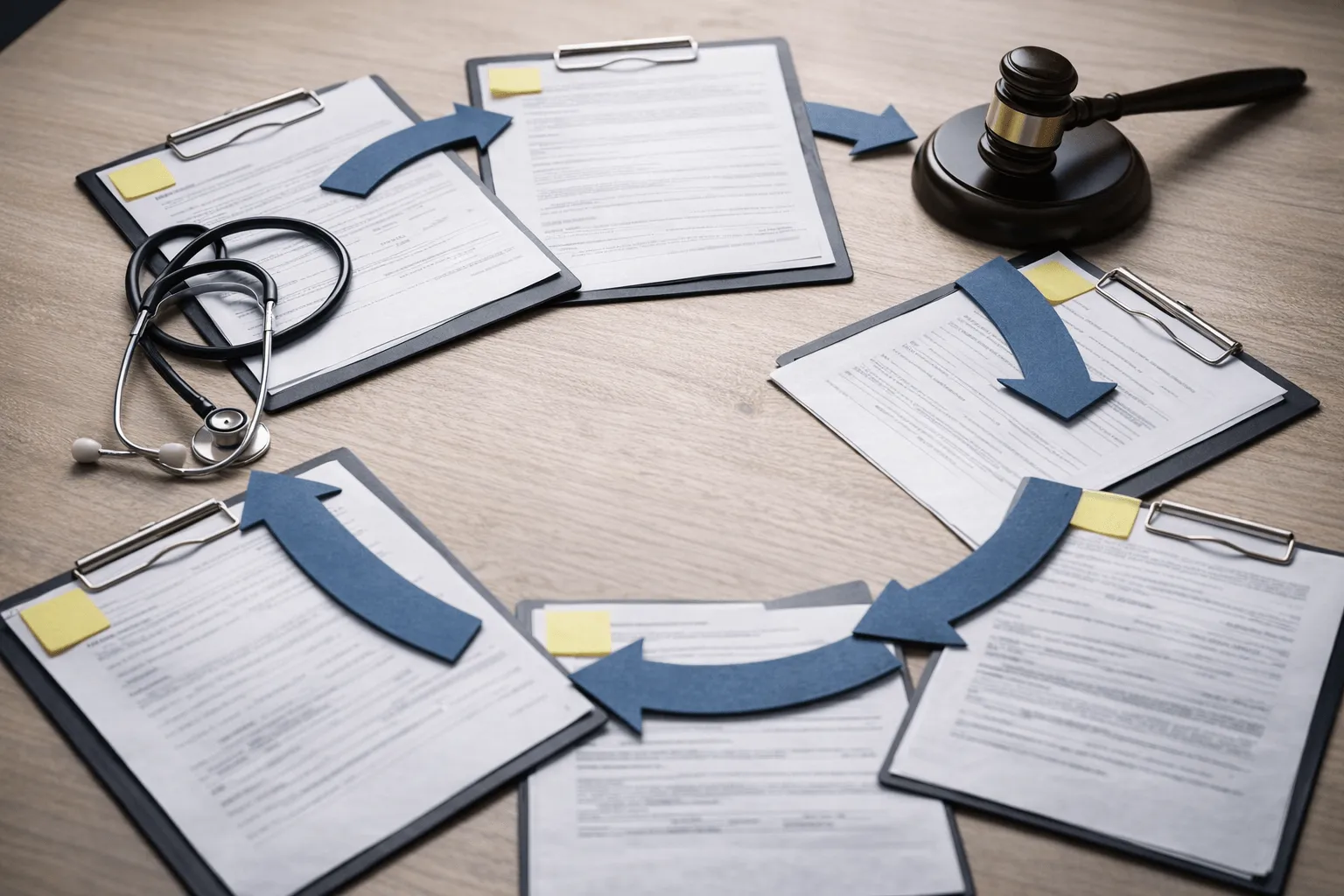
At a high-volume plaintiff firm, the medical chronology paralegal builds the file as records arrive rather than after collection closes, and each new batch triggers an update. The steps below run in order, because extraction and gap analysis both depend on a complete, Bates-numbered set.
Step 1: Collect and Inventory Every Record
Build a master inventory of every provider before extraction begins: emergency and urgent care, ambulance, primary care, each treating specialist, imaging facilities, physical therapy, pharmacy where pain management is significant, employer work-status forms, and billing records. Request records by facility and date range.
Under 45 CFR 164.524, a covered entity must act within 30 calendar days on an individual's HIPAA right-of-access request, including one made by a qualifying personal representative, with one 30-day extension permitted on timely written notice. Requests made under an authorization, subpoena, litigation process, or state law can follow different rules. California, Texas, and Washington include shorter periods for certain requester, provider, or record categories, so confirm which deadline applies before calendaring follow-ups.
Calendar a follow-up date for every outstanding request rather than treating the statutory deadline as the delivery date, and escalate to a subpoena or a rush designation where a filing date depends on the records.
Step 2: OCR, Bates-Number, Sort, and Deduplicate
OCR-process every page into a searchable, Bates-numbered set before extraction. A standard Bates convention identifies the producing party in the control number and follows it with a zero-padded sequential number, for example "SMITH-000001 through SMITH-000087."
Then sort the entire file forward by event date. Remove duplicate pages before assembly so treatment volume is not inflated. Common practice is to retain duplicates where the same records appear in multiple providers' files, since an emergency department note sitting in both the hospital's file and the primary care physician's file shows what each provider had in hand.
Step 3: Extract the Clinical Events That Drive the Case
Extract the standard fields for every encounter: dates, providers, diagnoses, treatments, and test results. Workers' compensation matters require more: the exact language the physician uses to connect the injury to work conditions, each work restriction with its issue date and later modifications, changes in diagnostic codes over time, documented TTD or TPD periods, and any opinion on maximum medical improvement, which California practice calls permanent-and-stationary status.
In personal injury cases, extract pre-injury baseline records with the same rigor as post-incident treatment; the baseline answers alternative-causation arguments before the defense raises them. Nursing notes warrant a full read, since they often record contemporaneous observations that physician notes leave out.
Step 4: Identify and Document Treatment Gaps
Flag every gap in treatment with its start and end dates and a documented explanation. An insurance lapse, a referral delay, or a relocation may account for the interval.
Cross-reference billing records and appointment schedules to distinguish a missed visit from missing documentation; the two look identical in a raw timeline but carry different litigation weight. Unexplained gaps hand defense counsel a causation argument. Log unresolved gaps and flag them for attorney review before the chronology leaves the paralegal's desk.
Step 5: Draft Neutrally and Flag Conflicts
State what the record documents. A chronology that reads as advocacy invites challenge and can undermine expert credibility, one of the most common drafting errors in medical timelines. Keep reviewer opinions, annotations, and strategy flags in a separate column.
Place each event at its actual date of occurrence, because EHR timestamps may reflect data entry rather than the event itself.
Use one date format throughout. When two records conflict, note both entries explicitly; a buried contradiction discovered by the defense looks like concealment.
Step 6: Run a Structured Quality Review
Before delivery, work through a structured review checklist: trace a sample of entries back to their source pages, confirm every entry carries a page or Bates reference, verify the timeline makes clinical sense (surgery before post-op notes, referral before the specialist visit), and route the finished chronology to a second reviewer.
Verifying AI-assisted chronology drafts against the original medical records is a required part of that review. The Alabama State Bar's Formal Opinion FO-2026-01 compares an AI draft to a first-year associate's first draft and says it requires substantive review that extends beyond proofreading. The supervising attorney remains responsible for the final work product regardless of who operated the tool.
Which Medical Chronology Format Fits the Case?
Record volume, case complexity, and intended use drive format selection, and one case can call for more than one. A working spreadsheet tracks continuing treatment while a visual timeline presents the same history at mediation.
Table or Spreadsheet Chronology
The dominant working format is a sortable table with columns for date, provider, summary, billing, and Bates number. Word suits initial drafting and attorney edits through tracked changes; Excel handles large volumes because entries can be sorted and filtered, with new records inserted and the grid re-sorted as the file grows. Choose this format for large record sets, straightforward clinical histories, ongoing case management, and deposition preparation, where fast page-level lookup matters.
Narrative Chronology
A narrative chronology is continuous prose held in date order. It explains relationships across providers and time, which makes it the right choice when the clinical reasoning at each visit matters, and for attorney memos, demand drafting, and mediation briefing. The trade-off is maintainability, since prose is harder to update as records keep arriving.
Hyperlinked Digital Chronology
Each entry links directly to its source page, so clicking a page number opens the corresponding page in the record PDF. This format fits voluminous multi-provider sets and supports deposition or trial use.
It also simplifies team handoffs because any reviewer can verify an entry independently without redundant searching. One caution: hyperlinks break if files are moved or renamed, so build links only after the Bates-stamped record set is final.
Visual Timeline
A visual timeline supplements the written chronology as a presentation layer derived from it. Build it in dedicated timeline software or standard presentation tools for mediation and demand packages. Visual timelines can also support opening and closing statements, especially where elapsed time between events is itself persuasive.
Chronology Reliability Depends on Sequence
A litigation-ready chronology comes out of sequence: complete records, an organized and Bates-numbered file, case-specific extraction, documented gaps, neutral drafting, and a structured second review. That sequence applies to injury case chronologies covering single-provider auto claims and to multi-year workers' compensation files.
Tavrn runs an automated chronology and case-review workflow that summarizes thousands of pages of records for review. Martay Law Office, a high-volume Illinois workers' compensation firm, grew case filings 65% year-over-year after adopting Tavrn while processing records up to 22,000+ pages in minutes.
To learn more, book a demo.