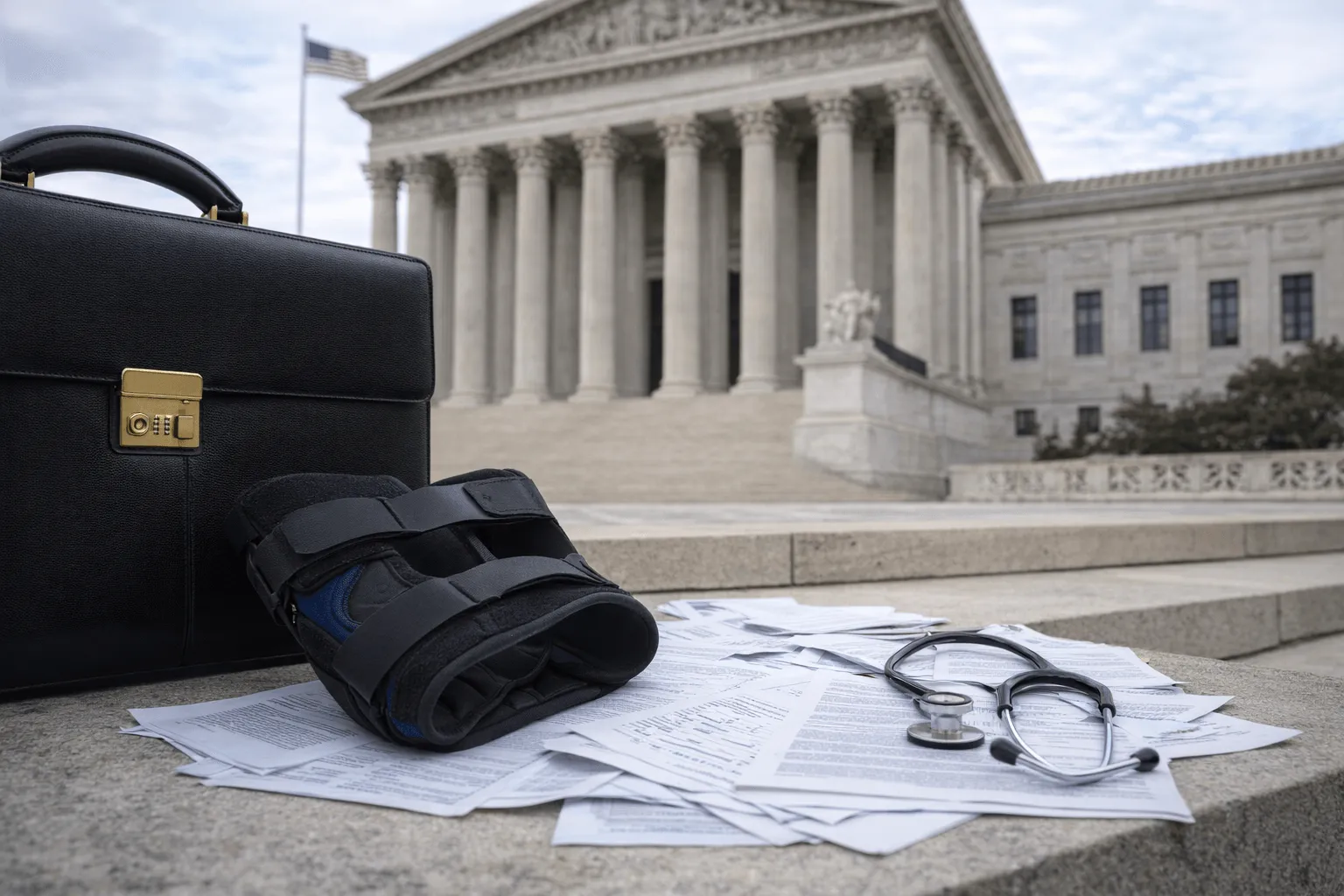
Case preparation stalls when a records request bounces back for a missing signature, an undated authorization, or a recipient field that does not match the file. For paralegals managing multiple active matters, each rejected request can delay chronology work before it begins.
Requesting medical records from a doctor follows a predictable structure: confirm authority, choose the correct legal pathway, attach a valid authorization or access direction, route to the correct custodian, track the response window, calculate the fee, and escalate when the practice stalls.
A valid request depends on documented authority, compliant authorization language, correct routing, deadline tracking, fee review, and the proper escalation path. Adverse-party records usually require a subpoena or lawful process rather than a client authorization.
Doctor Records Request Process for Legal Teams
A clean third-party request is a HIPAA-governed process, with separate rules for individual access requests and authorization-based disclosures. Which pathway applies sets the deadline, the permissible fee, and the form the signed instrument must take. The sections below work through that sequence: who may request, what the request must contain, where to send it, how long the office has to respond, what it may charge, and how to escalate a stalled request.
Who May Request Doctor Medical Records
HIPAA limits who may obtain protected health information, so documented authority must precede any release. That authority comes from the patient, a personal representative, or a third-party requester holding a valid authorization or access direction.
The patient holds the foundational right. Under 45 CFR 164.524, an individual may inspect and obtain a copy of protected health information about themselves in a designated record set.
A personal representative steps into the patient's shoes. 45 CFR 164.502(g) requires covered entities to treat a representative as the individual, with authority scoped to the underlying instrument. Qualifying instruments include a health care power of attorney, a court-appointed guardianship, or an executor's authority over a decedent's estate.
A law firm qualifies as a personal representative only when it holds such an instrument. In ordinary personal injury and medical malpractice work, the standard mechanism is instead a HIPAA authorization or a right-of-access direction signed by the client.
Required Elements in a Doctor Records Request
A doctor's office checks several components before acting: a complete request identifies the patient, includes the signed instrument, and defines the records sought in enough detail to match the correct chart.
Patient Identifying Information
The office uses identifiers to locate the correct file and avoid a mismatch. Use the patient's full legal name and date of birth, plus any prior names used during treatment. An account number, treatment date range, or treating physician's name narrows the search further and lowers the risk of receiving the wrong record set.
HIPAA Authorization or Access Direction
A full HIPAA authorization under 45 CFR 164.508 must contain six core elements:
- A description of the information to be disclosed, identified in a specific and meaningful fashion
- The name or identification of the person authorized to make the disclosure
- The name or identification of the recipient
- A description of each purpose of the disclosure
- An expiration date or expiration event that relates to the individual or the purpose of the use or disclosure
- The signature of the individual and the date
If a personal representative signs, the authorization must also describe that representative's authority to act for the individual, and it must carry statements on the right to revoke, conditioning, and the potential for redisclosure.
A lighter instrument exists when the patient directs records to a third party. Under the right-of-access direction at 45 CFR 164.524(c)(3)(ii), the request need only be in writing, signed by the individual, and clearly identify the recipient and destination. A 2020 federal court ruling narrowed that directive to electronic PHI held in an EHR, and providers may charge third-party rates on such transmittals.
The workflow distinction matters. A right-of-access request under 45 CFR 164.524 is a required disclosure and carries the 30-day HIPAA response window. A standard authorization under 45 CFR 164.508 is a permitted disclosure with no equivalent federal deadline; state law, provider policy, or the terms of the request control its timing instead.
Records Scope and Claim Relevance
Scope drives both follow-up volume and per-page cost. A complete-file request pulls every page in the chart, including duplicative administrative material that inflates copying labor and review time. A defined date range and the record types tied to the claim produce a leaner set a paralegal can move into chronology development without sorting through noise.
Correct Custodian and Submission Channels
A request sent to the wrong legal entity may not start the clock, and one sent to the wrong internal desk may sit until forwarded, so identifying the correct custodian first protects the receipt date.
At a hospital or large group, the Health Information Management department releases records; at a small practice, the administrative or office manager typically handles releases. Confirm the custodian and the accepted submission method before sending:
- Patient portal: Fastest for electronic records
- Fax: Still standard for authorizations
- Mail: Where electronic forms are refused
- Email: Some custodians, with secure transmission
For HIPAA access requests, the 30-day clock starts on the date the covered entity receives the request, and HHS guidance notes that internal forwarding delays consume part of that window.
Doctor Records Response Deadlines
Federal law sets the outer limit for HIPAA access requests, and state law may shorten it. The controlling deadline depends on whether the request is a right-of-access request, a standard authorization, or a state-law request.
Under 45 CFR 164.524, a covered entity must act on an access request no later than 30 calendar days after receipt, with one permitted extension of up to 30 additional days if it gives written notice of the delay, the reasons, and a completion date within the original window.
State law often controls because the HHS preemption framework treats HIPAA as a federal floor and preserves more stringent state law. Some states impose shorter windows:
- California: 15 days under Health & Safety Code § 123110(b)
- Texas: 15 business days under Occ. Code § 159.006(d)
Checking the provider's state before calculating a deadline prevents treating the federal 30-day count as controlling when a shorter state window governs. Statutory ceilings also differ from real-world retrieval turnaround times, which track custodian backlog and record volume.
Medical Records Fees and Third-Party Charges
The fee a doctor may charge depends on who receives the records. The starting point is the reasonable, cost-based fee for patient access, but that standard does not cover every legal-team request.
Under 45 CFR 164.524(c)(4), a covered entity may charge only for copying labor, supplies for portable media, postage when mailing is requested, and a summary if agreed in advance. HIPAA fee guidance bars charges for search, retrieval, verification, or infrastructure. For electronic copies of electronically maintained records, an optional $6.50 flat fee is one permitted method, not a cap.
When a patient directs records to a third party, the rule shifts. The fee limitation at 45 CFR 164.524(c)(4) applies only to an individual's request for their own records, so third-party transmissions fall outside it, and a provider may charge a commercial rate or the applicable state schedule, such as Texas's tiered structure for hospital records under Health and Safety Code § 241.154. Because rates vary widely, retrieval costs by state are worth confirming first.
Delayed, Denied, or Retired-Physician Requests
A stalled request usually has a fixable cause. Escalation should proceed from the simplest remedy to the formal complaint by identifying whether the holdup is a deficient authorization, a permissible denial, or a missing custodian.
A deficient authorization is the most common and easiest to correct: supply the missing element, date, signature, recipient, or unexpired expiration, then resubmit. Genuine denials rest on narrow grounds; under 45 CFR 164.524(a), the right of access excludes psychotherapy notes and information compiled in reasonable anticipation of litigation.
Some denials carry a right to review, including access reasonably likely to endanger the life or physical safety of the individual or another person, or to cause substantial harm where the records reference another person or a personal representative is involved. A written denial must state the basis in plain language and describe review and complaint procedures.
When a practice has closed or the physician has died, the records pass to a custodian. In Texas, custodianship typically transfers to the administrator or executor of the estate absent a group practice or prior arrangement, and Pennsylvania estate executors carry the same duty. Check the former office for closure notices, search for a successor custodian, and contact the state medical board, which often tracks where closed-practice records are stored.Formal escalation runs on two tracks. A HIPAA complaint may be filed with the HHS OCR within 180 days of when the violation was known or should have been known, extendable for good cause. A complaint to the state medical board addresses licensing and state records obligations; Texas law requires a denying physician to tell the patient how to file with both HHS and the Texas Medical Board.
Subpoenas for Adverse-Party Doctor Records
An authorization works only when the person whose records are sought has signed it. For an adverse party who has not consented, use compelled production rather than a client authorization. Only the individual whose PHI is at issue may invoke the right of access; the litigation pathways under 45 CFR 164.512(e) govern compelled mechanisms:
- Court or tribunal order: Disclose only what the order expressly authorizes, without patient notice.
- Subpoena or other lawful process with notice: The requester documents good-faith notice to the individual, an opportunity to object, and resolution of any objections.
- Subpoena or other lawful process with a qualified protective order: The parties agree to or request an order limiting PHI to the litigation and requiring its return or destruction afterward.
A covered entity may also make its own reasonable efforts to notify the individual or seek a qualified protective order before disclosure. Choosing the right mechanism early avoids the delay of an adverse-party request the custodian must reject.
Reliable Records Retrieval Workflows
Reliable doctor-record requests depend on authority review, authorization validation, custodian routing, deadline tracking, fee review, and escalation. A disciplined records retrieval workflow gives chronology development a stronger foundation.
Tavrn supports legal teams moving from raw medical records to chronology-ready review. Levine Benjamin, a personal injury firm managing 800 to 1,000 medical record requests a month, reached 3x faster turnaround and cut firm-wide paperwork by 90% after moving record retrieval onto Tavrn.
To learn more, book a demo.
.png)

.png)
.png)