Contingency-fee firms face a fundamentally different efficiency problem than hourly-billing practices. The bottleneck is not capturing billable time; it is moving cases from intake to demand faster without sacrificing the preparation quality that drives settlement outcomes.
Law firm efficiency in document-heavy practices means compressing the timeline between client intake and settlement-ready demand materials. Weaknesses in back-office workflows, including case management software, can amplify delays that start with records and documentation.
This article breaks down five stages of the intake-to-demand workflow and shows how AI-powered tools eliminate bottlenecks at each step for personal injury and medical malpractice practices operating on contingency fees.
The Intake-to-Demand Workflow in Contingency-Fee Practice
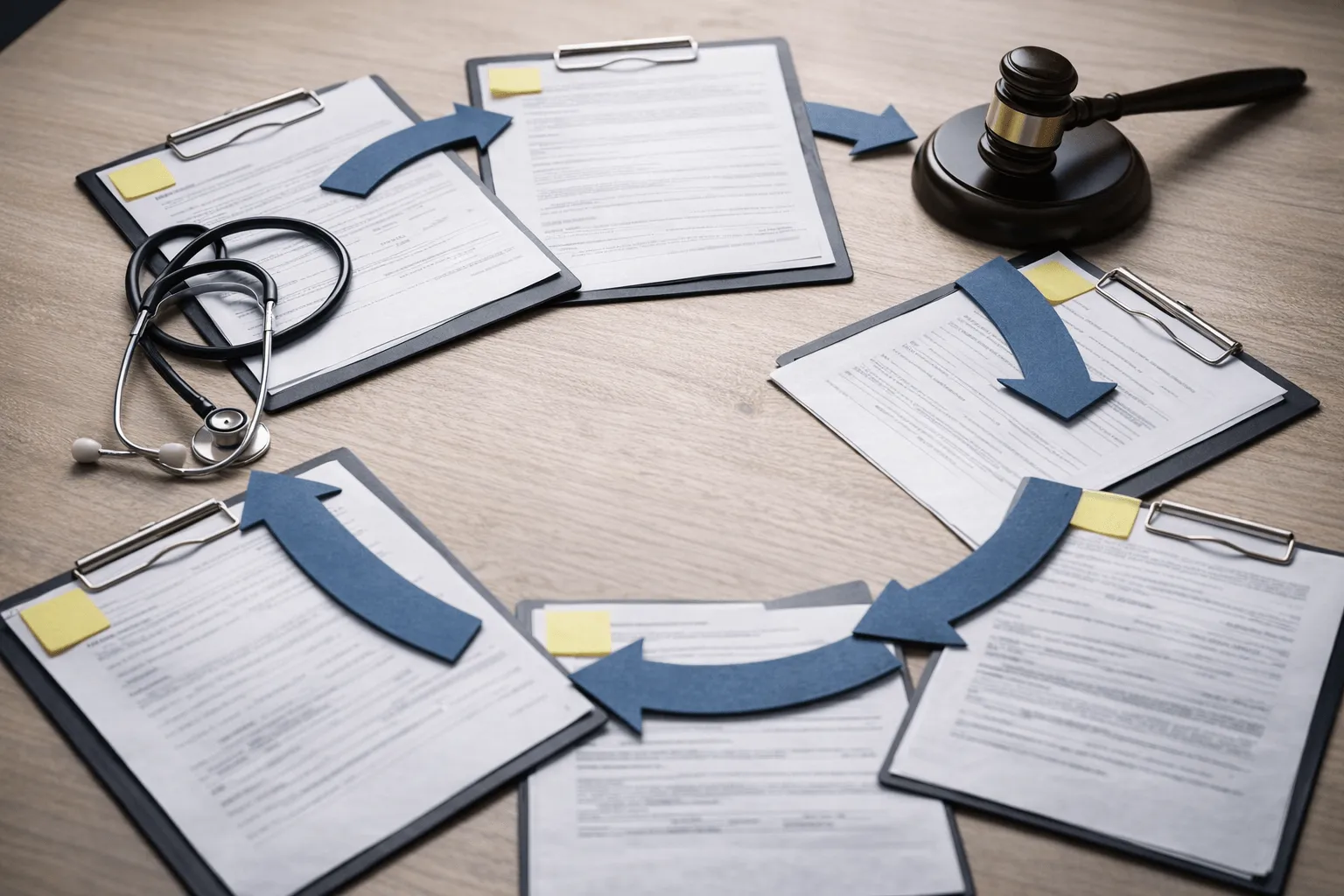
Personal injury case preparation follows a sequential pipeline. Client intake feeds into medical record retrieval, which feeds into chronology generation, which feeds into demand letter drafting. Each stage depends on the output of the one before it, and delays at any point compound downstream.
This dependency chain is what makes contingency-fee efficiency fundamentally different from hourly-billing models. Hourly practices optimize for capturing time; contingency practices optimize for case velocity. The faster a case moves from intake to a settlement-ready demand package, the faster the firm recovers its investment in that case.
The five stages below represent the end-to-end workflow where AI-powered tools have the greatest impact on timeline compression. Tavrn's platform addresses each stage as a connected pipeline rather than a set of isolated tasks.
1. Client Intake and Case Evaluation
Personal injury firms decline a significant majority of potential cases, but manual evaluation consumes staff time regardless of whether a case is accepted or rejected. Every inquiry requires screening before a disposition decision can be made, and manual intake processes create a volume ceiling that limits how many cases a firm can assess.
AI-powered intake tools evaluate case viability faster by analyzing injury type, liability indicators, statute of limitations compliance, and potential damages. Structured digital intake also eliminates the re-entry problem: data captured during initial screening feeds directly into downstream workflows like retrieval and chronology rather than requiring manual migration between systems.
Tavrn organizes intake data and prioritizes cases in a format that flows directly into medical record retrieval, chronology generation, and demand drafting. Rather than treating intake as a standalone step, the platform connects it to the full case preparation pipeline so information captured at first contact persists through every downstream stage without re-entry.
Other platforms that address intake for PI firms include:
- Litify provides Salesforce-based intake and case management with configurable workflows for plaintiff firms.
- Clio Grow handles client intake and CRM with online forms that feed into Clio's practice management suite.
- Filevine offers intake automation with conditional logic forms and built-in project management for litigation teams.
The operational metric that matters here is cost-per-evaluated-case. Reducing the staff time required to screen each inquiry means the same team can evaluate more potential clients, raising both case acceptance volume and selectivity.
2. Medical Record Retrieval
Medical record retrieval is the dependency that controls the entire case preparation timeline. Case progression often stalls until records arrive.
Federal law requires providers to respond to medical record requests within 30 days under HIPAA, with a possible 30-day extension. In practice, authorization errors, provider backlogs, and inconsistent follow-up routinely push retrieval past those timelines.
Traditional retrieval methods compound these delays at every touchpoint. Common failure points include:
- Fax requests that go unacknowledged
- Email follow-ups that sit in HIM queues
- Authorization deficiencies that trigger rejections and reset timelines
Systemic barriers are often operational rather than legal, especially when information must move across organizations with inconsistent processes. Federal ONC guidance on information exchange reflects persistent friction in obtaining and transferring clinical records.
For a case involving three or four treating providers, each with independent retrieval timelines, total record collection can stretch across months. Every day of delay is a day the case cannot advance in chronology or demand.
Tavrn's AI-powered retrieval automates the highest-friction elements of this process. AI agents handle provider follow-up calls directly, authorizations are validated before submission to prevent rejection cycles, and a real-time dashboard tracks every active request across the firm's full caseload. Flat-rate pricing removes the per-record cost pressure that causes some firms to narrow retrieval scope on complex cases with extensive treatment histories.
Other platforms that handle medical record retrieval include:
- ChartSwap offers digital request routing and status tracking through a provider network.
- Compex Legal Services provides traditional retrieval with nationwide coverage and copy services.
- Ciox Health (Datavant) operates one of the largest health information networks with standardized electronic release workflows.
For senior paralegals managing retrieval across 25 to 40 active cases, removing manual provider outreach from the daily workflow recovers substantial capacity for higher-value preparation tasks.
3. Medical Chronology Generation
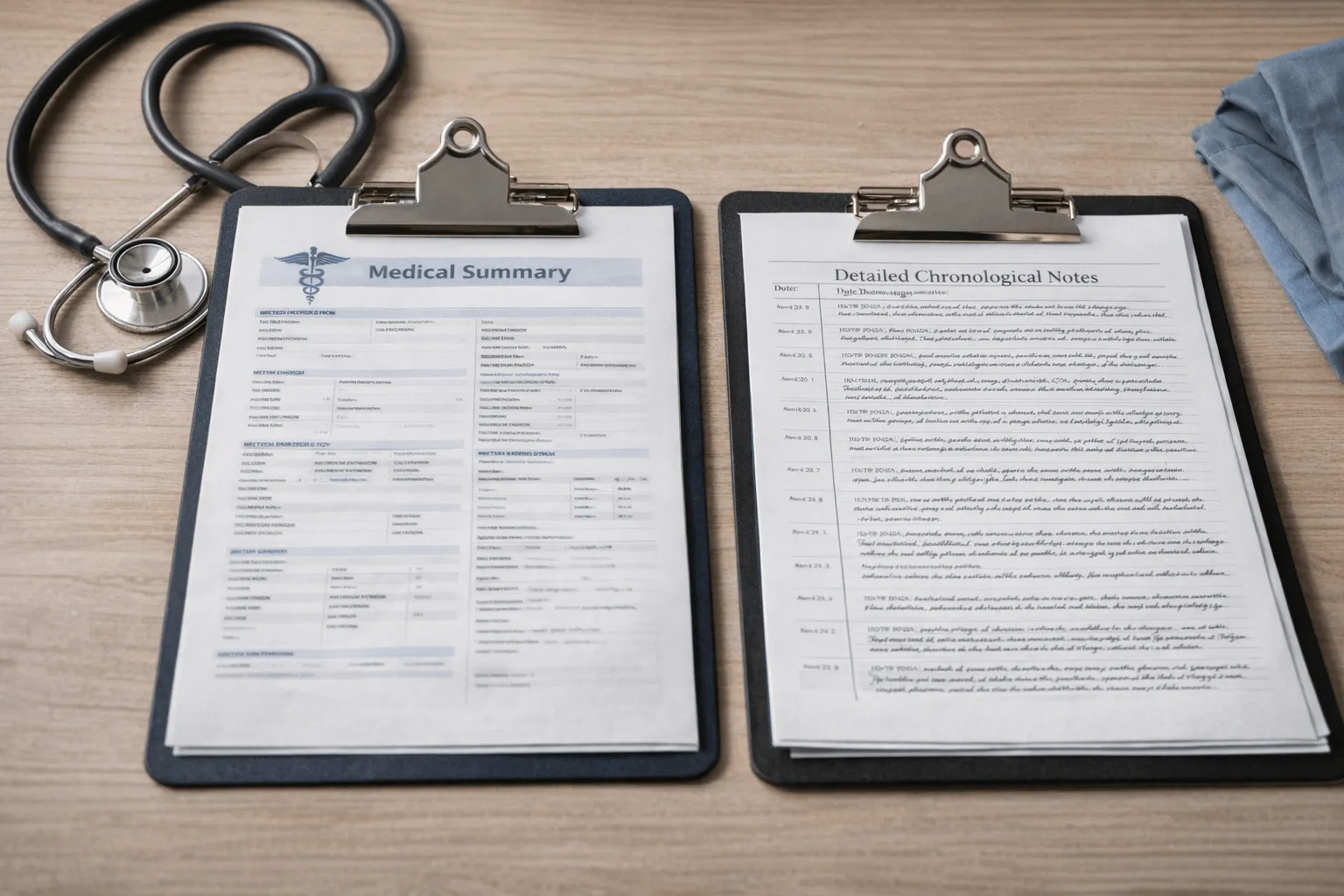
Converting hundreds or thousands of pages of medical records into a structured legal timeline is often the most labor-intensive stage of case preparation. Standard personal injury cases require an estimated 8 to 10 hours of paralegal chronology work; complex cases with extensive treatment histories can demand significantly more.
The manual process follows a repetitive extraction pattern: reviewing records page-by-page, extracting dates of service, treating providers, diagnoses, and treatment events, then normalizing everything into a consistent timeline format across facilities and record sets. AI chronology tools compress this work from days to hours by automating the extraction layer while preserving the source-linked detail that legal review requires.
AI chronology tools extract clinical data points, organize them into hyperlinked timelines, and flag gaps or inconsistencies that require follow-up. This distinction matters for experienced paralegals. Human oversight catches nuances that automated extraction misses, including context-dependent terminology, treatment relevance to specific causation theories, and documentation patterns that suggest gaps or pre-existing issues. NALA guidance emphasizes that the paralegal role shifts from routine data extraction to higher-value case analysis and quality assurance.
Tavrn delivers structured chronologies in under 24 hours, with every entry hyperlinked to its source page for verification. The platform extracts clinical data directly from retrieved records, so chronology generation begins automatically once records arrive rather than waiting for a paralegal to start building from scratch. Paralegals review, refine, and approve the output rather than assembling it manually.
Other platforms that offer medical chronology capabilities include:
- Precedent provides AI-powered medical record analysis with structured chronology outputs for personal injury litigation.
- Supio provides AI-powered medical record analysis and chronology tools focused on plaintiff litigation.
- Eve Legal offers AI chronology and case summarization for personal injury and medical malpractice practices.
For a paralegal managing 10 cases per month at 8 to 10 hours each, significantly reducing chronology time per case. That recovered capacity translates directly to additional cases the firm can prepare without adding headcount.
4. Demand Letter Drafting and Damages Integration
The demand letter is where case preparation converts to settlement leverage. A demand integrating complete medical documentation, calculated damages, and a clear causation narrative commands stronger offers and accelerates negotiation.
Traditional drafting requires manually cross-referencing chronologies, billing summaries, treatment records, and damage calculations. Every manual cross-reference point is a potential error point, and inconsistencies between the chronology timeline and the demand narrative create openings for adjusters to dispute severity or causation.
AI-driven demand preparation pulls directly from the chronology and record set, integrating treatment history with provider details, diagnosis information linked to source documentation, and calculated damages incorporating medical billing, lost wages, and future care estimates. The result is a continuous pipeline where data captured at intake flows through retrieval into a chronology, then integrates into the demand with each stage building on verified outputs from the prior stage.
Tavrn's demand letters include automated damages calculations with supporting medical data, custom templates by practice area, and direct integration with the chronology output. Because the platform handles retrieval, chronology, and demand as a connected workflow, the demand letter pulls from source-linked data rather than requiring attorneys or paralegals to manually reconcile separate documents. Jurisdiction-specific formatting controls and firm-customizable clause libraries further reduce drafting time.
Other platforms with demand letter capabilities include:
- EvenUp generates AI-powered demand packages with damages calculations for personal injury claims.
- Mighty provides AI-powered demand letter generation with medical record analysis and damages calculations for personal injury firms.
- CaseGlide provides claims resolution tools with demand management features focused on the insurer-attorney workflow.
5. Case File Organization and Document Review
Across every stage, personal injury firms manage substantial ancillary documentation beyond medical records: provider correspondence, discovery materials, expert reports, billing records, and insurance communications. Disorganized files slow down the entire intake-to-demand pipeline by forcing staff to locate and re-classify documents before they can be used. As case volume increases, the gap between organized and disorganized firms widens, with missed documents creating downstream errors in chronologies and demand letters.
AI-powered document management tools automate the highest-friction steps: classifying document types on upload, applying standardized naming conventions, extracting keywords for rapid search, and feeding categorized documents into downstream workflows without manual re-processing.
Tavrn's eDiscovery tool sorts and categorizes case documents with AI assistance, integrated with the broader case preparation workflow. Documents uploaded or received during retrieval are automatically indexed and tagged, so the same records feeding into chronology generation are already organized for demand drafting and case review. This eliminates the duplicate handling that occurs when document management and case preparation operate in separate systems.
Other platforms with document management and review capabilities include:
- Logikcull provides cloud-based eDiscovery with automated document processing and review for litigation teams.
- Everchron offers document organization and timeline tools designed for trial preparation.
- CaseFleet combines document management with fact chronology and evidence mapping for litigators.
For legal operations teams evaluating tools on integration capability, the relevant metric is not document management in isolation. The more important question is how organized files reduce friction at every subsequent preparation stage.
Compressing the Intake-to-Demand Timeline
Law firm efficiency in contingency-fee practice comes down to how fast a case moves from first contact to settlement-ready demand materials. Each stage in that pipeline, from intake triage and medical record retrieval to chronology generation, demand drafting, and document organization, either compresses or extends the overall timeline. The Federal Bar Association reports only 20% implementation of legal-specific AI among smaller practices, leaving a structural advantage for firms that standardize these workflows now.
Tavrn's platform connects each stage as a single pipeline rather than a set of disconnected tools. Automated record retrieval feeds directly into AI-generated chronologies, which integrate into demand letters with source-linked damages calculations. The result is a complete intake-to-demand workflow built specifically for contingency-fee practices, designed to increase case throughput without proportional headcount increases.