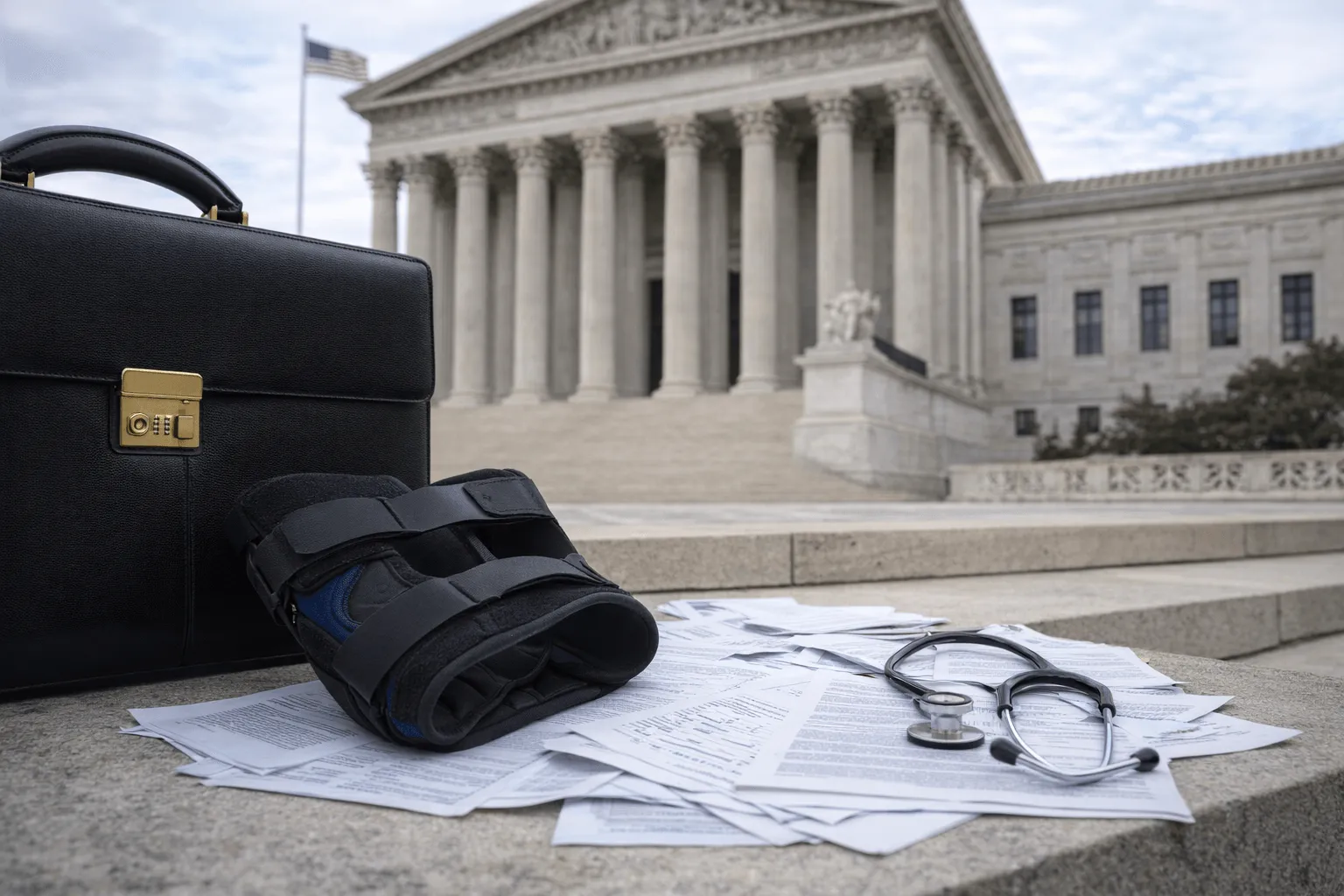
A West Virginia cattle farmer's 1999 complaint about dying livestock evolved into one of the largest toxic tort resolutions in American legal history. The DuPont PFOA lawsuit consolidated approximately 3,500 personal injury claims in MDL 2433, produced three consecutive plaintiff bellwether verdicts, and resulted in a $670.7 million global settlement. The litigation generated the C8 Health Project, a 69,030-participant epidemiological study establishing binding causation findings for six diseases, a procedural innovation that reshaped toxic tort practice.
This article examines the factual record from the Tennant case through the Leach class action settlement, the MDL 2433 bellwether trials, and the Sixth Circuit's Abbott decision establishing appellate precedent on collateral estoppel application.
DuPont PFOA Contamination History and Corporate Knowledge
Internal documents unearthed during litigation revealed DuPont possessed knowledge of PFOA health risks spanning decades. A 1961 company-commissioned report showed Teflon materials caused increased liver size in laboratory rats. Most damaging, a 1970 internal memo explicitly classified PFOA (C8) as "highly toxic when inhaled and moderately toxic when ingested"—nearly 30 years before the 1999 Tennant lawsuit filing.
- 1961: Company-commissioned studies documented increased liver size in laboratory rats exposed to Teflon materials.
- 1970: Internal memos classified PFOA as "highly toxic when inhaled and moderately toxic when ingested".
- 1980: Two pregnant employees working with PFOA gave birth to children with birth defects; DuPont marked findings confidential.
- 1991: DuPont established internal safety limit of 1 part per billion for PFOA in community drinking water, which it never disclosed to regulators or communities.
EPA enforcement documentation confirms DuPont failed to report substantial risk information to EPA as required under TSCA Section 8(e).
The Tennant Case: First Legal Challenge to DuPont PFOA Practices
Wilbur Tennant's cattle grazed on property downstream from an unlined landfill where DuPont dumped approximately 7,100 tons of PFOA-contaminated sludge. More than 153 cattle died, exhibiting stillbirths, tumors, and blackened teeth.
Attorney Robert Bilott of Taft Stettinius & Hollister LLP filed Tennant v. E.I. du Pont de Nemours & Company (Case No. 6:99-cv-00488) on October 21, 1999, in the United States District Court for the Southern District of West Virginia. A March 27, 2001, court order denying DuPont's protective motions proved pivotal, compelling comprehensive discovery that exposed internal documents on PFOA toxicity spanning five decades. DuPont settled the Tennant case in 2001 for undisclosed terms.
Leach Class Action and C8 Science Panel Framework
Leach v. E.I. du Pont de Nemours & Co. (Case No. 01-C-608) was filed August 31, 2001, in the Circuit Court of Wood County, West Virginia. The settlement received final court approval on February 28, 2005, valued at $107.6 million. Key components included:
- DuPont-funded water filtration systems for affected districts.
- Financing for an independent epidemiological study—the C8 Health Project.
- DuPont's agreement not to dispute general causation for any disease the C8 Science Panel found a "Probable Link" to C8 exposure.
C8 Health Project Methodology and Findings
The C8 Health Project enrolled exactly 69,030 participants between August 2005 and August 2006. Three independent epidemiologists — Dr. Tony Fletcher, Dr. David Savitz, and Dr. Kyle Steenland — analyzed data over seven years.
Between December 2011 and October 2012, the Science Panel confirmed "probable link" findings between PFOA exposure and six diseases:
- Kidney cancer
- Testicular cancer
- Thyroid disease
- Ulcerative colitis
- Diagnosed high cholesterol (hypercholesterolemia)
- Pregnancy-induced hypertension (including preeclampsia)
Under the settlement terms, DuPont was contractually precluded from disputing general causation for these six linked diseases in subsequent individual lawsuits.
The binding causation framework eliminated what would otherwise have been the most expensive and uncertain phase of each individual case. Without the ability to mount Daubert challenges on general causation across 3,500 claims, DuPont faced a litigation structure where plaintiffs needed only to prove specific causation — exposure history, diagnosis, and differential diagnosis. That procedural shift, combined with the bellwether losses that followed, compressed the path from filing to trial-ready status and fundamentally altered settlement economics.
MDL 2433 Consolidation and Bellwether Trial Outcomes
The Judicial Panel on Multidistrict Litigation consolidated the DuPont PFOA cases to achieve efficient pretrial management of claims arising from contamination near the Washington Works facility. On April 4, 2013, the JPML transfer order consolidated cases into MDL 2433 in the United States District Court for the Southern District of Ohio before Judge Edmund A. Sargus, Jr. The bellwether trial process — a procedural mechanism also central to 3M earplug litigation — produced three consecutive plaintiff verdicts that fundamentally altered settlement dynamics.
Bartlett v. DuPont: First Plaintiff Verdict
Carla Marie Bartlett, diagnosed with kidney cancer after residing near the Parkersburg plant, became the first bellwether plaintiff to reach verdict in Bartlett v. DuPont. On October 7, 2015, after a nearly month-long trial, the jury returned $1.6 million in compensatory damages. $1.1 million for negligence and $500,000 for emotional distress.
Plaintiffs introduced internal DuPont documents showing the company knew C8 was toxic as early as 1961 and had suppressed proposed epidemiological studies examining kidney cancer rates among exposed populations. DuPont's own witness, retired occupational hygienist Anthony Playtis, admitted under cross-examination that he had known for over a decade that plant drinking water was contaminated but never disclosed the information.
Freeman v. DuPont: Testicular Cancer Verdict and Malice Finding
David Freeman, a Marietta College professor who developed testicular cancer after drinking contaminated water in Washington County, Ohio, became the second bellwether plaintiff in Freeman v. DuPont. After a five-week trial, jurors deliberated for less than a day before returning $5.6 million. $5.1 million in compensatory damages and $500,000 in punitive damages.
The jury found that DuPont acted with malice in dumping C8 into the Ohio River. Plaintiff's counsel argued DuPont kept decades of internal health studies secret from local, state, and federal regulators, the first malice finding in the MDL and a signal that future juries would award punitive damages.
Vigneron v. DuPont: Escalating Punitive Exposure
Kenneth Vigneron, a 56-year-old truck driver from Washington County, Ohio, became the first non-bellwether plaintiff to reach trial in Vigneron v. DuPont. On December 21, 2016, the jury awarded $2 million in compensatory damages and found DuPont acted with malice.
During the punitive phase, plaintiff's financial expert testified that DuPont's 2015 revenue averaged $68.8 million per day. On January 5, 2017, jurors added $10.5 million in punitive damages, a 5.25x multiplier over compensatory damages and the largest single verdict in the MDL.
Three consecutive plaintiff verdicts totaling $19.7 million, with escalating punitive awards across successive trials, created maximum settlement pressure. Five weeks after the Vigneron punitive verdict, DuPont announced the $670.7 million global settlement.
DuPont PFOA Lawsuit Settlement Structure
On February 13, 2017, DuPont and Chemours announced a $670.7 million settlement resolving approximately 3,500 personal injury claims. Chemours, created in July 2015 when DuPont spun off its performance chemicals division, shared responsibility equally: $335.35 million each.
Abbott Trial and Sixth Circuit Precedent
Travis and Julie Abbott filed suit within MDL 2433 after Travis's testicular cancer diagnosis. The district court applied nonmutual offensive collateral estoppel based on prior bellwether trial verdicts, establishing duty, breach, and foreseeability as matters of law.
The jury awarded $40 million to Travis Abbott and $10 million to Julie Abbott. The district court applied Ohio's non-economic damages cap, reducing Julie's award to $250,000, resulting in a final judgment of $40.25 million.
On December 5, 2022, the Sixth Circuit affirmed, upholding the district court's application of collateral estoppel. The Supreme Court denied certiorari on November 20, 2023. Justice Clarence Thomas authored a dissenting statement raising constitutional concerns about applying collateral estoppel in MDL bellwether proceedings.
Post-Settlement Resolution and Ongoing MDL Management
Following the initial $670.7 million global settlement, subsequent resolution waves addressed remaining claims within MDL 2433. As of the most recent available information, MDL 2433 remains active with ongoing case management. The JPML transfer order, dated June 2024, confirms that new cases continue to be transferred for coordinated pretrial proceedings.
Expanding PFAS Litigation and Regulatory Developments
In June 2023, DuPont, Chemours, and Corteva announced a $1.185 billion settlement with public water systems serving approximately 88% of the U.S. population. In March 2024, the same three companies reached an $875 million settlement with New Jersey for natural resource damages.
EPA's April 2024 final rule establishing maximum contaminant levels of 4.0 parts per trillion for PFOA and PFOS creates additional litigation implications. The zero Maximum Contaminant Level Goal acknowledges no safe exposure level exists, strengthening causation arguments. EPA's concurrent CERCLA designation of PFOA and PFOS as hazardous substances enables water utilities to pursue cost recovery under strict, joint, and several liability standards. The corporate concealment evidence pattern parallels findings in Roundup cancer litigation, where internal documents similarly demonstrated decades of suppressed health data.
Strategic Implications for Toxic Tort Practice
The DuPont PFOA lawsuit traced a path from a single farmer's complaint to resolutions exceeding $2 billion. The C8 Science Panel model, binding general causation findings from a 69,030-person study, eliminated a critical evidentiary barrier and enabled resolution of approximately 3,500 claims without repetitive Daubert challenges.
The Sixth Circuit's collateral estoppel holding in Abbott creates precedent for using bellwether outcomes to bind defendants on common liability elements. PFOA/PFAS case intake benefits from the established causation framework for the six Science Panel-linked diseases. Portfolio management should account for the multi-decade timeline demonstrated by this litigation. Medical records coordination remains essential for the six linked diseases, requiring complete diagnostic workups and differential diagnosis documentation.
For additional toxic tort precedent, see the Johnson & Johnson lawsuit analysis.
.png)

.png)
.png)