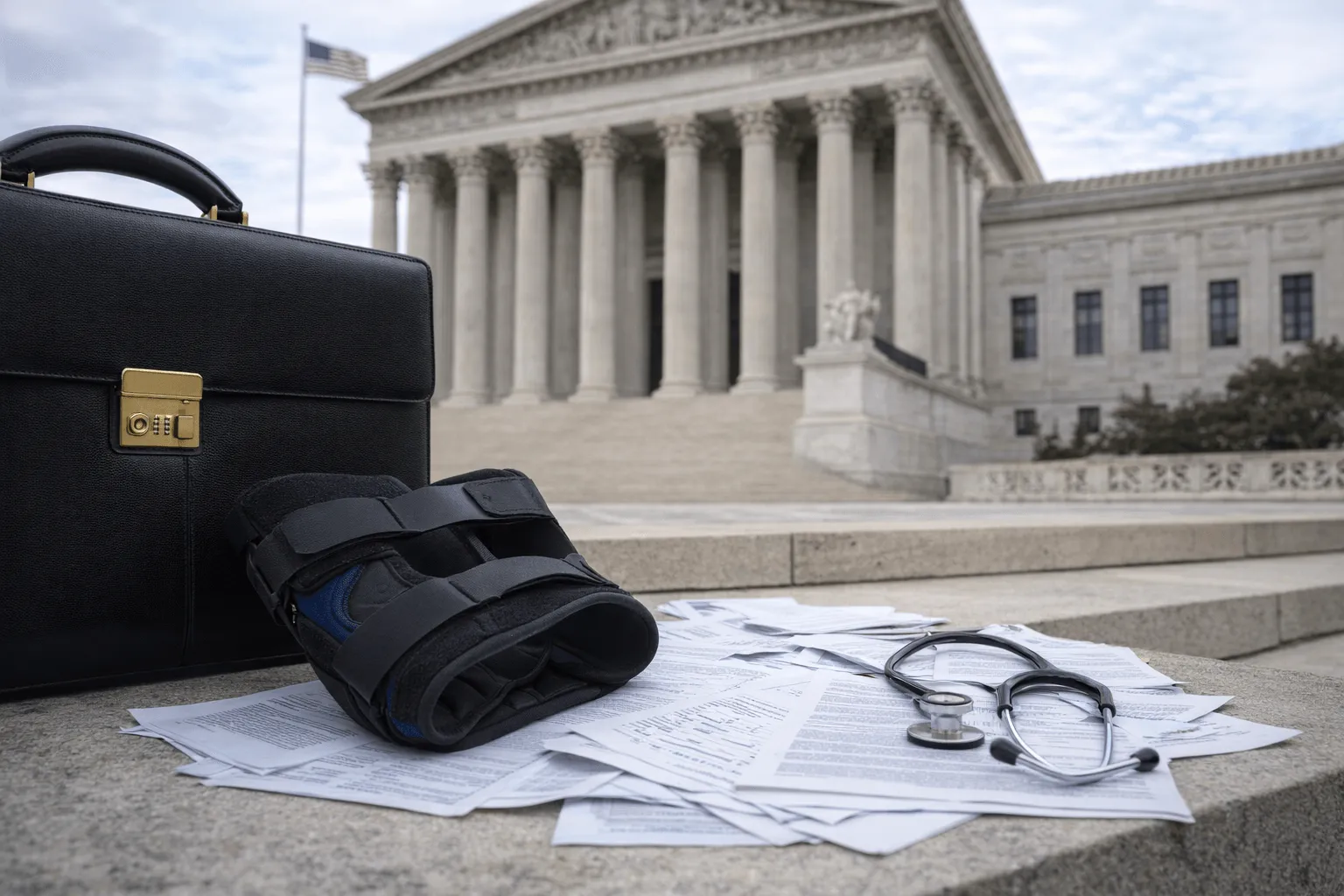
A defective layer of packaging, missing from a vacuum-sealed bag, now sits at the center of the Exactech lawsuit, one of the largest orthopedic device dockets in the country. What began as a series of implant recalls has grown into coordinated federal litigation, a Chapter 11 bankruptcy, a federal fraud settlement, and a billion-dollar action against the company's former private equity owner.
These tracks now run in parallel. Exactech Inc., the Gainesville, Florida joint replacement manufacturer, faces 1,838 pending claims in MDL 3044 before Judge Nicholas G. Garaufis in the Eastern District of New York, and its October 2024 Chapter 11 filing triggered an automatic stay under 11 U.S.C. § 362 that paused bellwether proceedings.
The recall record now shapes claim valuation and recovery strategy alongside the MDL, Florida proceedings, Delaware bankruptcy, False Claims Act settlement, and sponsor-liability litigation, a sequence that has reshaped other device recall settlements. Each plaintiff's claims are evaluated individually.
Packaging Defect and Recall Timeline Behind the Litigation
The litigation centers on UHMWPE inserts packaged without the secondary EVOH oxygen barrier layer, an oxidation pathway that links packaging, implant wear, revision timing, and causation.
From 2004 onward, Exactech distributed ultra-high molecular weight polyethylene inserts in vacuum-sealed bags that omitted the secondary ethylene-vinyl alcohol oxygen barrier layer. The missing layer exposed components to oxidation before implantation and allegedly caused premature wear and revision surgery, a defect-to-injury chain that anchors other device defect litigation as well.
Recalls began in June 2021 with Connexion GXL hip liners, expanded in August 2021 to knee inserts, and culminated on February 7, 2022 with an Urgent Medical Device Correction covering all knee and ankle UHMWPE inserts in non-conforming bags. The FDA classified the knee and ankle recalls as Class II and issued a Safety Communication on March 23, 2023. Additional hip liner recalls followed in February 2025.
The February 7, 2022 correction letter identified 147,732 knee and ankle inserts implanted since 2004 in non-conforming packaging. The affected products included the Optetrak, Optetrak Logic, and Truliant knee lines and the Vantage ankle system. The hip recalls ran separately. They covered roughly 90,000 Connexion GXL hip replacements in 2021 and about 40,105 conventional liners in an August 2022 expansion.
How MDL 3044 Was Structured in the Eastern District of New York
The federal and state proceedings developed on parallel tracks, and that structure became more consequential once the bankruptcy stay halted bellwether movement in federal court and disrupted the Florida schedule.
The JPML consolidated federally filed cases on October 7, 2022, as In re Exactech Polyethylene Orthopedic Products Liability Litigation, MDL No. 3044, No. 1:22-md-03044-NGG-MMH (E.D.N.Y. 2022), before Judge Garaufis. The court appointed plaintiffs' leadership in December 2022 and set a bellwether structure, the same staged approach used to test claims in the Zantac MDL. Judge Garaufis designated Geraldine Larson (No. 22-cv-6643) and Gayle Tarloff (No. 23-cv-5793) as the first two test cases, both centered on Optetrak tibial inserts, but the October 2024 bankruptcy stay halted every bellwether before a jury heard it.
A parallel Florida state consolidation, No. 01-2022-CA-2670 (Fla. 8th Jud. Cir.) before Judge Donna M. Keim, held at least 740 lawsuits at the petition date, but the bankruptcy put many of those cases on hold and blocked the first scheduled Florida bellwether.
TPG was dismissed from the MDL on March 7, 2024, when Judge Garaufis ruled that plaintiffs had not shown the private equity owner exercised enough control over Exactech to bear direct personal-injury liability. That dismissal did not end later sponsor-liability litigation brought through the post-confirmation trust structure.
Chapter 11 Filing and Its Effect on Pending Claims
The Chapter 11 case shifted the focus from trial sequencing to claim preservation, trust structure, and estate value, making the automatic stay and plan terms matter as much as tort scheduling.
Exactech filed for Chapter 11 protection on October 29, 2024, in In re Exactech, Inc., No. 24-12441 (LSS) (Bankr. D. Del. 2024), with roughly $352 million in funded debt colliding with the recall and litigation overhang. About 2,600 patient plaintiffs had filed suit. The company secured $85 million in debtor-in-possession financing from an investor group that later was the stalking horse bidder.
The original plan proposed releasing TPG for an $8.1 million contribution. The Unsecured Creditors Committee, represented by Brown Rudnick LLP, argued the bankruptcy was being wrongly used to absolve TPG and other non-debtors, and most claimants voted to reject it.
A revised plan, confirmed September 15, 2025, and effective in late October 2025, took a different approach:
- Senior lenders, a group including Strategic Value Partners, Stellex Capital, and Greywolf Capital, acquired the operating business through EI Bidco, LLC
- A litigation trust, initially funded with $2 million, was created to handle tort and unsecured creditor claims, with the ability to pursue TPG preserved
What the $8 Million False Claims Act Settlement Resolved
The qui tam settlement added a public record on alleged defect knowledge and tied the implants to federal healthcare programs. The product-liability docket remained unresolved.
In September 2025, Exactech agreed to pay $8 million to resolve two qui tam whistleblower actions alleging False Claims Act violations for implants billed to Medicare, Medicaid, and the VA. The U.S. Attorney's Office announced the settlement, $7.64 million of it the federal share, and the Delaware bankruptcy court approved it. Exactech did not admit liability.
The first action, filed in 2018 in Alabama by former sales agents and a former product manager, alleged Exactech knew by 2008 that an Optetrak finned tibial tray failed prematurely yet marketed it through December 2018. The second, brought in Maryland by Dr. Pasquale Petrera, alleged the company knew by January 2019 that Optetrak Logic and Truliant polyethylene parts failed prematurely yet sold them into 2022. The whistleblowers received $1,329,360 and $565,360, respectively.
The $1 Billion Fraud Action Against TPG
The trust's suit against TPG pushes the dispute beyond product defect into sponsor liability, fraudulent transfer, and alter ego theories, because the trustee holds powers individual MDL plaintiffs did not.
On February 5, 2026, Trustee Ellen K. Reisman filed Exactech Settlement Trust v. TPG Inc., C.A. No. 2026-0129-MTZ (Del. Ch. 2026), a billion-dollar fraud suit naming TPG Inc., affiliated entities, and individual principals. It alleges the firm engineered the Chapter 11 filing to dodge liability through fraudulent transfers among shell entities, ignored and concealed implant defects, fought regulators' recall demands, and extracted management fees through intermediary holding companies.
TPG paid $737 million to take Exactech private in February 2018. The complaint asserts fraudulent transfer and alter ego liability under Delaware law and was filed by a trustee with avoidance powers that individual MDL plaintiffs lacked. TPG declined to comment.
Practice Considerations for Plaintiff, Defense, and Coverage Counsel
The Exactech matter moves on separate tracks. The stayed MDL, Delaware bankruptcy, Florida consolidation, and the fraudulent transfer action create separate pressure points for documentation, deadlines, valuation, and forum strategy.
For Plaintiff Counsel
- Confirm device-specific eligibility using Exactech's serial number lookup and the correction letter list, and preserve bankruptcy claim deadlines through the Kroll claims agent process
- Build the valuation file (imaging, intraoperative findings, explant pathology, and surgeon notes on wear, osteolysis, and aseptic loosening), the kind of mass tort record retrieval that scales across large claimant pools
- Note that patients who signed Exactech's release before consulting counsel may face limited participation
For Defense and Coverage Counsel
Defense and coverage counsel should evaluate the insurance tower for product liability and recall coverage, including reservations on the EVOH packaging issue, monitor the confirmed plan for channeling injunction language that may shift defense obligations to the litigation trust, and treat TPG's prior MDL dismissal as a template for sponsor liability defense.
Outlook and Litigation Trust Mechanics Through 2026
Mid-2026 status: bellwether trials remain paused and no global tort settlement has been approved. The next phase turns on who pays and through what mechanism. For plaintiffs, the pressure points are proof-of-claim compliance, individualized medical support, and the interaction between trust procedures and stayed tort dockets; for defendants and insurers, the questions are allocation, coverage position, and whether the trustee's Delaware claims expand the recovery pool. If the stay lifts, early trial settings will supply the first valuation benchmarks since the bankruptcy interrupted both tracks.
Whichever track moves first, valuing claims at this scale rests on the underlying medical record. Building a defensible file across thousands of claimants and hundreds of facilities is a documentation exercise as much as a legal one, and firms increasingly pair that effort with outsourced record retrieval and dedicated medical record and chronology services.
Read more case analysis articles from Tavrn here.
.png)

.png)
.png)