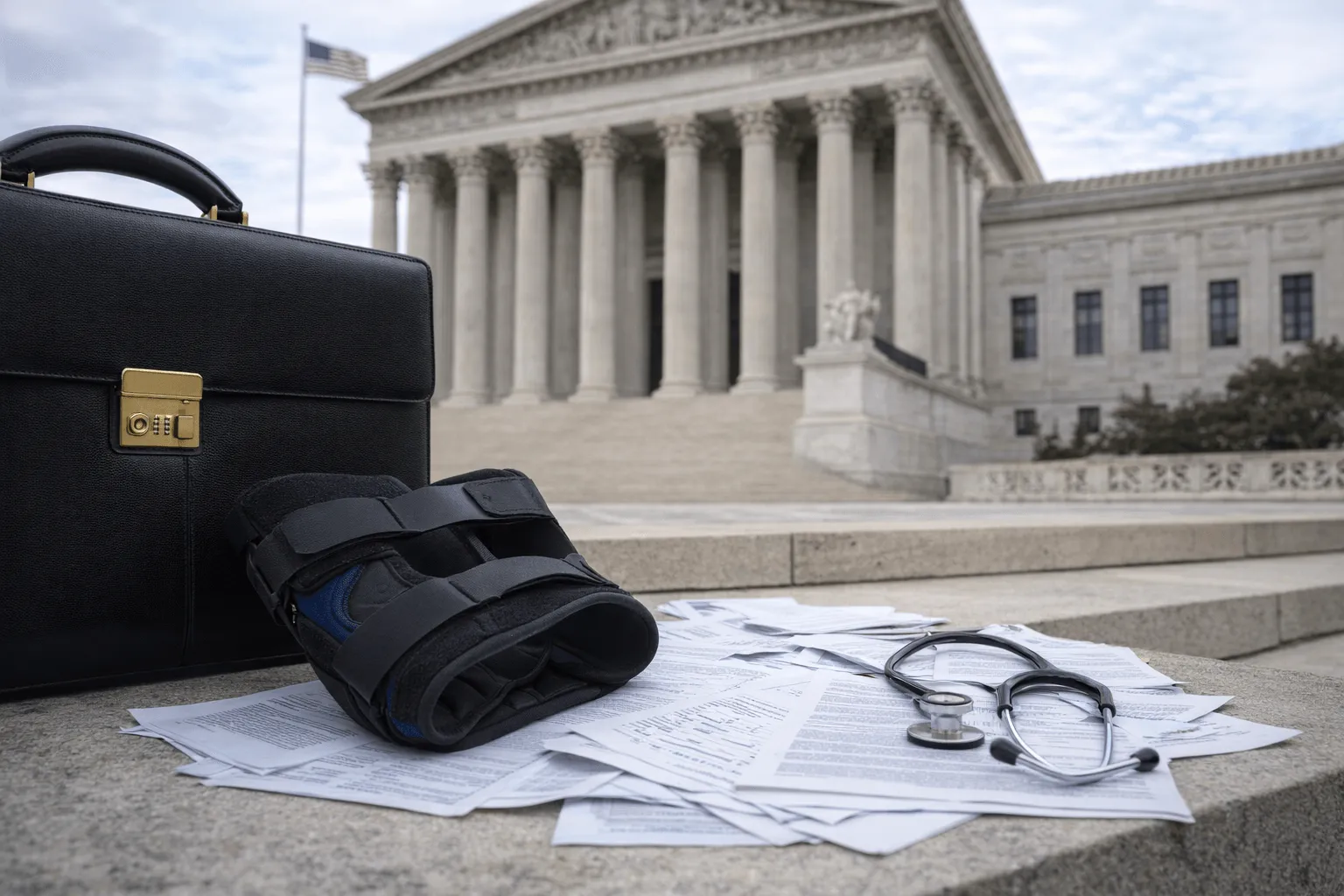
Personal injury paralegals spend hours assembling demand letters from scattered medical records and damage documentation. That manual workflow creates a bottleneck that slows case throughput and settlement velocity.
AI demand letter services automate record ingestion, chronology building, damages summaries, and insurance-ready formatting. The goal is faster, more consistent demand packages without relying on general-purpose writing assistants.
General legal AI roundups rarely address the record-processing depth that drives demand quality. This guide defines an evaluation framework and compares nine AI demand letter services currently used by personal injury firms.
How AI Demand Letter Services Differ from General Legal AI
The distinction between domain-specific AI demand letter platforms and general-purpose tools like ChatGPT matters more than most comparison articles acknowledge. General AI writing tools produce unformatted text from broad training data.
They typically lack:
- Medical record ingestion pipelines
- Damages calculation engines
- Case management integrations
- Compliance infrastructure for protected health information
AI demand letter services operate through a specialized pipeline with distinct processing stages:
- Medical record ingestion: Automated extraction that identifies diagnoses, treatments, medications, and procedures, a step that depends on reliable record retrieval upstream. Records are mapped to ICD-10 codes and organized into structured chronologies.
- Damages calculation: Automated aggregation of treatment costs, lost wages, and non-economic damages estimates. Specific calculation methodologies remain proprietary across all vendors, a pattern that requires hands-on evaluation rather than reliance on marketing materials.
- Narrative generation: Purpose-built demand letter platforms draft from structured case data rather than general knowledge, grounding every claim in actual medical facts. This reduces the fabrication risk that makes general-purpose tools unreliable for settlement documentation.
- Output formatting: Pre-structured templates with automated exhibit attachment, citation linking to specific medical record pages, and formatting aligned with insurance adjuster review workflows.
Enterprise-grade platforms also require infrastructure that general drafting tools rarely support. These requirements become decisive when a firm needs auditability, access controls, and predictable performance across fluctuating caseloads.
- Direct integration with case management systems for bi-directional data flow
- HIPAA-compliant data handling with access controls and audit trails
- Reliable performance whether the firm processes 50 or 500 demands per month
That functional gap makes the category distinction critical for any firm evaluating options.
Evaluation Criteria for Personal Injury Firms
Selecting an AI demand letter service requires a structured framework rather than ad-hoc feature comparison. ABA Formal Opinion 512 and the ILTA strategic framework establish baseline requirements that apply before operational features enter the conversation, including a compliance baseline that functions as a hard gate.
Compliance baseline (non-negotiable): The minimum baseline generally includes:
- An executed HIPAA Business Associate Agreement
- Current SOC 2 Type II
- Service agreement language supporting Model Rule 1.6 confidentiality
- Written policies confirming that client data is not used for model training
The NYSBA task force report emphasizes that Model Rule 1.1 requires attorneys to understand AI limitations, not merely operate the interface. If a vendor cannot satisfy baseline requirements, the evaluation stops.
Medical record integration depth: Evaluate OCR accuracy across varied record types, including handwritten documentation and multi-provider files. Test with three to five closed cases containing known outcomes rather than vendor-supplied sanitized samples.
Assess whether the tool flags inconsistencies between provider records and identifies treatment gaps.
Damages calculation methodology: Every vendor treats this as proprietary IP. No publicly documented methodologies exist for multiplier algorithms, settlement database access, or jurisdictional adjustments.
This capability area demands live demonstrations with real case data.
Insurance adjuster alignment: The Cleveland State Law Review identifies it as claim evaluation software that uses medical coding and documentation to value personal injury claims. Demand letters structured around ICD-10 codes, demonstrable injury classification, and proper presentation sequencing perform better in algorithmic evaluation, which is central to maximizing carrier payouts. Assess whether tools emphasize the documentation elements that adjuster software weighs heavily.
Additional criteria often determine day-to-day usability, particularly after record quality and compliance controls are confirmed:
- Customization depth, including firm voice, carrier-specific tone, and injury-type templates
- Output format flexibility
- Bi-directional case management integration
- Pricing model transparency
The 9 Best AI Demand Letter Tools on the Market
Nine platforms currently serve personal injury firms with AI-powered demand letter capabilities. The table below summarizes each against the dimensions that most often determine fit, followed by a closer look at what each tool does and the firm profile it suits. Pricing models and integrations shift frequently, so confirm current details during a live demonstration.
All vendor performance claims noted below originate from company sources unless otherwise attributed.
1. Tavrn
Tavrn is the only platform covering the full pre-litigation workflow from medical record retrieval through demand letter generation in a single system. AI-powered retrieval agents contact providers directly, removing the manual phone-and-fax follow-up that stalls record collection, and OCR converts scanned files into structured chronologies. Records become hyperlinked chronologies within 24 hours, with each entry linked back to its source document page, and that structured output feeds directly into demand generation with auto-attached exhibits and source-linked references.
Custom templates preserve firm-specific formatting and voice, and the platform extends across intake screening, retrieval, chronology, and demand drafting rather than a single stage. Integrations include Litify, Clio, and Filevine. The platform carries SOC 2 Type II, HIPAA, and ISO 27001 certifications, and vendor-reported metrics cite a 50 to 70% reduction in medical record review time. A $15 million Series A round led by Left Lane Capital, bringing total funding to $21.6 million, signals company stability.
Best for: Firms that want a single connected workflow from record retrieval through demand generation rather than stitching together point tools.
Pricing: Flat-rate monthly covering unlimited retrieval and demand generation, which removes per-demand cost variability as volume rises.
2. EvenUp
EvenUp is an end-to-end platform built exclusively for plaintiff PI firms, spanning demand letter generation, case valuation, negotiation prep, and discovery support across the pre-litigation and litigation lifecycle. Its proprietary Piai engine is trained on hundreds of thousands of injury cases, and the platform processes roughly 10,000 PI cases weekly.
EvenUp offers two demand tiers: rapid AI-generated Express demands and Expert-Reviewed demands that add legal and medical expert refinement, while a Mirror Mode feature reproduces the firm's own voice and formatting rather than generic output. Integrations cover Litify, SmartAdvocate, and Filevine, and the company claims 99% damages calculation accuracy, though this metric lacks independent verification. Its $150 million Series E in October 2025 brought total capital raised to $385 million and a valuation over $2 billion, making it the most heavily funded vendor in the category.
Best for: High-volume plaintiff firms that want the deepest trained case dataset and scale across the pre-litigation lifecycle.
Pricing: Per-case model, positioned as one predictable cost per case rather than per-letter add-ons.
3. Filevine DemandsAI
Filevine DemandsAI functions as an add-on module within the Filevine case management ecosystem, which appeals to firms that already run their matters, deadlines, and billing on Filevine. The companion MedChron tool extracts and classifies medical data with source document linkage, mapping treatments and diagnoses back to the underlying records, and tone emulation matches the demand to firm-specific writing style.
Because the module lives inside the case management system, case data flows into the demand without duplicate entry across platforms. Verified user reviews note significant time savings alongside a steeper learning curve during onboarding.
Best for: Firms already standardized on Filevine that want demand drafting native to their existing case management system.
Pricing: Priced as an add-on module, with AI features quoted separately from the base Filevine subscription.
4. Supio Demands
Supio Demands uses proprietary Document Intelligence and CaseAware AI systems to ingest medical records, bills, and case files, then builds structured chronologies and demand drafts, claiming 97% accuracy with human-in-the-loop verification. Its source-linked chronologies let a reviewer click any claim in the demand and trace it to the original document, which supports the fact-checking attorneys are obligated to perform before sending.
Confirmed full integration with SmartAdvocate includes two-way syncing, with additional data transfer support for MyCase and CasePeer. Supio's $60 million Series B in April 2025, led by Sapphire Ventures with participation from Thomson Reuters Ventures, brought total funding to $91 million.
Best for: SmartAdvocate firms that prioritize click-through traceability from the demand back to source records.
Pricing: Custom enterprise quote based on firm size and volume.
5. Precedent
Precedent offers demand generation through its Demand Composer, which builds itemized billing breakdowns at the CPT-code level so that treatment costs map cleanly to the procedures documented in the records. The tool supports multiplier, per diem, and hybrid damages calculation approaches, giving the drafting attorney control over how non-economic damages are framed for a given claim. Integrations include Clio, SmartAdvocate, and Litify, and its flat per-demand ceiling keeps cost predictable regardless of record volume on a given case.
Best for: Firms that want granular, CPT-code-level billing detail and predictable flat per-demand cost.
Pricing: Up to $275 per demand as a flat maximum, with unlimited pages and revisions.
6. Settlement Intelligence
Settlement Intelligence is the only tool explicitly claiming Colossus-specific optimization, drawing on founder expertise that traces back more than 22 years of research into insurance claim evaluation software. Because many carriers route claims through valuation software that weighs demonstrable injuries, ICD-10 coding, and treatment sequencing, the platform structures each demand in the format and order that software expects, aiming to reduce the undervaluation that comes from poorly sequenced documentation. That focus makes it a strategy tool as much as a drafting tool, suited to firms that negotiate against algorithmic evaluation regularly.
Best for: High-volume firms building a deliberate strategy around how carrier valuation software reads a demand.
Pricing: Advanced Plan at $24,000 annually and a Professional Plan starting at $60,000 annually, best suited to firms generating 200 or more demands per year.
7. AI Demand Pro
AI Demand Pro was developed by PI attorneys and runs on Anthropic's Claude model within a HIPAA-compliant closed system where client data is not used to train the model. The platform analyzes core case materials, including medical records, bills, and police reports, then guides users through structured inputs covering liability, damages, and treatment to produce a narrative-style demand rather than a bullet-point summary.
It emphasizes the way an experienced attorney presents liability, damages, and pain and suffering, with a 15 to 30 minute turnaround on a fully formatted draft. CasePeer integration is confirmed.
Best for: Firms that want fast, narrative-style demand drafts from a dedicated tool without full-platform overhead.
Pricing: Volume-based, ranging from $200 to $550 per demand.
8. ProPlaintiff AI
ProPlaintiff AI is a plaintiff-focused platform built specifically for PI attorneys and paralegals, generating demand letters, medical chronologies, and document review from uploaded case files. It ingests records to build visual injury timelines that link diagnoses and treatments back to their source pages, and its research capability draws on a large library of judicial opinions to support case arguments.
Firms can build custom demand templates that match their own style and format, and the tool extends to drafting motions, subpoenas, and other routine filings. The platform is HIPAA-compliant and SOC 2-audited.
Best for: Security-conscious buyers who want a documented compliance posture and built-in legal research alongside demand drafting.
Pricing: Credit-based tiered plans that scale with usage volume.
9. Eve
Eve is a plaintiff-side platform spanning the full case lifecycle from intake through resolution, with demand-package generation and medical chronology analysis at its core. Its demand product generates AI demand packages backed by MedChrons medical record analysis, cites verdict and settlement data within the demand arguments, and produces visual injury timelines, with both Express and Expert-Reviewed demand options.
The platform reports processing more than 200,000 cases annually. A $103 million Series B in September 2025, led by Spark Capital with participation from a16z and Lightspeed, brought total funding to $164 million at a valuation over $1 billion.
Best for: Firms seeking a broad case-lifecycle platform rather than a demand-only tool.
Pricing: Custom quote based on firm size and case volume.
Workflow Fit by Firm Size, Volume, and Practice Mix
The right tool depends on operational context, not feature lists. A senior paralegal recommending a platform to firm leadership needs to articulate why one service fits the firm's workflow better than another, tying tool choice to stronger settlement outcomes.
The factors below typically determine fit more than marginal differences in model quality.
Firm size shapes priorities. The Clio 2026 Legal Trends identifies clear differences in procurement and rollout requirements. Common patterns by firm size include:
- Small firms (1 to 10 attorneys): Affordability and rapid deployment measured in days.
- Mid-size firms (11 to 50 attorneys): Defined testing periods and designated technology champions.
- Large practices: Enterprise governance, comprehensive security review, and implementation timelines extending 12 to 16 weeks.
Case volume determines ROI thresholds. Case volume often sets the investment floor where automation costs are offset by reduced paralegal time. The critical threshold sits at approximately 100 or more cases annually.
A typical ROI segmentation looks like:
- 100 or more cases annually: Demand preparation consumes enough paralegal time to justify automation.
- 500 or more cases annually: Enterprise solutions with workflow orchestration become more important.
- Below 100 cases: Manual processes may remain more cost-effective.
Case management system compatibility is non-negotiable. Bloomberg Law's technology guide confirms that bi-directional data flow eliminates the manual entry bottlenecks that cause failed implementations, making integration a first-order requirement rather than a secondary feature.
A tool that requires duplicate data entry across systems negates efficiency gains regardless of its AI capabilities. Verify whether integrations are native or custom workarounds, and test auto-population rates during pilot evaluation.
Practice mix affects complexity requirements. Pure PI practices benefit from template-driven automation with standardized injury categories and typically achieve full deployment in four to eight weeks. Firms with more than 30% medical malpractice caseload often require additional capabilities, including:
- Advanced medical record processing
- Expert report synthesis
- Nuanced legal argument frameworks
Those requirements extend implementation to 12 to 16 weeks and narrow the field of appropriate tools. The practical effect is a higher evaluation burden on record-processing depth and defensibility of citations.
ROI and Implementation Realities
Managing partners evaluating AI demand letter services need confidence that the investment delivers measurable returns. The available evidence provides a verified baseline but leaves gaps that require internal validation.
A procurement process typically needs both operational time studies and quality sampling.
The verified efficiency metric: Peer-reviewed research published in the International Journal of Intelligence Science found efficiency gains of up to 60% in document review tasks. This represents the most concrete independently verified data point referenced here.
If paralegals currently spend two to four hours per manual demand letter, a 60% reduction translates to roughly 0.8 to 1.6 hours per letter, including review time. Vendor claims exceeding this baseline require pilot program validation.
Settlement velocity and value impact remain unverified. No authoritative third-party data exists on settlement improvements attributable to AI demand letter services, and vendor marketing materials frequently substitute internal metrics for peer-reviewed evidence. Firms should validate any efficiency or settlement claims through a pilot program on closed cases with known outcomes before committing firm-wide.
Implementation planning should account for realistic timelines. The North Carolina State Bar Journal's Beyond the Ban recommends pairing a written AI policy with mandatory staff training rather than an outright ban.
A structured onboarding plan commonly includes:
- Hands-on training for every paralegal before independent use
- Small pilot groups before firm-wide expansion
- Regular feedback sessions during the first month
Budget for a three to six-month productivity transition before achieving full efficiency gains. Plan for quality assurance sampling of 10% of AI-generated output during that period.
Staff adoption determines success or failure. Technology investments fail when the people using them daily reject the workflow change. Successful implementations start with small pilot groups, incorporate paralegal feedback into template refinement, and demonstrate that AI enhances expertise rather than replacing judgment.
Firms that skip change management planning undermine ROI regardless of the tool selected.
Selecting the Right Service for the Firm
AI demand letter services represent a maturing but still opaque market, and independent third-party validation remains largely absent across the category. The evaluation framework outlined here, applied to the tools currently available, provides a starting point for procurement decisions grounded in practitioner priorities rather than vendor marketing.
Firms that adopt an integrated approach to demand letters and medical record processing address the workflow continuity that PI practices need. At Bigos Law, adopting a single connected platform for retrieval, chronology, and demand generation accelerated productivity and case closing roughly 10x, with one multi-minor negotiation concluding in a week instead of up to six months. Confirmed case management integrations and connected outputs support a single workflow from intake through demand package creation.
To learn more, book a demo.
.png)

.png)
.png)