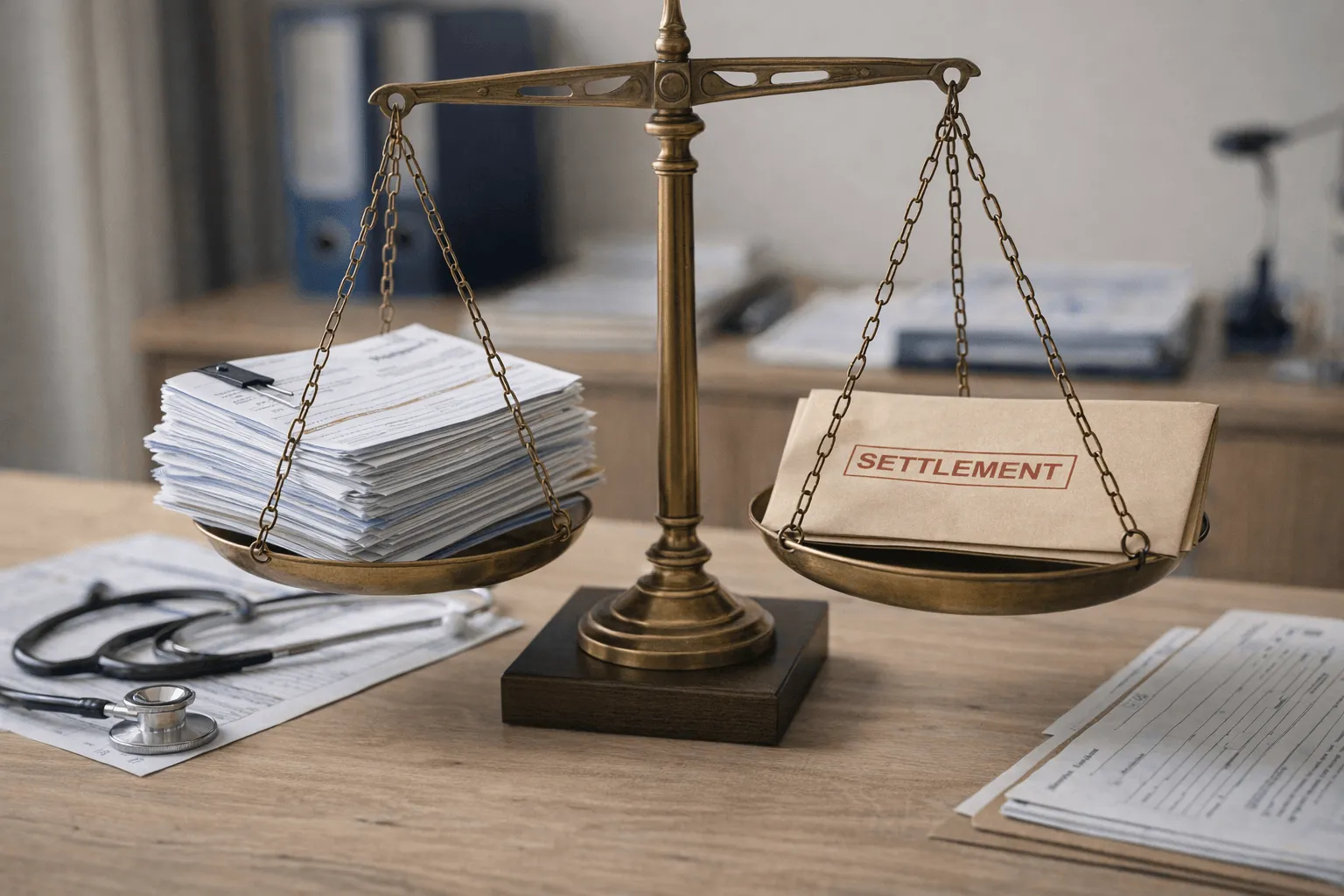
A demand package built on a summary alone, when causation is disputed, often invites a reduced settlement position. The document choice happens early; the consequences often surface later in negotiations.
Medical summaries and chronologies are not interchangeable. They serve different audiences, case stages, and legal arguments. This article focuses on when each document is more effective and why record order matters at each stage.
What follows is a case-stage framework for PI and med-mal paralegals: which document fits which moment, what each must accomplish, and the workflow consequences of choosing the wrong one.
Medical Summary vs. Chronology: Function and Structure
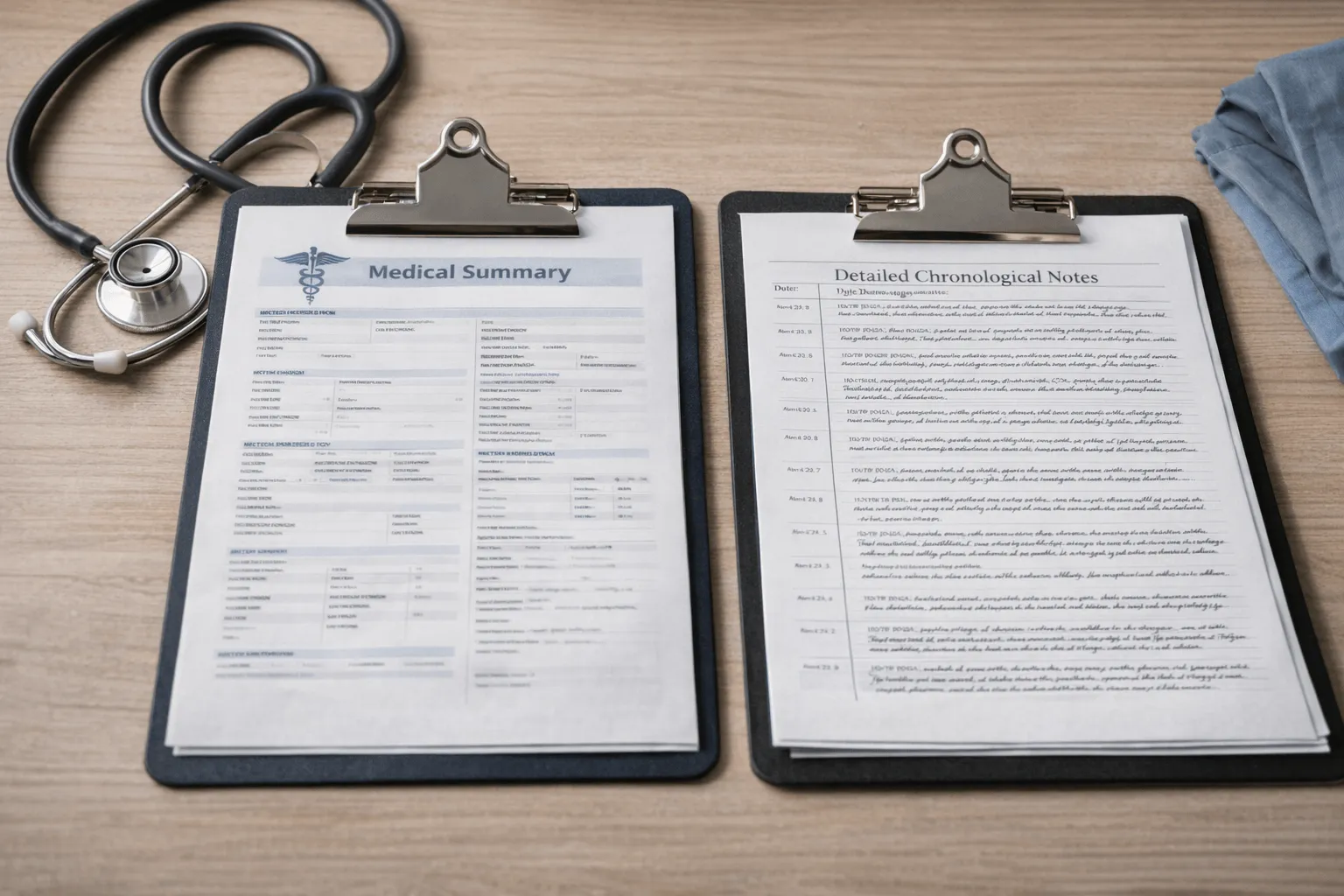
The medical summary vs chronology distinction is not about formatting preferences. It is about function: one document anchors facts to dates and sources, and the other translates those facts into a narrative that moves a case forward.
The Medical Chronology: Date-Anchored and Source-Cited
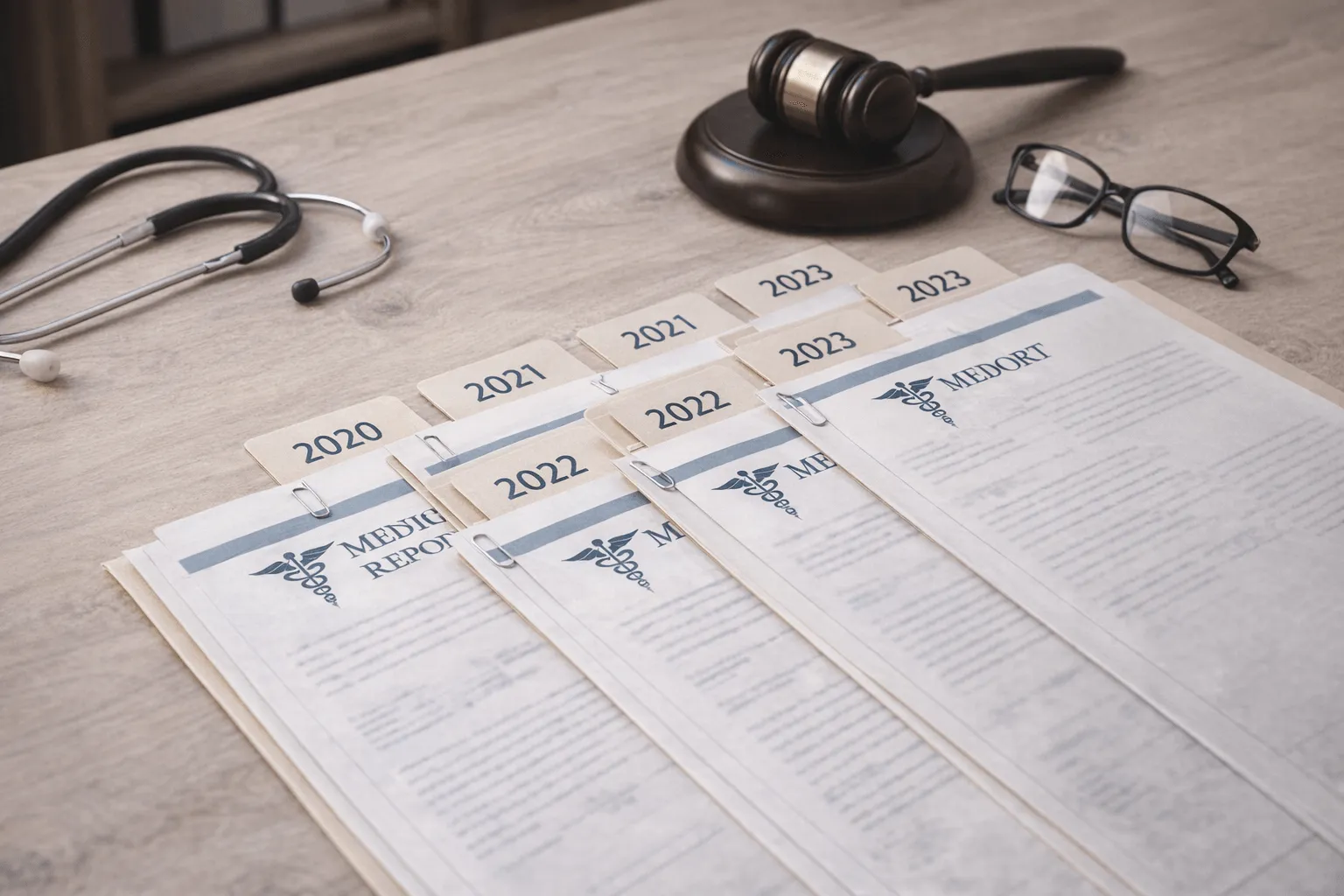
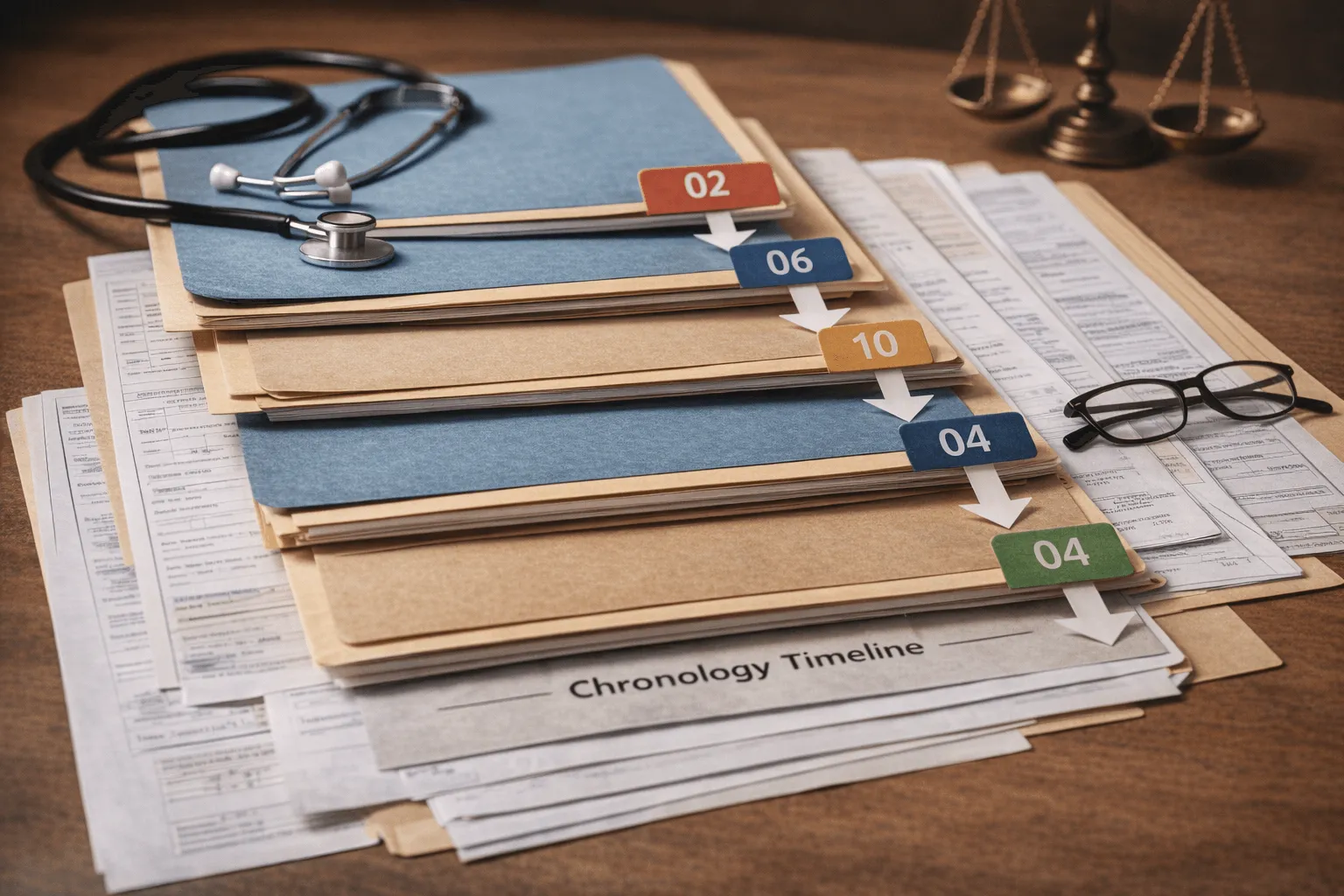
A medical chronology is a date-sequenced, source-verified timeline of every clinical event relevant to the case. In med-mal and PI litigation, that sequencing is the foundation of causation analysis: it converts unorganized clinical records into a factual structure that experts can reason from and attorneys can defend under scrutiny.
In litigation-focused practice, each entry typically traces back to a Bates-stamped or otherwise clearly cited page in the original records. That traceability improves source verification and makes the chronology more useful in discovery, expert review, and cross-examination preparation. The document exists to answer one question with precision: what happened, and when.
Chronologies are built for audiences who need granular verification:
- Expert witnesses developing causation or breach-of-care opinions
- Attorneys preparing for depositions or trial
- Legal teams testing the factual record during discovery
The Medical Summary: Narrative-Driven and Reader-Specific
A medical summary is a condensed, narrative synthesis of medical records organized around case themes rather than raw dates. In demand packages, its function is to tell a coherent medical story tied directly to damages, translating clinical detail into a narrative a non-medical reader can act on.
Summaries translate clinical complexity into accessible language tailored for a specific reader: an insurance adjuster evaluating a demand, an attorney assessing case viability, or co-counsel joining a case mid-litigation. The summary answers a different question: what does this medical history mean for this claim.
The distinction matters because each document fails when asked to do the other's job. A chronology sent to an adjuster forces interpretation without persuasive framing. A summary used at deposition lacks the source-level precision that supports close factual scrutiny.
When PI Cases Require a Medical Chronology
Some case stages demand precision more than persuasion. In those settings, a date-anchored chronology usually carries more weight because it can be checked against the underlying record and used under adversarial pressure.
Causation Disputes and Preexisting Condition Challenges
Causation is central to every PI and med-mal case. A precise treatment timeline gives plaintiff counsel the ability to trace the plaintiff's medical trajectory through dates, findings, and clinical progression, which is the factual foundation any causation argument depends on.
When defense counsel argues that injuries predate the incident, the chronology helps establish baseline health status and document how the incident changed the medical trajectory. A robust chronology gives plaintiff counsel verifiable dates and source citations that can help separate preexisting conditions from incident-caused injuries.
Treatment Gap Analysis
Treatment gaps represent a recurring vulnerability in plaintiff cases. Treatment gaps give insurers a ready argument: that injuries were minor, pain was intermittent, or the plaintiff failed to mitigate damages.
Chronologies expose gaps early in the case lifecycle, giving plaintiff counsel time to obtain explanations such as financial barriers, provider unavailability, or transportation limitations. Without early identification, defense counsel often frames the gap first.
Deposition Prep and Expert Witness Briefing
The ABA guidance identifies organizing medical records and creating a patient care chronology as essential tasks in medical negligence cases. Chronologies give attorneys and experts a shared foundation that allows experts to focus on developing opinions rather than reconstructing records from disparate sources.
In deposition preparation, attorneys need fast access to specific dates and findings under cross-examination pressure. Disorganized records increase preparation time for both attorneys and expert witnesses, compounding cost at the stage of litigation where efficiency matters most.
What a Weak Chronology Costs
Weak chronology work creates specific, recoverable problems, but only if they are identified before opposing counsel finds them first. Missing records from a treating provider leave a gap in the treatment timeline that defense counsel can frame as evidence the injury was minor or resolved without intervention. Unsupported date entries invite cross-examination challenges that undermine expert credibility at the worst possible moment. Unclear sequencing between providers makes it harder for an expert witness to construct a coherent causation opinion, increasing preparation time and the risk of an opinion that does not hold up under scrutiny.
The completeness requirement is not procedural caution. It is the difference between a chronology that closes defense arguments and one that opens them.
When a Medical Summary Serves the Case Better
A summary becomes more valuable when the immediate task is explanation rather than reconstruction. At those stages, readability, thematic organization, and efficient communication matter more than line-by-line source checking.
Early Case Assessment
Brief summaries provide attorneys with enough information to make decisions without reviewing complete medical records. That function is especially useful when intake volume is high and counsel needs a fast, structured view of diagnosis, treatment pattern, and likely damages themes.
Demand Package Construction
Demand packages are one of the highest-stakes uses of medical summaries. A well-constructed summary gives attorneys the clinical clarity to argue liability and quantify damages without having to reconstruct the medical record themselves.
An effective PI summary does more than list treatments. It names specific diagnoses, cites physician findings, and ties functional limitations to treatment outcomes. Poorly organized or incomplete medical documentation is a recurring reason insurers reduce settlement offers. Vague summaries that omit diagnosis specifics, physician findings, or functional limitations give adjusters room to discount the claim.
Client Updates and Co-Counsel Briefings
Summaries translate complex medical information into language that non-medical readers can use. For client communication, they reduce confusion and help manage expectations about case progression. For co-counsel or referral scenarios, they provide efficient knowledge transfer without requiring the receiving attorney to reconstruct the full medical record from scratch.
Which Medical Document Does a PI Case Need at Each Stage?
The choice between summary and chronology is rarely a one-time decision. PI cases move through stages that put different pressure on medical documentation, so the stronger workflow is usually to match output to the question the team must answer next.
Case Stage Document Map
From intake through resolution, both documents serve complementary functions:
- Intake: Preliminary chronology frameworks scope record requests and identify missing providers; summary notes support initial case valuation
- Record collection: Chronologies verify completeness as batches arrive; summaries keep attorneys informed of case development
- Demand preparation: Chronologies provide the factual backbone with Bates citations; summaries provide the persuasive narrative that drives settlement value
- Negotiation: Chronologies resolve factual disputes when adjusters challenge specific claims; summaries maintain settlement momentum
- Litigation and depositions: Chronologies support discovery preparation and precision questioning; summaries enable thematic case presentation
- Mediation and trial: Both documents serve different reader needs simultaneously
The Single-Document Failure Mode
Firms that rely on only one document type create predictable vulnerabilities. A chronology-only approach produces a dry presentation that forces adjusters to interpret medical significance on their own, reducing settlement leverage. A summary-only approach leaves the factual record less prepared when opposing counsel challenges treatment dates, causation timelines, or retrieval.
Many firms use both documents throughout the case because they serve different audiences and different legal arguments. Treating this as a production protocol rather than a deadline-driven judgment call reduces the risk of reaching a critical juncture without the right documentation in place.
How Is AI Changing Chronology and Summary Work in PI Firms?
AI-assisted drafting is changing the pace of medical record work, but not the need for legal review. The central question is not whether software can produce a first draft. It is whether the firm has a defensible process for validation, revision, and oversight.
Speed Gains and Accuracy Requirements
AI drafting and summary generation can compress the timeline between record receipt and usable work product. AI-assisted tools are being used in PI firms for early case assessment and chronology drafting, while most practitioners continue to avoid AI-generated output for court filings where accuracy requirements are non-negotiable.
That selective use reflects a practical reality: AI-generated drafts can introduce factual errors that are not self-evident without checking against source records, which makes paralegal verification a mandatory step rather than an optional one.
Paralegal Oversight as a Professional Obligation
ABA Formal Opinion 512 explains that existing professional duties apply when lawyers use generative AI, including competent representation, client information protection, communication with clients about AI use, and reasonable fees consistent with time spent using generative AI. The California Bar adds that confidential client information must not enter any AI platform lacking adequate security protections.
For paralegals, the work centers on validation, exception handling, and quality assurance alongside any AI-assisted drafting. Spot audits against source records, discrepancy tracking, and staged review protocols are baseline requirements for any AI-augmented workflow.
Choosing the Right Document Protects the Settlement
Medical summaries and chronologies solve different problems at different moments in the same case. One persuades a reader who needs to understand the medical picture quickly; the other verifies a timeline that has to hold up under adversarial pressure. PI and med-mal firms that treat them as interchangeable tend to find the gap at the worst possible stage — demand, deposition, or mediation. The decision of which document to produce, and when, is a production standard worth building into the workflow before the pressure arrives. More on the paralegal's role in that process in this chronology guide.
Tavrn is an AI platform built for plaintiff-side PI and med-mal firms, designed to shorten the time between record receipt and case-ready documentation. Retrieval, chronology generation, and demand preparation run in one connected workflow, with paralegal oversight built into each stage rather than added after the fact.
.png)
.png)