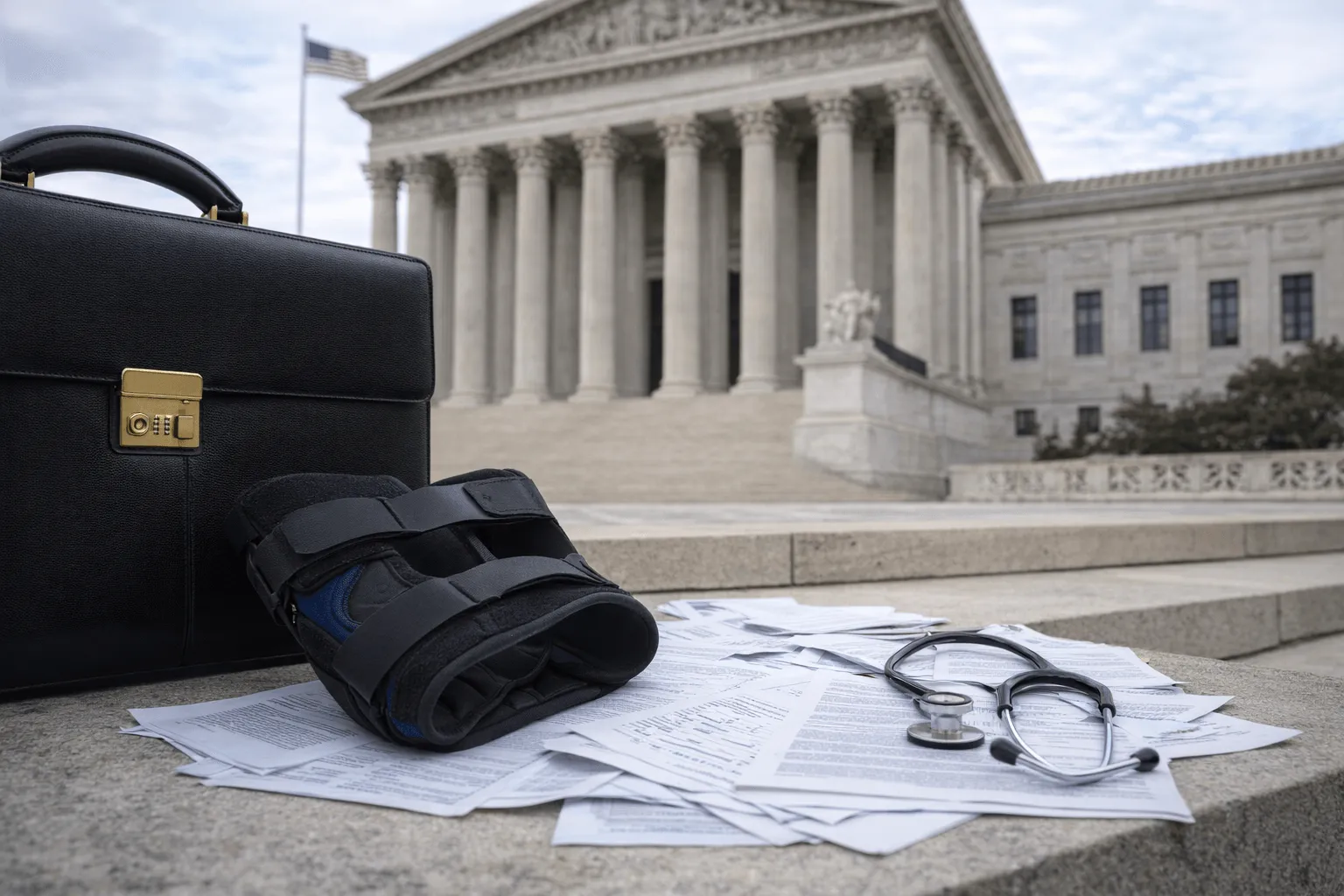
The Florida Second District Court of Appeals issued a significant ruling on October 29, 2025, in Kowalski v. Johns Hopkins All Children’s Hospital, vacating the $208 million jury verdict returned in 2023. The decision reshapes how statutory immunity applies in medical–child welfare disputes.
The case centers on Maya Kowalski’s 2016 hospitalization, the hospital’s child-abuse reports, and the dependency court orders that followed. These events created one of Florida’s most closely watched civil trials in recent years.
This article examines the appellate court’s reasoning, the scope of immunity under Florida Statute § 39.203, and the resulting implications for trial strategy, discovery boundaries, and risk evaluation in medical–child welfare litigation.
Case Background and Procedural Framework
The Kowalski v. Johns Hopkins All Children’s Hospital dispute began with Maya Kowalski’s October 2016 admission for Complex Regional Pain Syndrome (CRPS). Prior ketamine-based treatments, parental requests for additional dosing, and inconsistencies perceived by clinical staff prompted a closer review of whether her presentation reflected genuine pain symptoms or potential medical child abuse. Those concerns set the foundation for the dependency proceedings that later shaped the civil claims.
Hospital personnel filed three child-abuse hotline reports on October 7, 8, and 9. Those reports triggered state involvement and led the dependency court on October 14 to restrict parental access and place Maya under shelter care jurisdiction. From that point forward, the hospital’s conduct was governed by judicial oversight rather than unilateral clinical discretion.
Within this early phase, three developments shaped the later litigation:
- Repeated hotline reports that documented staff concerns regarding the nature of Maya’s symptoms.
- Judicially imposed shelter care, which limited parental involvement and placed physical custody under the court’s authority.
- Active participation in dependency proceedings, including record production, testimony, and cooperation with DCF investigations.
Maya’s mother, Beata Kowalski, died by suicide on January 7, 2017. The family subsequently filed civil claims alleging false imprisonment, battery, medical negligence, intentional infliction of emotional distress, fraudulent billing, and wrongful death.
Civil Trial Analysis and Verdict Breakdown
The 2023 trial unfolded against an unusual factual backdrop: a dependency-court case running parallel to a civil claim for false imprisonment, negligence, and emotional distress. Plaintiffs argued that clinicians misinterpreted CRPS symptoms as fabricated abuse and that the hospital’s role in restricting parental access exceeded what the circumstances justified.
Two issues shaped how the case reached the jury:
- How much discretion did hospital staff maintain once the dependency court assumed jurisdiction over Maya’s care?
- Whether mandatory reporting decisions were grounded in clinical observations or influenced by misinterpretation of CRPS-related behaviors.
Against this evidentiary setting, jurors returned a $261 million verdict—later reduced to $213.5 million through remittitur—reflecting both compensatory and punitive findings. The hospital countered that its actions were protected under §39.203, emphasizing that all reporting, cooperation with investigators, and adherence to court orders were undertaken in good faith.
Statutory Immunity Framework Under §39.203
The statutory framework governing the dispute centers on § 39.203(1)(a) grants immunity to individuals and institutions reporting suspected child abuse "in good faith" or participating in child-protection proceedings. The statute provides dual protection:
- Immunity for "reporting in good faith any instance of child abuse."
- Immunity for "participating in good faith in any act authorized or required by this chapter."
The appellate court determined that the hospital's conduct between October 7 and 13, 2016, fell entirely within the statute's protection.
This included initial hotline reports, cooperation with DCF investigations, provision of medical records, testimony in dependency court, and implementation of court-ordered restrictions on parental access.
Appellate Decision and Legal Holdings
On October 29, 2025, the appellate court vacated the final judgment and reversed the damages award. The court held that the hospital was immune from actions arising from good faith child abuse reporting and participation in dependency proceedings.
The appellate reversal demonstrates how statutory immunity under § 39.203(1)(a) can eliminate substantial exposure even in cases involving tragic family outcomes and significant jury sympathy. This provides essential precedential authority for defense strategy, client counseling protocols, and operational risk management in medical malpractice practices handling child welfare intersections.
In explaining why the 2023 verdict could not stand, the panel underscored two specific errors in the trial court’s treatment of conduct from the October 2016 detention period:
- Actions performed while the dependency court controlled custody were treated as discretionary hospital decisions rather than court-directed, statutorily protected participation.
- The jury received a liability framework that omitted the full scope of § 39.203 immunity, allowing immune conduct to form the basis of several claims.
Practice Considerations in Medical–Child Welfare Litigation
The appellate ruling sharpens the boundary between protected mandatory-reporting conduct and actions still subject to civil liability in medical–child welfare disputes. This clarity requires firms to reassess how they evaluate exposure, document decision-making, and preserve issues for potential appeal.
For Managing Partners
The appellate reversal demonstrates how statutory immunity can eliminate substantial exposure, but the initial $213 million verdict created significant litigation costs and reputational damage before appellate correction. Managing partners must consider billing structures that account for intensive appellate work in immunity cases.
Client counseling frameworks should address reputation management during high-profile litigation. Malpractice insurance coverage evaluation becomes critical for medical-child welfare intersection cases.
For Senior Paralegals
Precisely segment timelines to identify hospital conduct occurring before abuse suspicion developed or after dependency proceedings concluded. Focus discovery on whether hospital personnel acted outside the scope of good faith child protection activities or with knowledge of falsity rather than reasonable clinical judgment.
Case preparation protocols should preserve objections on statutory interpretation, jury instructions, and motion practice for potential appellate review.
For Legal Operations
Develop standardized protocols for evaluating statutory immunity early in medical-child welfare cases. This includes checklist systems for identifying protected conduct, templates for immunity-based motions, and appellate preservation procedures.
Risk assessment protocols must evaluate temporal boundaries of immune conduct and develop fact-gathering systems to support good faith determinations.
Professional Liability Market Analysis
The appellate reversal reaffirms the scope of statutory protection for healthcare providers engaged in child-welfare investigations. By confirming that good-faith reporting and participation in dependency-court proceedings fall within § 39.203 immunity, the ruling stabilizes underwriting assumptions for providers facing similar allegations.
Insurers are now assessing how the decision affects exposure modeling and the application of coverage exclusions in cases involving contested reporting decisions. Their reviews focus on two underwriting variables:
- The weight given to dependency-court involvement when evaluating potential liability.
- How carriers classify good-faith clinical reporting within risk tiers for pediatric and emergency settings.
In Summary
The Kowalski appellate decision clarifies how Florida’s mandatory reporting statute applies when medical judgment and child-welfare obligations intersect. The court held that conduct undertaken in good faith during the 2016 dependency proceedings fell squarely within the protections of § 39.203.
The ruling confirms that statutory immunity extends beyond initial hotline reports to encompass participation in investigations, provision of records, and compliance with dependency court orders. This establishes a clearer boundary for assessing potential liability in medical–child welfare disputes.
For practitioners, the decision offers guidance on evaluating exposure, preserving appellate issues, and structuring case strategies in matters involving clinical assessments and child-protection mandates.